Pork cuts compared (per 100 g cooked)
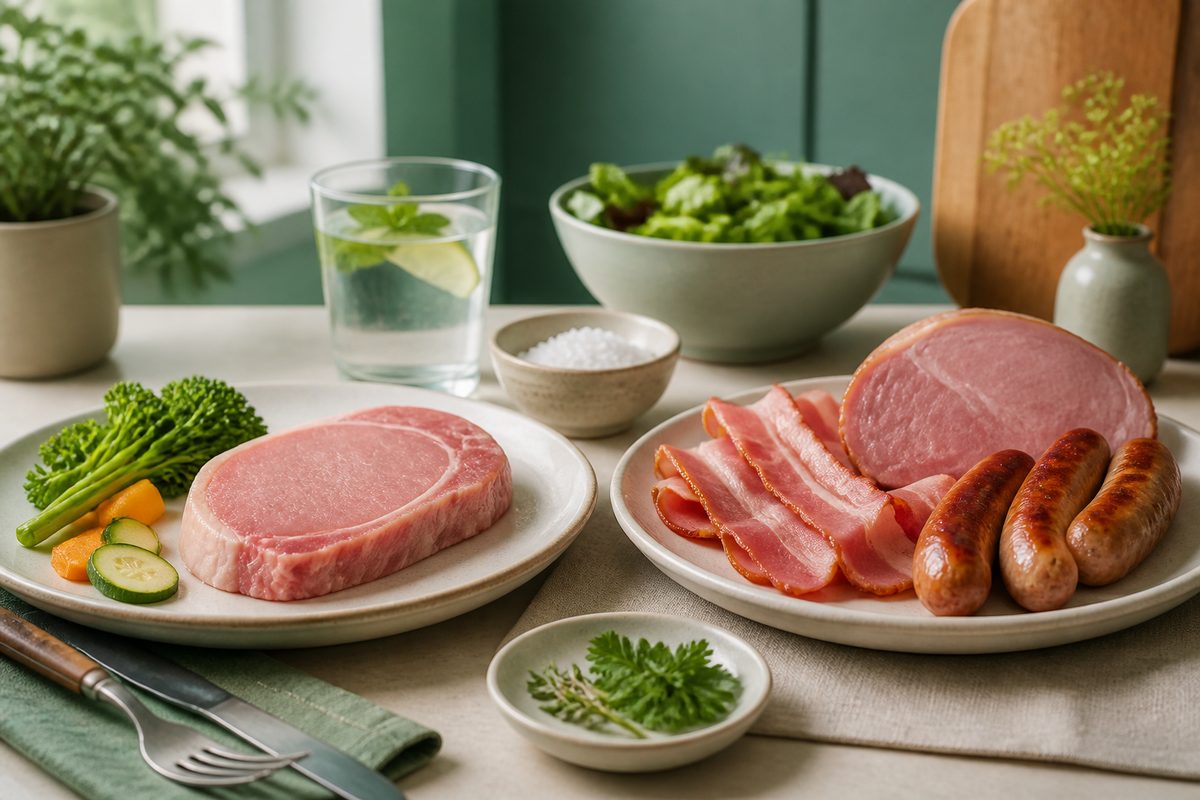
- Pork loin (lean): ~ 200 mg P, 360 mg K, 6 g fat
- Pork tenderloin: ~ 220 mg P, 380 mg K, 4 g fat (the leanest)
- Pork chop: ~ 210 mg P, 350 mg K, 10 g fat
- Pork mince (10% fat): ~ 190 mg P, 320 mg K, 12 g fat
- Pork belly: ~ 170 mg P, 280 mg K, 32 g fat — limit
- Bacon: 220 mg P, 360 mg K, 22 g fat, ~ 1,500 mg sodium ❌
- Gammon: 200 mg P, 320 mg K, ~ 1,700 mg sodium ❌
- Pork sausage: 180 mg P, 280 mg K, ~ 900–1,200 mg sodium ❌
Why processed pork is so problematic
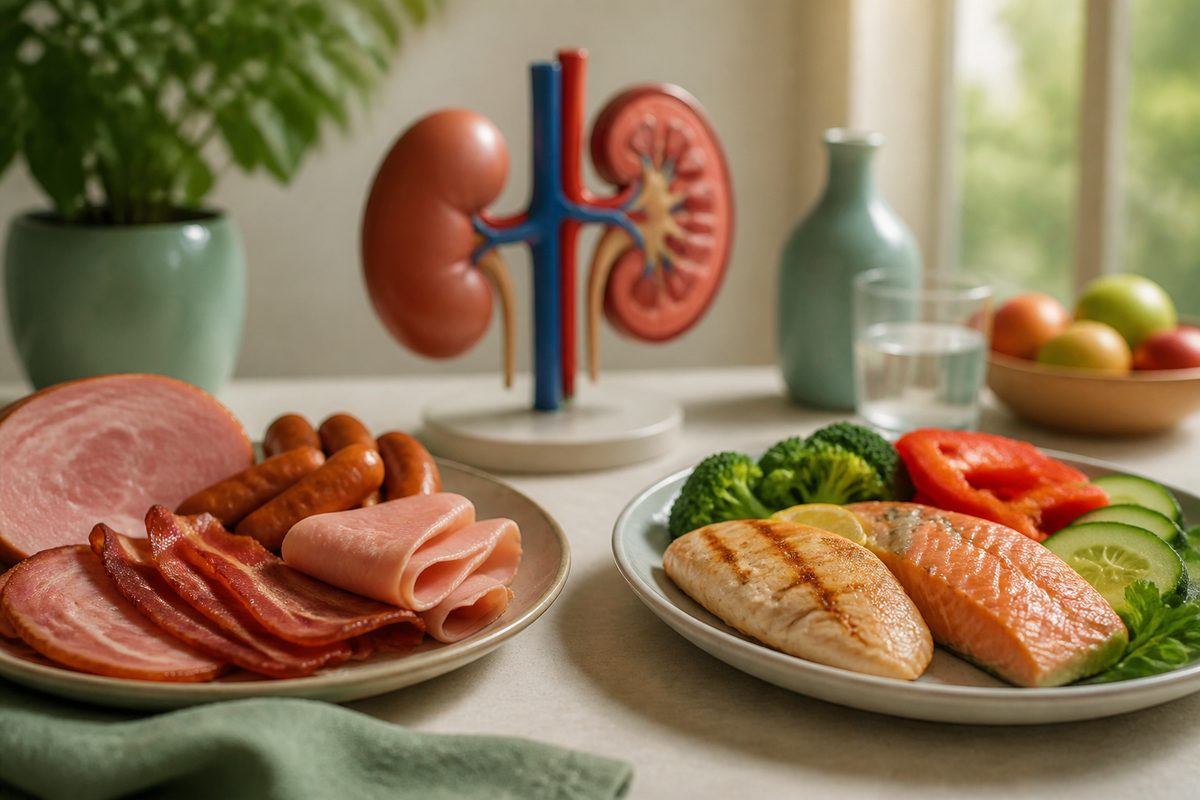
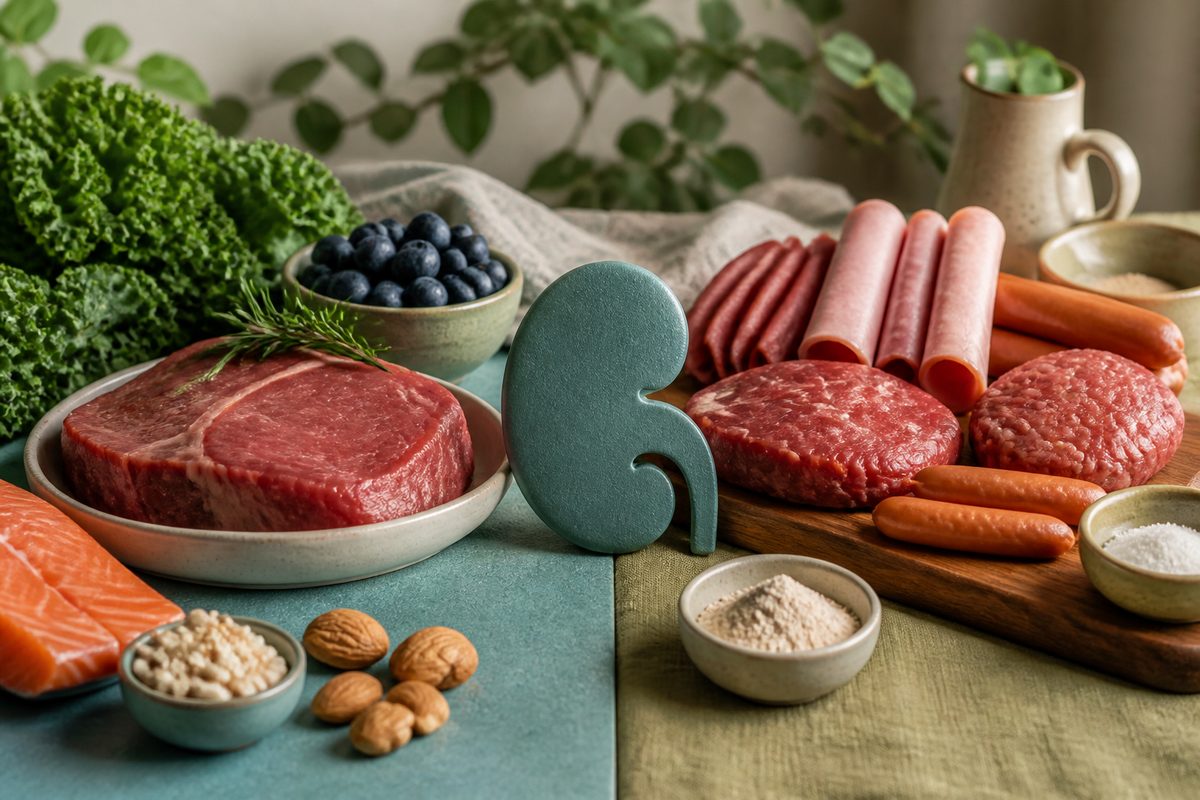
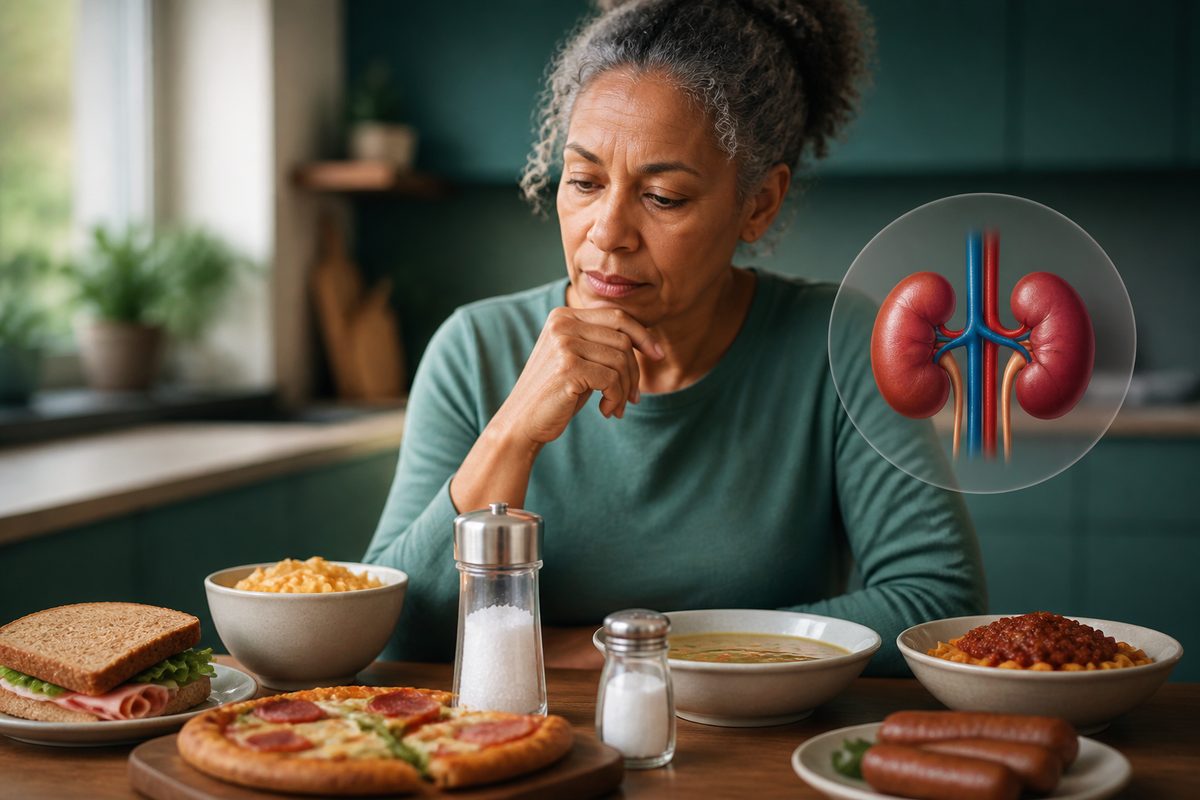
Cured / smoked / preserved pork dominates UK breakfast and lunch options — bacon sandwiches, ham rolls, sausages, chorizo on pizza, salami in pasta. Each portion delivers sodium loads that wipe out a full day's CKD salt target (1.5–2.0 g). Inorganic phosphate additives (E338, E450, E451) are nearly 100% absorbed and contribute to vascular calcification risk in CKD.
Portion by CKD stage (plain pork loin)
- Stage 1–3: 100 g cooked, 1–2 × per week.
- Stage 3b–4: 80 g cooked, 1 × per week.
- Stage 5 / dialysis: 80–100 g cooked, occasional — work into protein target.
Practical CKD-friendly ideas
- Pork tenderloin medallions with lemon, garlic, rosemary — 80 g portion.
- Pork stir-fry with peppers, mangetout, and a splash of low-salt soy.
- Slow-cooked pork shoulder (small portion, fat skimmed) with cabbage.
- Avoid: bacon sandwiches, ham and cheese toasties, full English breakfasts, salami pizza, pulled-pork BBQ with shop-bought sauce.
Food first. If you are choosing a daily multivitamin alongside a balanced diet, Kidney Vitality was developed by a UK Consultant Nephrologist using renal nutrition principles. See the formulation.