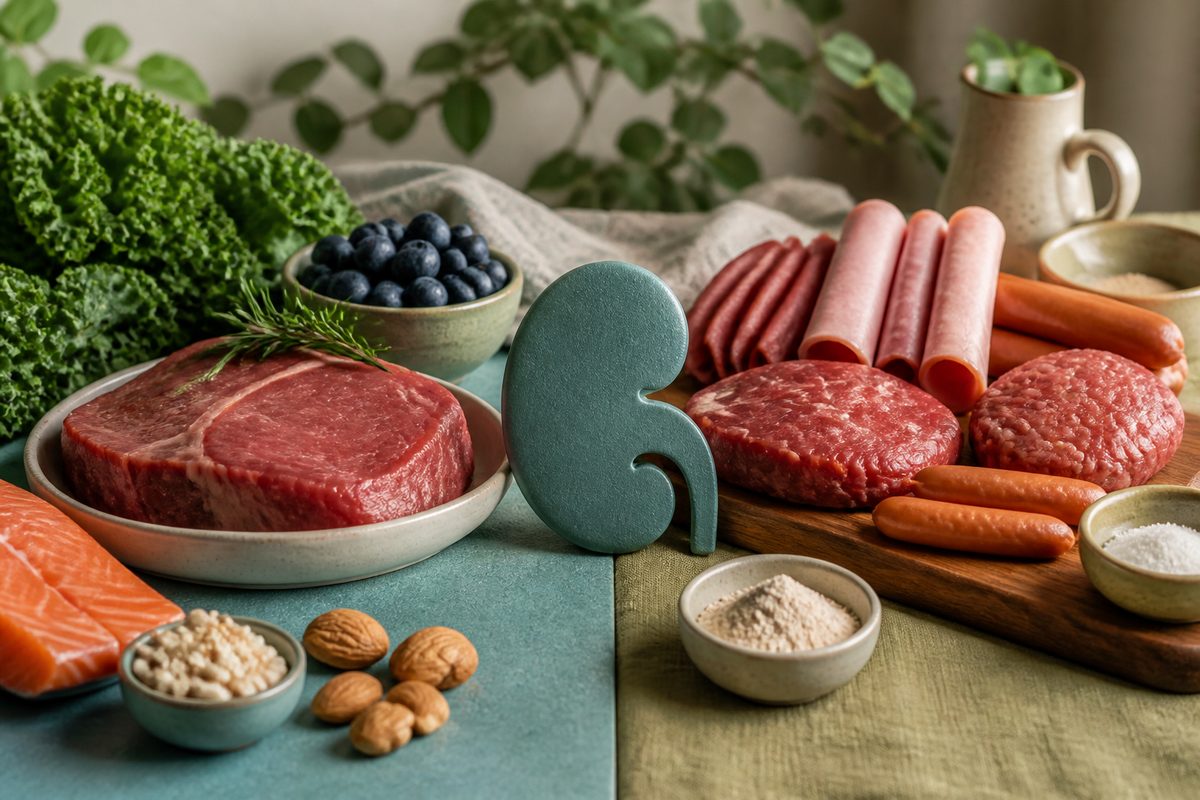
Two different conversations: processed vs unprocessed
When we talk about red meat in CKD, it's important to separate two categories:
- Unprocessed red meat — fresh beef, lamb, pork, venison. Cooked at home in normal portions, this is a legitimate protein source. The concerns are dietary acid load and total intake.
- Processed red meat — bacon, sausages, ham, salami, hot dogs, pâté, corned beef, most deli meats. These have been preserved using salt, nitrates and often added phosphate. They are much higher risk for CKD because they combine sodium, additive phosphate and the acid-load issue.
The most consistent finding across large UK and international studies is that processed red meat is the biggest dietary driver of faster kidney decline. Unprocessed red meat carries a smaller but still meaningful risk at high intakes.
Dietary acid load and CKD progression
Animal proteins — red meat especially — generate sulphate and other acid metabolites when digested. Healthy kidneys handle this easily. In CKD, the ability to excrete acid falls, and chronic metabolic acidosis develops in many patients from Stage 3b onwards.
Metabolic acidosis is independently associated with faster CKD progression, muscle wasting, bone loss and worse cardiovascular outcomes. Trials of dietary alkali (more fruit and vegetables, fewer animal proteins) and oral sodium bicarbonate have shown slower eGFR decline.
The practical implication: reducing red meat intake — and replacing some with plant proteins or chicken/fish — directly lowers your daily acid load.
The phosphate problem in processed meat
Most UK processed meats use phosphate-containing preservatives to extend shelf-life, retain water and improve texture. Common additives include sodium phosphate (E339), sodium triphosphate (E450), and sodium tripolyphosphate (E451). On labels these appear as 'phosphate', 'polyphosphate', or as E-numbers.
Unlike the phosphate naturally present in meat (which is ~ 60% absorbed), added inorganic phosphate is ~ 90–100% absorbed. A few rashers of bacon or a couple of sausages can contribute more bioavailable phosphate than a serving of fresh steak.
In advanced CKD where phosphate control matters most, this matters most.
Sodium in cured and processed meats
Approximate sodium per typical serving:
- 2 rashers back bacon (50 g): 750–950 mg sodium
- 2 pork sausages (90 g): 500–700 mg sodium
- 4 slices ham (40 g): 350–500 mg sodium
- Salami (30 g): 500–600 mg sodium
- Pâté (50 g): 350–500 mg sodium
For context, the NHS adult limit is 2,400 mg sodium/day (6 g salt); many CKD patients are advised to stay clearly below this. A typical 'full English' breakfast can deliver well over half the daily sodium limit before any added salt.
Swaps that actually work
Practical, evidence-based substitutions:
- Replace bacon with grilled mushrooms, tomato and a poached egg.
- Replace sausages with chicken sausages (lower sodium versions) or lean pork loin.
- Replace ham sandwiches with chicken, tinned tuna, egg or hummus.
- Replace beef mince in Bolognese with half-and-half beef + lentils (cuts acid load, adds fibre, lowers cost).
- Replace steak twice a week with grilled chicken, salmon or a bean stew.
- Keep red meat to 1–2 small (70 g cooked) portions per week.
Large UK observational studies (UK Biobank, EPIC) consistently show that the biggest CKD-related dietary wins come from cutting processed meat and shifting to plant or fish proteins, not from avoiding any single food.
Food first. If you are choosing a daily multivitamin alongside a balanced diet, Kidney Vitality was developed by a UK Consultant Nephrologist using renal nutrition principles. See the formulation.
Special situations
- Iron-deficiency anaemia in CKD: red meat is a useful haem-iron source. If you've been told you need more iron, don't cut red meat without speaking to your renal team — they may prefer to keep small unprocessed portions and add an iron supplement.
- Dialysis with protein needs: protein needs rise on dialysis (1.2–1.4 g/kg/day). Prioritise eggs, fish, chicken and tofu over red meat.
- Transplant: normal red meat intake within general healthy-eating guidance is fine, but immunosuppression means avoiding undercooked meat for the first few months — discuss with your transplant team.
- Gout + CKD: red and organ meats are high in purines and worsen gout — limit accordingly.