1. What "kidney health supplement" really means
In the UK, "kidney health supplement" is a marketing phrase, not a regulated medical category. Products sold under that label range from sensible, dietitian-aligned multivitamins to herbal blends that renal teams actively discourage. The first job of this page is to help you tell them apart — and to set out what a evidence-based daily supplement should, and should not, contain.
A supplement cannot cure or treat chronic kidney disease, and the NHS rightly warns against products that claim otherwise. What a sensibly formulated supplement can do is help fill the specific nutritional gaps that are common in CKD — without adding to the kidneys' workload through megadoses, accumulating fat-soluble vitamins, or minerals that are hard to clear in reduced kidney function.
2. Vitamins CKD patients commonly lack
UK renal-nutrition guidance consistently flags three groups of nutrients as more likely to fall short in chronic kidney disease:
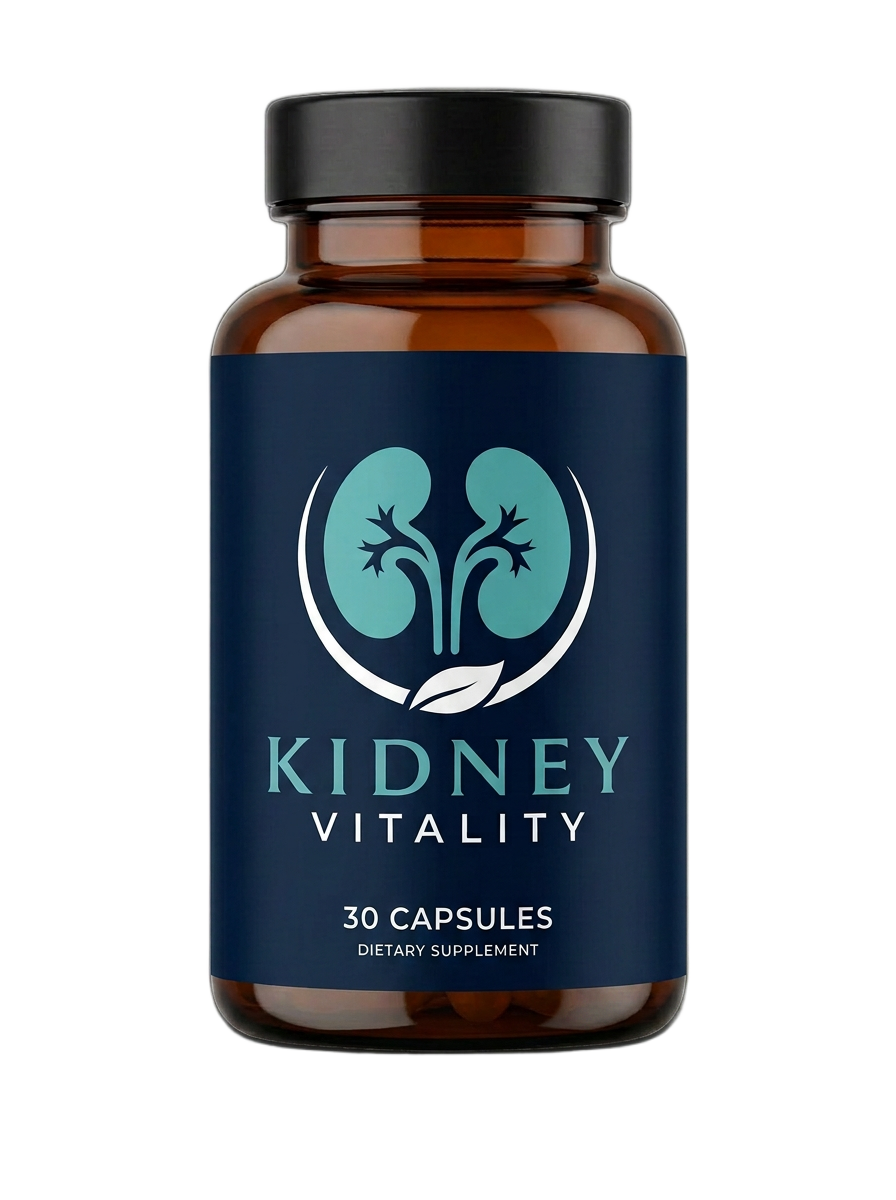
- Vitamin D. The kidneys activate vitamin D, so 25-OH vitamin D is commonly low in CKD. NICE NG203 supports correcting deficiency in adults with CKD. A moderate daily dose (such as the 1000 IU (25 mcg) in Kidney Vitality) is a sensible baseline; renal teams may prescribe higher doses or active analogues based on bloods.
- Water-soluble B-vitamins (B1, B2, B6, B12, folate). Restricted protein intake, poor appetite and — in dialysis patients — losses through the dialysis filter make a sensible daily B-complex one of the most consistently recommended additions in CKD.
- Moderate vitamin C. A modest dose (around 75 mg/day) supports general antioxidant intake without pushing oxalate load — which becomes important when kidney clearance is reduced.
3. Vitamins and minerals to avoid in CKD
The same guidance is equally clear about what to leave out. These are the four ingredients renal dietitians most often flag on supplement labels:
- High-dose vitamin A as retinol. Vitamin A and its carrier protein are partly cleared by the kidneys. In reduced kidney function it accumulates and can become toxic. Renal dietitians typically advise against any supplement listing added retinol above 800–1500 µg/day.
- Added potassium. The kidneys regulate potassium. Raised potassium in CKD can affect the heart — it is the more dangerous of the renal electrolytes. Most renal diets aim to limit, not add, potassium.
- Added phosphate. Phosphate is hard to clear in CKD and is one of the main drivers of bone and vascular problems in advanced kidney disease. Phosphate binders are often prescribed — the last thing a supplement should do is add more.
- Added magnesium. Magnesium clearance falls with CKD progression. Supplemental magnesium can accumulate in moderate-to-advanced CKD and is usually avoided unless specifically prescribed.
- High-dose vitamin C (≥ 500 mg/day). Vitamin C is metabolised to oxalate, which can stress the kidneys and contribute to oxalate stones. Renal dietitian guidance typically caps supplemental vitamin C at around 100–200 mg/day.
4. Common supplement risks & interactions
Beyond the core renal-nutrition checklist, three categories of supplements regularly cause problems in UK kidney clinics:
Herbal products with documented renal harm. High-dose turmeric, nettle root, noni juice, star fruit and some traditional Chinese herbal blends have been linked to acute kidney injury or interactions with kidney medication. Always check any herbal supplement with your GP, pharmacist or renal team before starting.
Interactions with ACE inhibitors, ARBs and diuretics. Potassium-containing supplements (including some "salt substitutes") combined with ACE inhibitors, ARBs or potassium-sparing diuretics can raise blood potassium to dangerous levels. If you take any of these medicines, supplements with added potassium are generally off the table.
Vitamin K and warfarin. Patients on warfarin should avoid sudden changes in vitamin K intake. Kidney Vitality does not include added vitamin K for this reason.
5. The kidney-friendly buying checklist
Before buying any kidney supplement in the UK, run it past this short checklist. A product that fails any of these is usually not an appropriate daily choice if you have reduced kidney function.
- No added vitamin A as retinol (beta-carotene at sensible doses is acceptable).
- No added potassium.
- No added phosphate.
- No added magnesium (unless specifically prescribed).
- Vitamin C kept at roughly 75 mg/day.
- Vitamin D3 at a sensible daily dose (around 400–1000 IU) — not megadosed.
- A standard daily B-complex (B1, B2, B6, B12, folate).
- Made in the UK to GMP standards, with batch testing and full ingredient traceability.
- Clinician involvement in the formulation, and a named medical reviewer.
- A clear disclaimer that it is a food supplement — not a medicine and not a treatment for kidney disease.
6. Evidence-based vs standard multivitamin
The contrast is easiest to see side by side. Figures below are illustrative of typical high-street multivitamin labels in the UK.
Vitamin A (retinol)
Target: Avoid megadoses
Typical multi: Often ≥ 800 µg as retinol
Kidney Vitality: No added retinol
Vitamin D3
Target: Moderate, individualised
Typical multi: Often 1000–4000 IU
Kidney Vitality: 1000 IU (25 mcg)
Vitamin C
Target: 75 mg
Typical multi: Often 500–1000 mg
Kidney Vitality: Within evidence-based range
Potassium
Target: Avoid added
Typical multi: Sometimes added
Kidney Vitality: None added
Phosphate
Target: Avoid added
Typical multi: Sometimes added
Kidney Vitality: None added
Magnesium
Target: Avoid added
Typical multi: Often 100–300 mg
Kidney Vitality: None added
7. How Kidney Vitality is different
Kidney Vitality was designed from a blank page as a evidence-based daily supplement — not a generic multivitamin with a renal sticker on the front. Three things make it stand apart from most UK alternatives:
Nephrologist-formulated
Formulated and reviewed by Professor Mohammed Mahdi Althaf, UK Consultant Nephrologist (GMC 7216325) — not by a marketing team.
Renal-aligned dosing
Every nutrient sits within the ranges UK renal dietitians consider appropriate. Vitamin C kept moderate; no megadose retinol; no added potassium, phosphate or magnesium.
UK manufactured, GMP certified
Manufactured in the UK in a BRCGS, NSF GMP and Halal certified facility, batch-tested, in vegan capsules, with full ingredient traceability.
8. Supplement guidance by CKD stage
Supplement priorities shift as kidney function declines. The following is general nutritional information, not personal medical advice — your renal team's guidance always takes precedence.
- CKD Stage 1 →
Focus on diet, blood pressure and avoiding nephrotoxic supplements. Standard evidence-based daily multi is reasonable.
- CKD Stage 2 →
Begin watching potassium-rich and high-phosphate supplements. A evidence-based daily multi remains appropriate.
- CKD Stage 3 →
Renal-specific dosing matters more. Avoid added potassium, phosphate and magnesium. Check vitamin D bloods.
- CKD Stage 4 →
Discuss every supplement with your renal team. Many patients are moved to prescribed renal vitamins at this point.
- CKD Stage 5 / dialysis →
Prescribed renal multivitamins (Renavit, Dialyvit) are usually the standard. Do not start an OTC product without specialist sign-off.
- After transplant →
Specific guidance applies post-transplant — supplements must be reviewed against immunosuppressive medication.
9. Medical review & sources
Reviewed by a UK Consultant Nephrologist
This page was written and reviewed by Professor Mohammed Mahdi Althaf — Consultant Nephrologist & Acute Physician, GMC 7216325. Information here is general nutritional education aligned with UK renal-nutrition guidance. It is not a substitute for personal advice from your own GP, pharmacist or renal team.
Primary sources