Why salt matters so much in CKD
High salt intake raises blood pressure in a dose-dependent way. In CKD, blood pressure control is the single most powerful modifiable lever for slowing kidney decline — NICE NG203 recommends a target of < 130/80 mmHg for adults with CKD and significant proteinuria.
Salt also directly worsens proteinuria (independent of blood pressure) and reduces the effectiveness of ACE inhibitors and ARBs — the two drug classes that protect kidney function. Cutting dietary salt enhances the action of these drugs.
For most adults with CKD, salt reduction is one of the two or three highest-impact changes they can make.
How much salt is too much
The UK adult limit is 6 g salt/day (= 2.4 g sodium = 2,400 mg sodium). Most population guidance and renal guidance for CKD reinforces this, with a stricter target of < 5 g/day (< 2,000 mg sodium) for adults with hypertension or proteinuria. Some renal teams aim for even lower.
The average UK adult currently consumes around 8.4 g salt/day (Public Health England National Diet and Nutrition Survey). That means most adults — with or without CKD — need to reduce intake by 25–40% to hit the recommended target.
Key conversion: salt × 0.4 = sodium content. A food label showing '1.5 g salt per 100 g' contains 0.6 g (600 mg) sodium per 100 g.
Where the salt actually comes from
About 75% of UK adults' salt intake comes from manufactured and processed foods, not from the salt added at home. The biggest contributors:
- Bread and breakfast cereals (especially wholegrain loaves and savoury cereals).
- Ready meals, takeaways and restaurant meals.
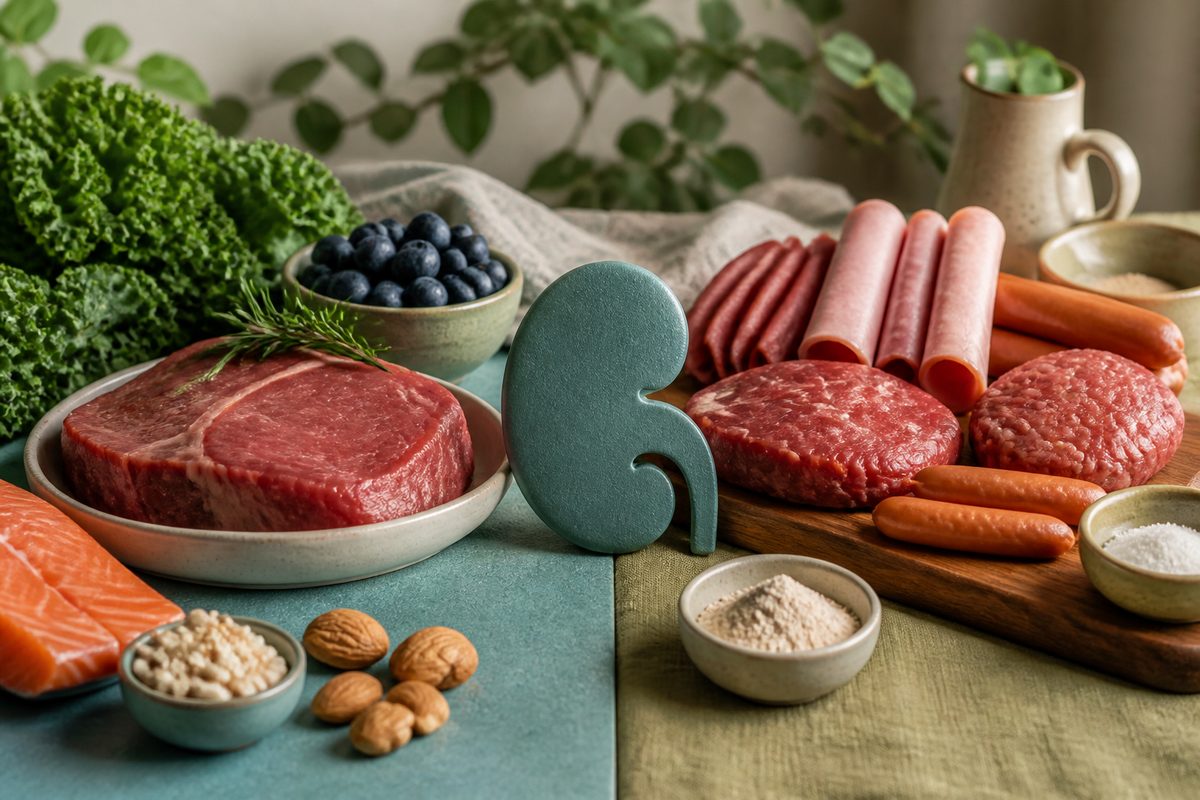
- Processed meats (bacon, ham, sausages, salami, deli meats).
- Hard cheeses (cheddar, feta, halloumi, parmesan, blue cheeses).
- Tinned soups, stocks, gravies and sauces (ketchup, brown sauce, soy sauce, fish sauce).
- Crisps, salted nuts, savoury snacks.
- Smoked and tinned fish (smoked salmon, kippers, sardines in brine).
The practical lesson: most of the win from a low-salt diet comes from choosing lower-salt versions of staple foods and reducing processed/takeaway frequency — not from removing the table salt cellar (though that helps too).
Reading UK food labels
All UK packaged food must show salt content per 100 g (and per portion). The traffic-light guidance:
- Green (low): ≤ 0.3 g salt per 100 g — choose freely.
- Amber (medium): 0.31–1.5 g salt per 100 g — eat occasionally.
- Red (high): > 1.5 g salt per 100 g — limit or avoid.
For bread specifically, aim for ≤ 1.0 g salt per 100 g (most major UK supermarket own-brand wholemeal loaves now meet this). For breakfast cereals, aim for ≤ 0.3 g per 100 g.
Why low-sodium salt substitutes are usually unsafe in CKD
Many supermarket 'reduced sodium' salts (LoSalt, Saxa So-Low, supermarket own-brand reduced sodium salt) replace ~ 60–70% of the sodium chloride with potassium chloride. A teaspoon contains a substantial potassium load.
In anyone with CKD Stage 3b or worse, on dialysis, or taking ACE inhibitors, ARBs, spironolactone, eplerenone, or trimethoprim, this can cause life-threatening hyperkalaemia. Several UK case reports of cardiac arrest have been published.
Always read the ingredients of any salt product, and never start using a low-sodium salt substitute without checking with your renal team or pharmacist. The 'salt for high blood pressure' marketing on these products does not factor in kidney function.
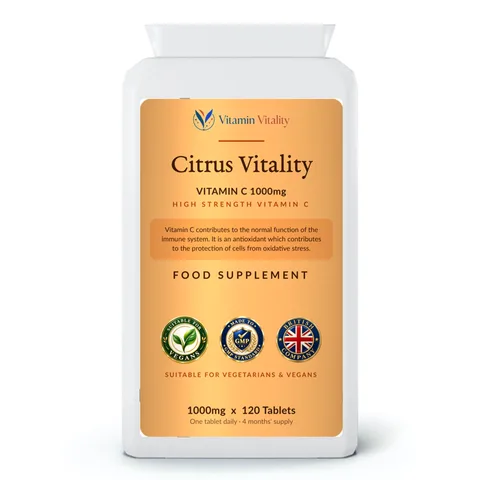
Kidney Vitality adds no sodium and is formulated without added potassium, magnesium, phosphorus or iron. See the formulation.
Practical ways to cut salt without losing flavour
What works in clinic:
- Cook from scratch where you can — you control the salt.
- Use herbs (parsley, basil, thyme, coriander, mint), spices (paprika, cumin, ginger, garlic, chilli), citrus zest and vinegars to add flavour without sodium.
- Choose 'no salt added' tinned tomatoes, pulses and vegetables.
- Swap salty snacks (crisps, salted nuts) for unsalted nuts, popcorn or rice cakes.
- Drain and rinse tinned beans and tuna — cuts sodium by ~ 40%.
- Compare bread brands — variation is large (0.6 g vs 1.4 g per 100 g).
- Limit ready meals; when you use them, choose ones in the green or amber salt band.
- Re-check home blood pressure 3–4 weeks after a salt reduction effort — most people see a measurable drop.