The 12 evidence-based kidney-supportive foods
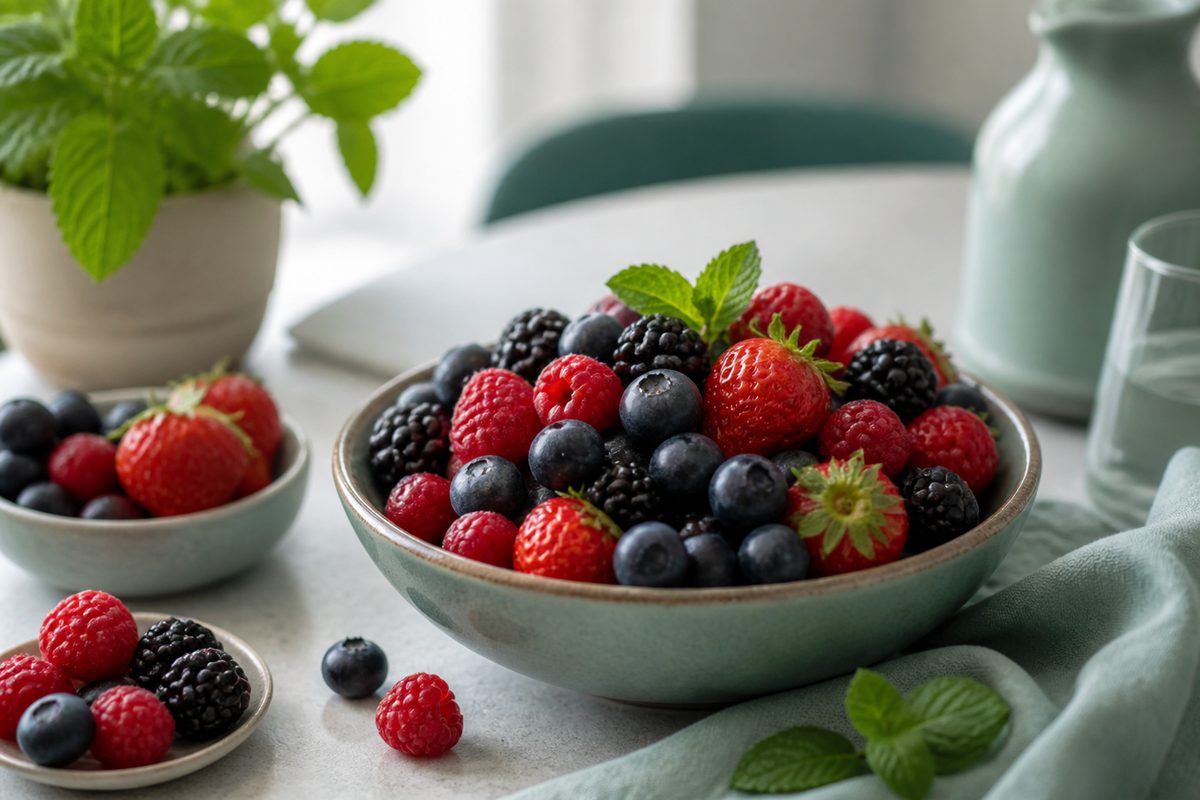
- Blueberries, strawberries, raspberries — low potassium, high antioxidant.
- Red bell peppers — low potassium, high vitamin C.
- Cauliflower — low-K substitute for mashed potato.
- Cabbage and kale (cooked) — low-K leafy greens.
- Apples — fibre, low potassium.
- Garlic — flavour without sodium.
- Olive oil — monounsaturated fat, anti-inflammatory.
- Oily fish (salmon, mackerel, sardines) — omega-3.
- Egg whites — high-quality, low-phosphate protein.
- Unsalted nuts (walnuts, macadamias) in 15–20 g portions.
- Lemon and lime — citrate for stone prevention.
- Water — 1.5–2 L/day unless on a fluid restriction.
Foods marketed as 'cleanses' that don't deliver
Parsley tea, dandelion root, juniper berries, watermelon detoxes and high-dose turmeric drinks are not supported by trial evidence and can be actively harmful — concentrated herbal extracts have caused acute kidney injury (AKI). Cranberry juice is great for UTIs but doesn't 'cleanse' the kidneys, and high-sugar versions are counterproductive.
Why salt reduction beats any 'detox'
The single biggest dietary lever for kidney health is sodium. Cutting from a typical UK 8–10 g/day down to the NHS 6 g/day target drops blood pressure by 4–8 mmHg — equivalent to one antihypertensive medication. That is the actual mechanism behind protecting kidney function.
Build a kidney-supportive plate
Half the plate: low-potassium vegetables (cabbage, peppers, cauliflower, courgette, green beans). Quarter: lean protein (oily fish, egg whites, chicken, tofu). Quarter: lower-K starch (white rice, pasta, bread, leached potato). Add: olive oil, herbs, lemon. Drink: water, herbal tea.
Food first. If you are choosing a daily multivitamin alongside a balanced diet, Kidney Vitality was developed by a UK Consultant Nephrologist using renal nutrition principles. See the formulation.