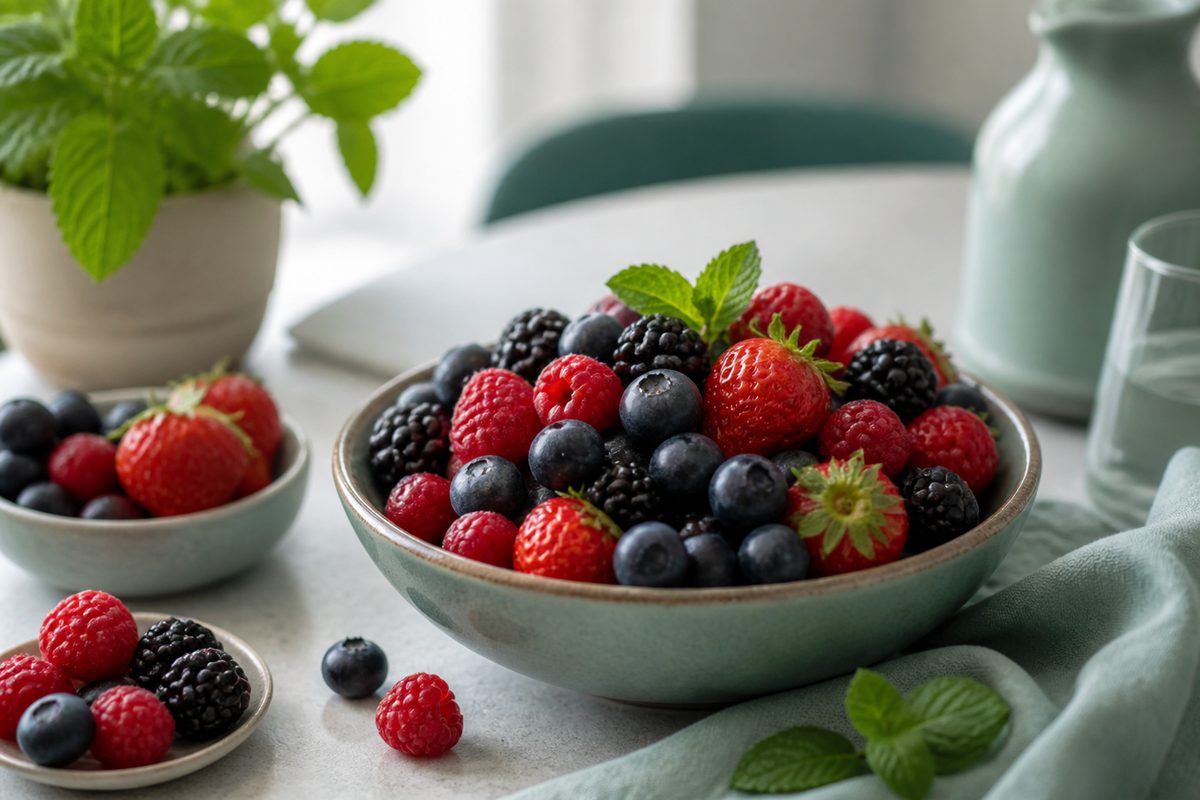
Why berries fit a renal diet
Berries are repeatedly highlighted by UK renal dietitians as a 'go-to' fruit family. Reasons:
- Low potassium (80–170 mg per 100 g) — fits even tight late-stage targets.
- Low phosphate (~ 15–25 mg per 100 g).
- High vitamin C and folate.
- Rich in anthocyanin polyphenols, associated with reduced cardiovascular risk — relevant because CKD doubles cardiovascular mortality.
- Naturally portion-controlled and satisfying.
Comparison table
Per 100 g fresh:
- Blueberries — 77 mg K, 12 mg P, 10 g sugar
- Strawberries — 153 mg K, 24 mg P, 5 g sugar
- Raspberries — 170 mg K, 29 mg P, 4 g sugar
- Blackberries — 162 mg K, 22 mg P, 5 g sugar
- Cranberries (fresh) — 80 mg K, 13 mg P, 4 g sugar (but high oxalate)
All comfortably below the 'high-K fruit' threshold (250 mg per 100 g).
Portion guidance
- Stage 1–4: 150 g per portion, once or twice daily.
- Stage 5 / dialysis: 100 g once daily is usually fine.
- Frozen berries: same nutrition; check the packet has no added sugar.
- Tinned in syrup: avoid — sugar load.
- Dried berries (cranberries, blueberries): concentrated — limit to a small tablespoon as a topping.
Practical CKD-friendly ideas
- Top porridge with 80 g frozen blueberries — they thaw in the heat of the oats.
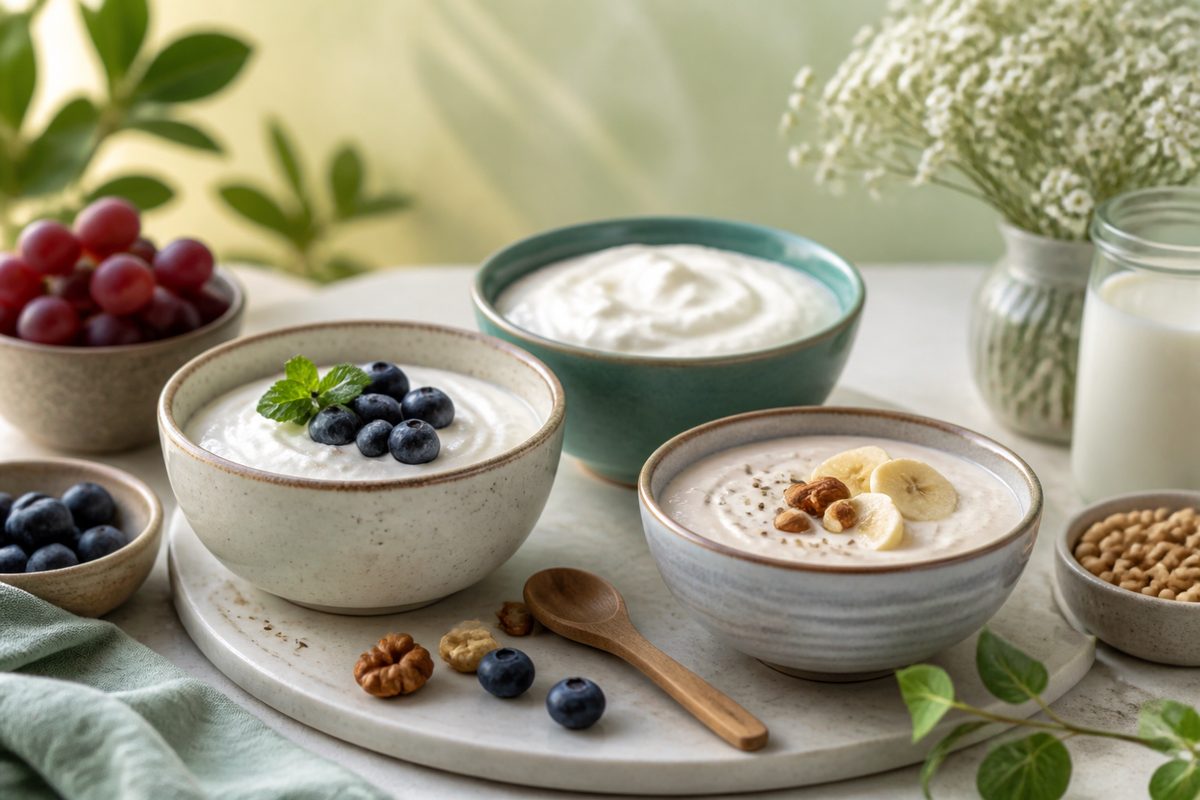
- Greek-style yoghurt with strawberries (watch yoghurt phosphate — see our yoghurt guide).
- Blend a small smoothie: 150 g berries + 100 ml almond milk + half a banana. Drink with food.
- Blueberry + lemon zest baked into porridge muffins as a low-salt snack.
- Avoid 'berry smoothie' bottled drinks — usually apple juice base with added sugar.
Food first. If you are choosing a daily multivitamin alongside a balanced diet, Kidney Vitality was developed by a UK Consultant Nephrologist using renal nutrition principles. See the formulation.