Phosphate, potassium and protein in a pot
Approximate values per 125 g pot:
- Natural low-fat yoghurt — 110 mg phosphate / 220 mg potassium / 6 g protein
- Whole-milk natural yoghurt — 120 mg P / 210 mg K / 5 g protein
- Greek-style (10% fat) — 140 mg P / 180 mg K / 7 g protein
- Skyr (0% fat) — 200 mg P / 200 mg K / 13 g protein
- Fruit yoghurt (Müller Corner) — 120 mg P / 200 mg K / 5 g protein / 18 g sugar
- Yoghurt drink (Yakult/Actimel) — 60 mg P / 100 mg K / 12 g sugar per 100 ml
Dairy phosphate is moderately absorbed (~ 60%) — much less than additive phosphate (~ 90–100%).
The label check — avoid additive phosphates
Some flavoured, processed and 'set' yoghurts contain phosphate additives used as emulsifiers and stabilisers:
- E338 — phosphoric acid
- E339 — sodium phosphates
- E340 — potassium phosphates
- E341 — calcium phosphates
- E450, E451, E452 — di-, tri- and polyphosphates
These are absorbed almost completely (~ 90–100%) compared with natural dairy phosphate (~ 60%). For CKD patients, avoiding additive phosphate is one of the highest-impact dietary changes — far more important than the natural phosphate in plain yoghurt.
Plain natural and Greek yoghurts in UK supermarkets generally don't contain these additives. Flavoured, fat-free 'thick & creamy' and yoghurt-based desserts often do.
Plant-based yoghurts
Per 125 g pot, approximate:
- Coconut yoghurt (unfortified) — 30 mg P / 100 mg K / 1 g protein
- Almond yoghurt (unfortified) — 40 mg P / 80 mg K / 2 g protein
- Oat yoghurt — 60 mg P / 150 mg K / 1 g protein
- Soya yoghurt — 90 mg P / 200 mg K / 5 g protein
If the pot is fortified with calcium phosphate (most UK supermarket plant yoghurts are — check the label for 'calcium phosphate' or E341), the absorbable phosphate goes up. Unfortified coconut yoghurt is usually the lowest-mineral choice; soya yoghurt is the most protein-rich.
Practical guidance
- One 125 g pot of plain natural yoghurt a day is a sensible default for CKD stages 1–4.
- Greek/Skyr: enjoy in 100 g portions — the protein and phosphate are concentrated.
- Avoid yoghurts with phosphate E-numbers; choose 'plain' or 'natural'.
- Flavoured fruit yoghurts: limit for sugar reasons (often 15–20 g sugar/pot).
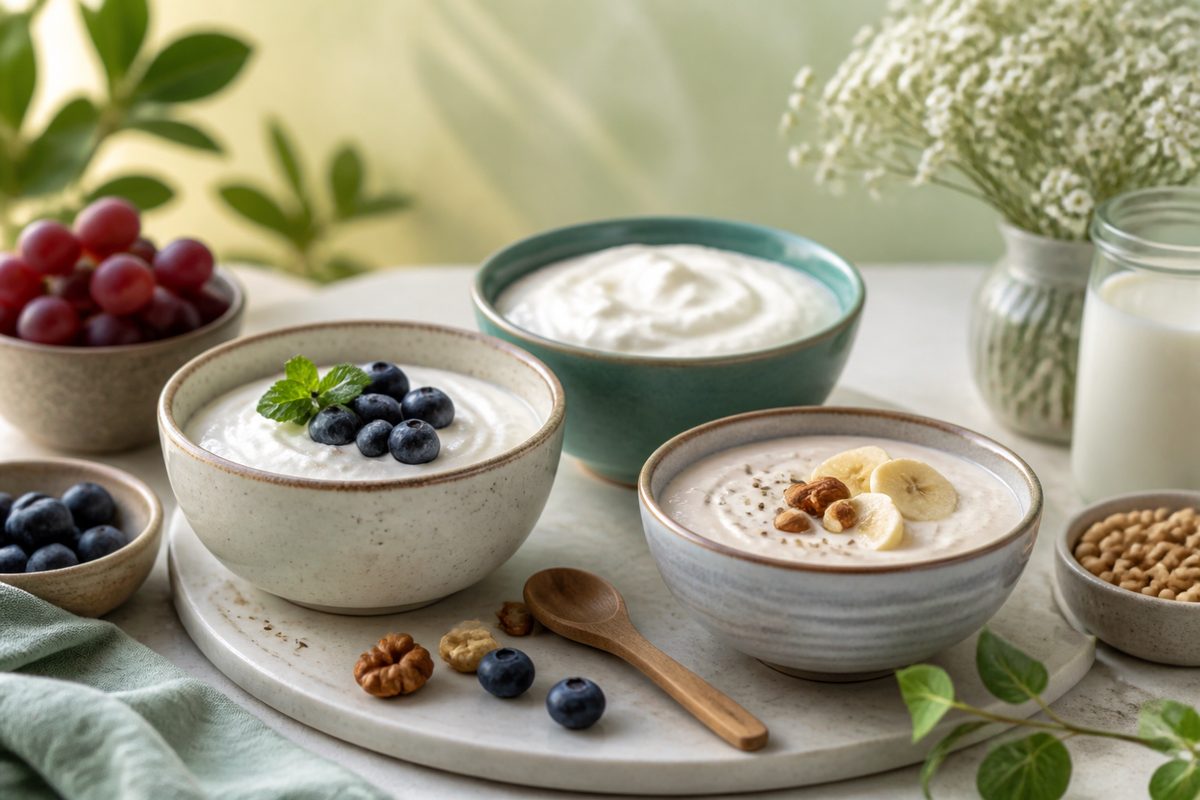
- Sweeten plain yoghurt at home with fresh berries (lower potassium than banana).
- Pairing yoghurt with high-phosphate foods (e.g. cheese, processed meats) at the same meal stacks the phosphate load — spread dairy across the day.
- Dialysis patients: discuss daily dairy intake with your renal dietitian — yoghurt is usually included, but portion size matters more.
Food first. If you are choosing a daily multivitamin alongside a balanced diet, Kidney Vitality was developed by a UK Consultant Nephrologist using renal nutrition principles. See the formulation.