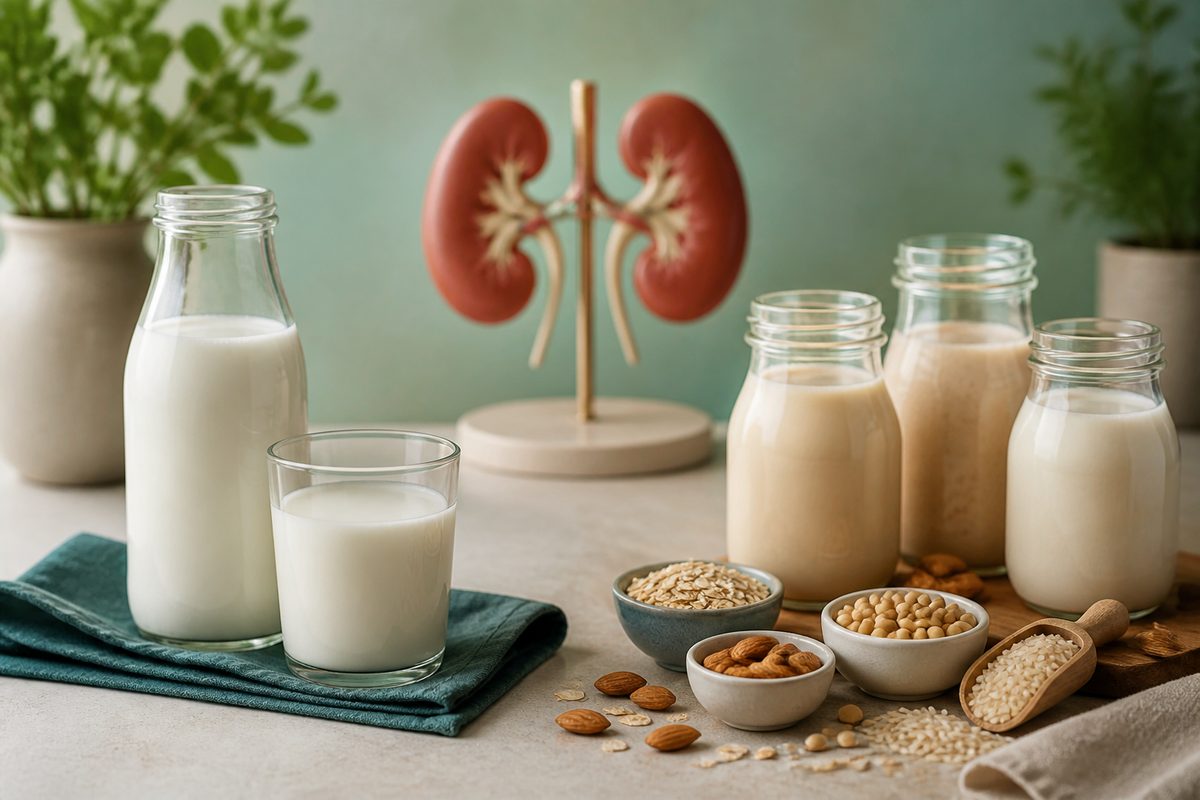
Why milk shows up on renal diet lists
Dairy is the single biggest natural source of phosphate in the typical UK diet, and a moderate source of potassium. In a healthy kidney, both are filtered and balanced effortlessly. In CKD, the kidney's ability to excrete phosphate falls (often as early as Stage 3a), and high blood phosphate accelerates vascular calcification, bone disease, and parathyroid problems. Potassium also begins to accumulate in Stage 4–5 and on dialysis.
This is why renal dietitians ask CKD patients to think about their daily dairy total, not because milk is inherently 'bad'.
Cow's milk numbers
Per 200 ml (a typical mug or bowl-of-cereal pour):
- Whole milk (3.6% fat): ~ 310 mg potassium, ~ 190 mg phosphate
- Semi-skimmed (1.8% fat): ~ 320 mg potassium, ~ 200 mg phosphate
- Skimmed (0.1% fat): ~ 330 mg potassium, ~ 210 mg phosphate
For reference, a typical UK adult takes in around 800–1,200 mg phosphate/day. In late-stage CKD the dietary target is usually 800–1,000 mg/day, and on dialysis often lower with a phosphate binder.
A practical implication: someone in CKD Stage 4 having two cups of tea with 30 ml of milk each, plus 150 ml of milk on cereal, plus 30 g of cheese, can easily reach 600 mg of dairy phosphate before any other food.
Which plant milk if you want one
General guide (always check the specific label — formulations change):
- Best options (typically lower K/P): unsweetened, unfortified almond, hazelnut or rice milk.
- Middle: oat milk — moderate potassium, often fortified — choose 'unsweetened, no added phosphate' versions.
- Watch carefully: soya milk (naturally higher in potassium and phosphate; many UK brands also fortified).
- Avoid in advanced CKD: any plant milk that lists phosphate additives in the ingredients.
Note: plant milks are often lower in protein than cow's milk. If you are using them as your main milk and need to maintain protein intake, plan compensating protein sources with your dietitian.
Practical portion advice by CKD stage
These are starting points — your renal dietitian will refine them:
- CKD Stages 1–3 with normal blood K and PO₄: no specific milk limit. Normal use in tea/coffee/cereal/cooking is fine.
- CKD Stage 4: typically 200–300 ml dairy/day total (including milk in tea, cereal and cooking), with care on cheese and yoghurt.
- CKD Stage 5 / dialysis: usually ≤ 200 ml dairy/day, often with a phosphate binder at meals. Read labels on plant milks.
- Kidney transplant on tacrolimus or ciclosporin: dairy potassium and grapefruit interactions matter — discuss with your transplant pharmacist.
Food first. If you are choosing a daily multivitamin alongside a balanced diet, Kidney Vitality was developed by a UK Consultant Nephrologist using renal nutrition principles. See the formulation.
Cheese, yoghurt and milky drinks
Don't forget that dairy isn't only milk. A 30 g portion of mature cheddar contains around 150 mg phosphate; a 150 g pot of natural yoghurt around 220 mg potassium and 180 mg phosphate; a large latte (steamed milk) easily contains 400 mg potassium and 300 mg phosphate before anything else.
If you've been asked to lower dairy, count it across the whole day — milk in tea, cereal, sauces, hot drinks, cheese on top of meals, and yoghurt at breakfast — not just the glass of milk you might or might not drink.