Acute stone management
Presentation
- Severe loin-to-groin colicky pain
- Restless, cannot get comfortable
- Nausea, vomiting
- Haematuria (visible or microscopic) in 85%
- May be febrile if infected (URGENT)
Immediate Investigations
- Urine dip + MSU
- Bloods: FBC, U&E, CRP, calcium, urate
- NON-CONTRAST CT KUB (gold standard within 14 h per BAUS/NICE NG118)
- Ultrasound first-line in pregnant women and children
Acute Treatment
- Analgesia: IM diclofenac 75 mg or rectal — first-line in normal renal function
- AVOID NSAIDs in CKD, AKI, dehydration → use IV paracetamol + opioid (morphine, fentanyl)
- Antiemetic (cyclizine, ondansetron)
- IV fluids if dehydrated (do NOT over-hydrate — this does not push stones out)
- Tamsulosin 400 mcg OD ('medical expulsive therapy') if stone 5-10 mm in lower ureter — modest benefit
- Most stones <5 mm pass within 4 weeks
Urgent Urology Referral
- Obstruction + infection (urosepsis, pyonephrosis) — emergency stent or nephrostomy
- Solitary kidney with obstruction
- AKI
- Bilateral obstructing stones
- Uncontrolled pain or vomiting
- Stone >10 mm
Stone types and metabolic causes
CALCIUM OXALATE (70%):
- Hyperoxaluria (diet, IBD, bariatric surgery, primary hyperoxaluria)
- Hypercalciuria (idiopathic, hyperparathyroidism, sarcoid, vit D excess)
- Hypocitraturia (low urinary citrate)
- Low urine volume
CALCIUM PHOSPHATE (15%):
- Distal (type 1) RTA — high urine pH
- Primary hyperparathyroidism
- Medullary sponge kidney
- High urine pH + hypercalciuria
URIC ACID (8%):
- Persistently low urine pH (<5.5)
- Diabetes, metabolic syndrome, obesity
- Gout, high purine diet, tumour lysis
- Chronic diarrhoea (alkaline loss)
STRUVITE (3%) — magnesium-ammonium-phosphate:
- Urease-producing infection (Proteus, Klebsiella, Pseudomonas, ureaplasma)
- Often staghorn — fills the collecting system
- Need surgical clearance + targeted antibiotics
CYSTINE (1%):
- Hereditary autosomal recessive cystinuria
- Hexagonal crystals on urine microscopy
- Recurrent from childhood, often staghorn
- Treatment: massive fluid intake, urinary alkalinisation, tiopronin/penicillamine
RARE: 2,8-dihydroxyadenine (APRT deficiency), xanthine, drug-induced (atazanavir, sulfadiazine, triamterene).
Metabolic work-up (after second stone)
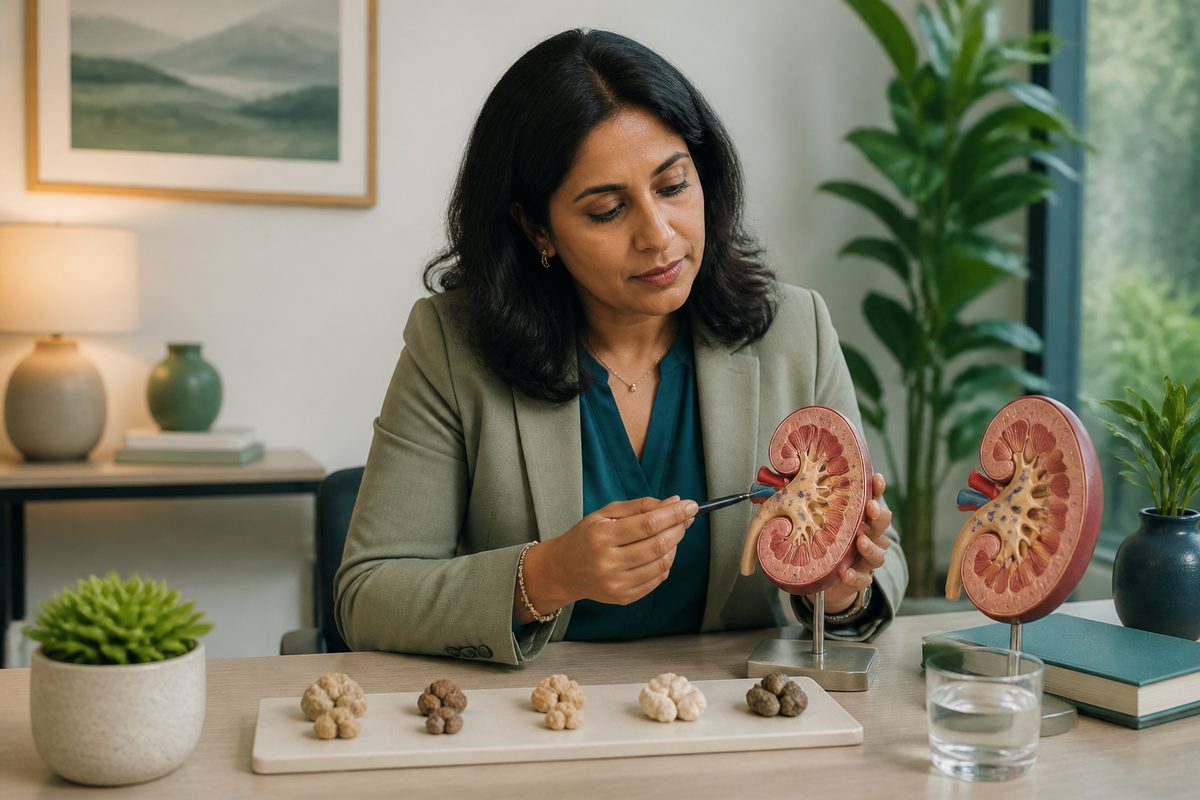
STONE ANALYSIS — single most important investigation. Strain urine for fragments, send to lab (often free service via NHS).
Bloods
- U&E, eGFR
- Bone profile (calcium, phosphate, magnesium, ALP)
- PTH (if raised calcium)
- 25-OH vitamin D
- Urate
- Bicarbonate
- Cystine (if recurrent young patient or family history)
24-HOUR URINE (2 collections, off acute treatment, on usual diet):
- Volume
- Sodium (proxy for salt intake — should be <100 mmol/day i.e. <6 g salt)
- Calcium (>7.5 mmol/day = hypercalciuria)
- Oxalate (>0.45 mmol/day = hyperoxaluria; >1 mmol = primary hyperoxaluria suspected)
- Citrate (<1.7 mmol/day = hypocitraturia)
- Urate
- Phosphate
- Creatinine (validates 24-h collection)
- pH
- Cystine (cystinuria)
Imaging
- Renal ultrasound +/- non-contrast CT for stone burden
- Consider DXA if hyperparathyroidism or chronic acidosis
WHEN TO REFER (specialist stone clinic):
- Recurrent (>1 stone)
- Children
- Single kidney
- Bilateral or staghorn stones
- Family history
- Cystinuria, primary hyperoxaluria
- Stones with CKD or RTA
Targeted prevention
For All Stone Formers
- Fluids 2.5-3 L/day (aim urine output >2.5 L/day) — biggest evidence
- Salt <5 g/day (lowers calcium excretion)
- Normal calcium 700-1000 mg/day — DO NOT restrict
- Reduce animal protein (1 g/kg/day)
- 5 portions of fruit and veg (citrate, K)
- Reduce sugar-sweetened drinks
- Weight management
Calcium Oxalate / Calcium Phosphate
- Thiazide (bendroflumethiazide 2.5-5 mg or indapamide 1.5 mg) if hypercalciuria
- Potassium citrate (or lemonade — but check K!) if hypocitraturia or calcium phosphate
- Reduce oxalate (rhubarb, spinach, beetroot, nuts, dark chocolate, strong black tea)
- Take calcium WITH oxalate meals (binds oxalate in gut)
- Treat primary hyperparathyroidism
Uric Acid
- Urinary alkalinisation: potassium citrate or sodium bicarbonate, target urine pH 6.5-7.0
- Allopurinol 100-300 mg if hyperuricaemic or recurrent
- Reduce purines (red meat, shellfish, oily fish, beer)
- Treat metabolic syndrome
Struvite
- Complete surgical clearance (PCNL)
- Long-term suppressive antibiotic (e.g. nitrofurantoin)
- Acetohydroxamic acid (urease inhibitor) — rarely used, toxic
Cystine
- 4-5 L fluid/day
- Aggressive alkalinisation (urine pH 7.0-7.5)
- Tiopronin (Thiola) or D-penicillamine
- Tertiary stone-centre care
Follow-up
- Repeat 24-h urine 3-6 months after intervention to check it worked
- Annual ultrasound
- Bone health monitoring (DXA) if on long-term alkali or thiazide
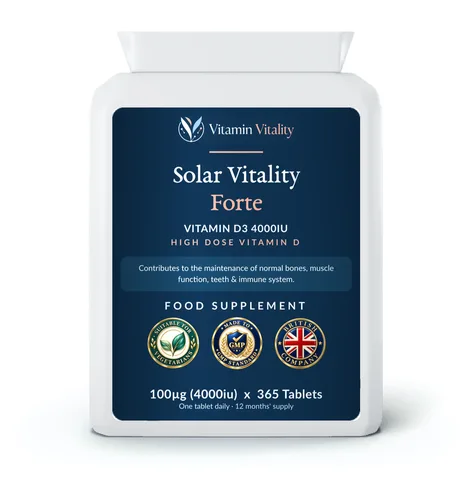
Kidney Vitality provides 75 mg vitamin C and 1000 IU vitamin D3 within a multivitamin developed using renal nutrition principles. See the formulation.