Why turkey works on a renal diet
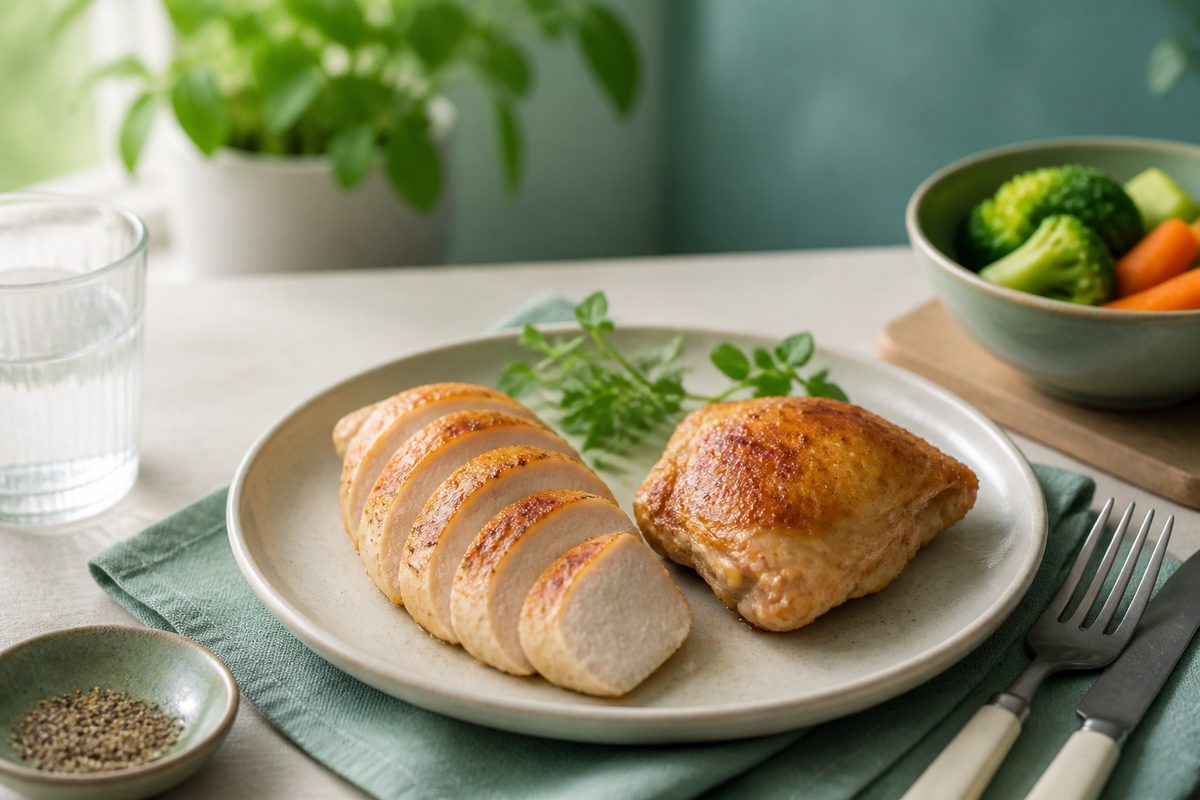
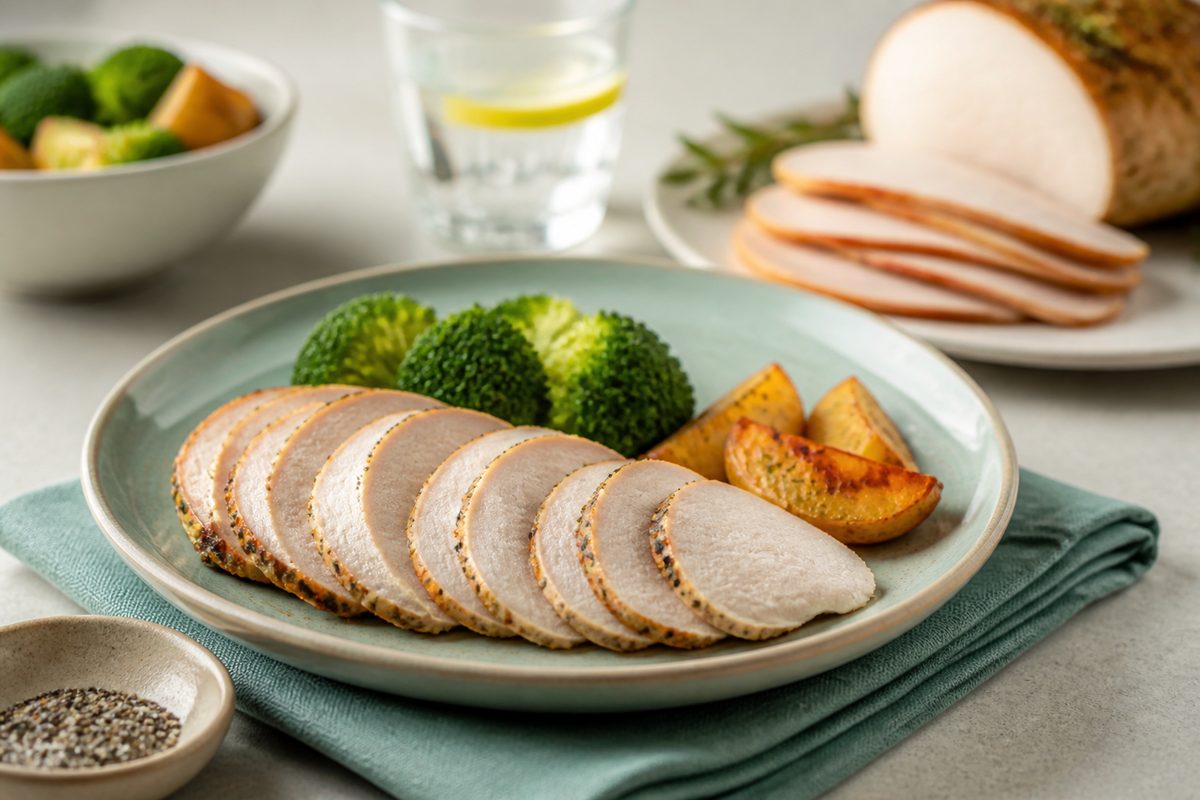
Turkey breast is one of the leanest meats available in the UK. It provides high-quality complete protein with less saturated fat than chicken thigh, lamb or pork. Mineral profile is nearly identical to chicken breast, so the same portion guidance applies.
Beware brined and basted turkey
Pre-basted, butter-basted, or 'self-basting' turkey crowns are injected with salt and phosphate solutions to keep the meat moist during roasting. Sodium content can exceed 600 mg per 100 g — three times that of a plain roast. For CKD, choose a plain free-range or organic crown and baste yourself with olive oil and herbs.
Portion by CKD stage
- Stage 1–3: 100–150 g cooked per meal.
- Stage 3b–4: 80–100 g cooked per meal.
- Stage 5 / dialysis: 100–150 g cooked per meal.
The deli turkey problem
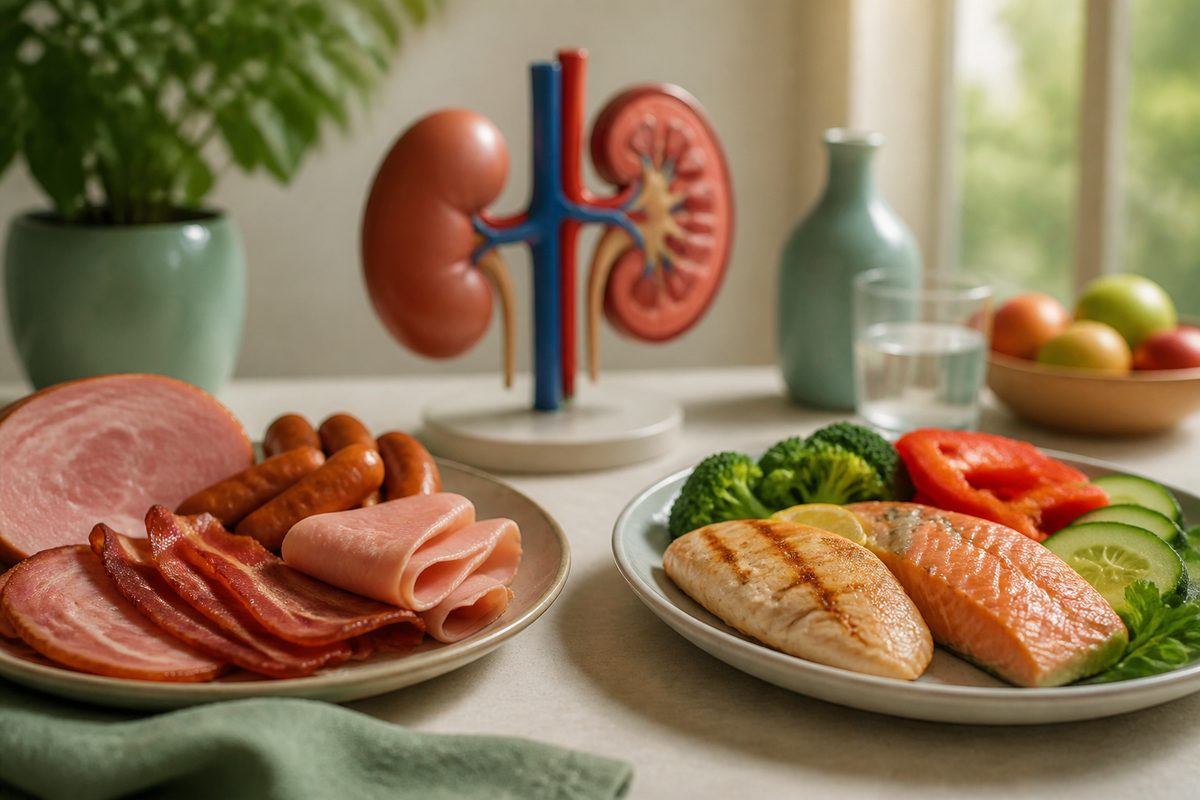
Pre-sliced turkey from the chiller cabinet is processed meat. Sodium 700–900 mg per 100 g, often with sodium phosphate, dextrose, and stabilisers. A typical sandwich (4 slices) can deliver 1.5 g sodium — most of a CKD daily allowance. Roast a turkey breast at home and slice it yourself.
Practical CKD-friendly ideas
- Roast turkey breast with rosemary and lemon — slice for sandwiches all week.
- Turkey mince stir-fry with mangetout and ginger.
- Turkey and apple burgers (homemade, no salt added) on a low-salt roll.
- Avoid: turkey bacon, turkey sausages, turkey hot dogs, and brined Christmas turkey.
Food first. If you are choosing a daily multivitamin alongside a balanced diet, Kidney Vitality was developed by a UK Consultant Nephrologist using renal nutrition principles. See the formulation.