Sweetcorn forms compared
- Boiled kernels (80 g) — 225 mg K, 70 mg P
- Tinned, drained (60 g) — 150 mg K, 55 mg P
- Corn on the cob (medium, ~ 200 g cooked) — 560 mg K, 180 mg P
- Plain popcorn (20 g) — 55 mg K, 70 mg P
- Salted/buttered popcorn (50 g cinema) — moderate K + high sodium + high fat
- Cornflakes (30 g serving) — low K, but often phosphate-fortified
Portion by CKD stage
- Stage 1–3: 100 g portions or half a cob.
- Stage 3b–4: 60–80 g portions, or share a cob.
- Stage 5 / dialysis: 60 g tinned sweetcorn, drained.
- Hyperkalaemia episode: skip until K normalises.
The corn syrup question
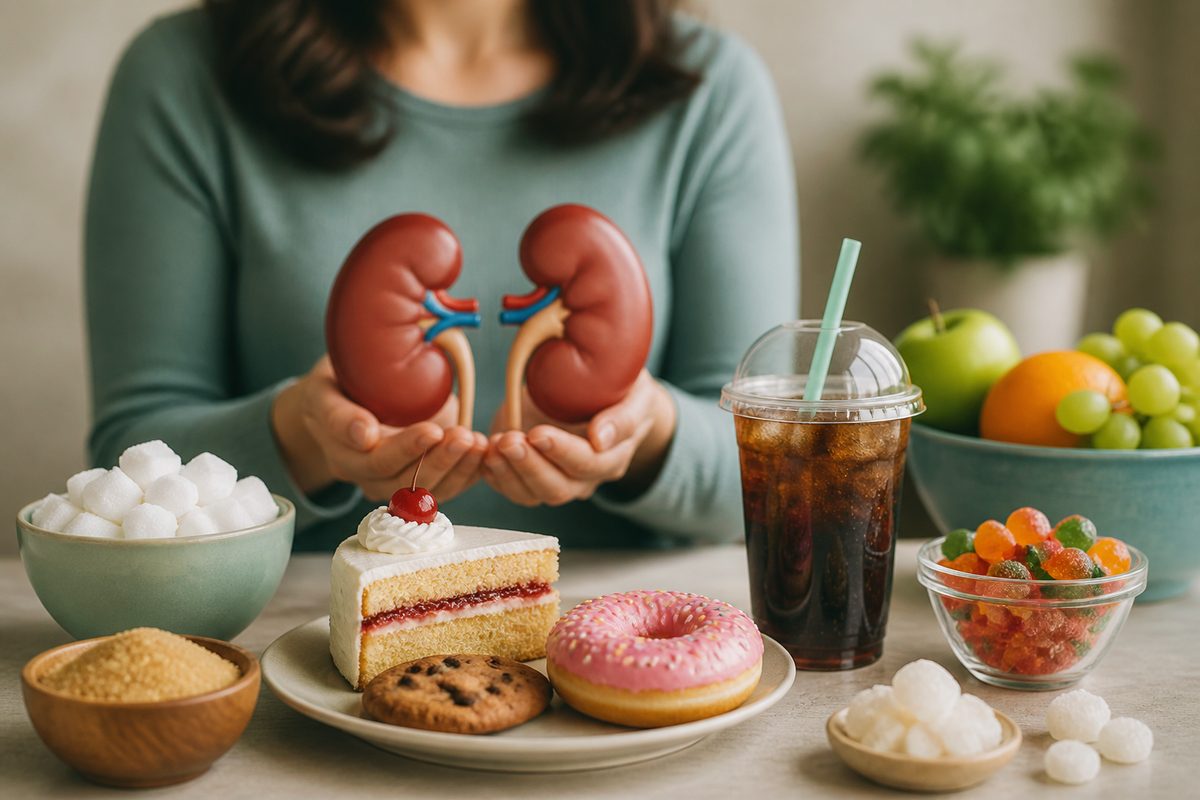
High-fructose corn syrup (HFCS) is metabolised differently to glucose and is strongly associated with insulin resistance, fatty liver and worsening kidney function in cohort studies. It's hidden in many soft drinks, breakfast cereals, sauces and processed snacks. Check labels for 'glucose-fructose syrup', 'corn syrup' or 'HFCS'. Reducing these matters more for kidney health than worrying about a side of corn.
Practical CKD-friendly ideas
- 3 tbsp drained sweetcorn stirred into rice or a side salad.
- Half a corn cob, brushed with olive oil and grilled.
- Plain air-popped popcorn (20 g) with a sprinkle of paprika.
- Avoid: regular soft drinks (HFCS), 'sweet chilli sweetcorn' tinned products, cornflakes with phosphate additives.
Food first. If you are choosing a daily multivitamin alongside a balanced diet, Kidney Vitality was developed by a UK Consultant Nephrologist using renal nutrition principles. See the formulation.