Why peas need a closer look than green beans
Unlike green beans, mature garden peas are technically a pulse — the mineral profile reflects that. Phosphate especially is higher than most non-pulse vegetables, and combined with moderate potassium, peas can become a hidden source in renal diets when piled generously.
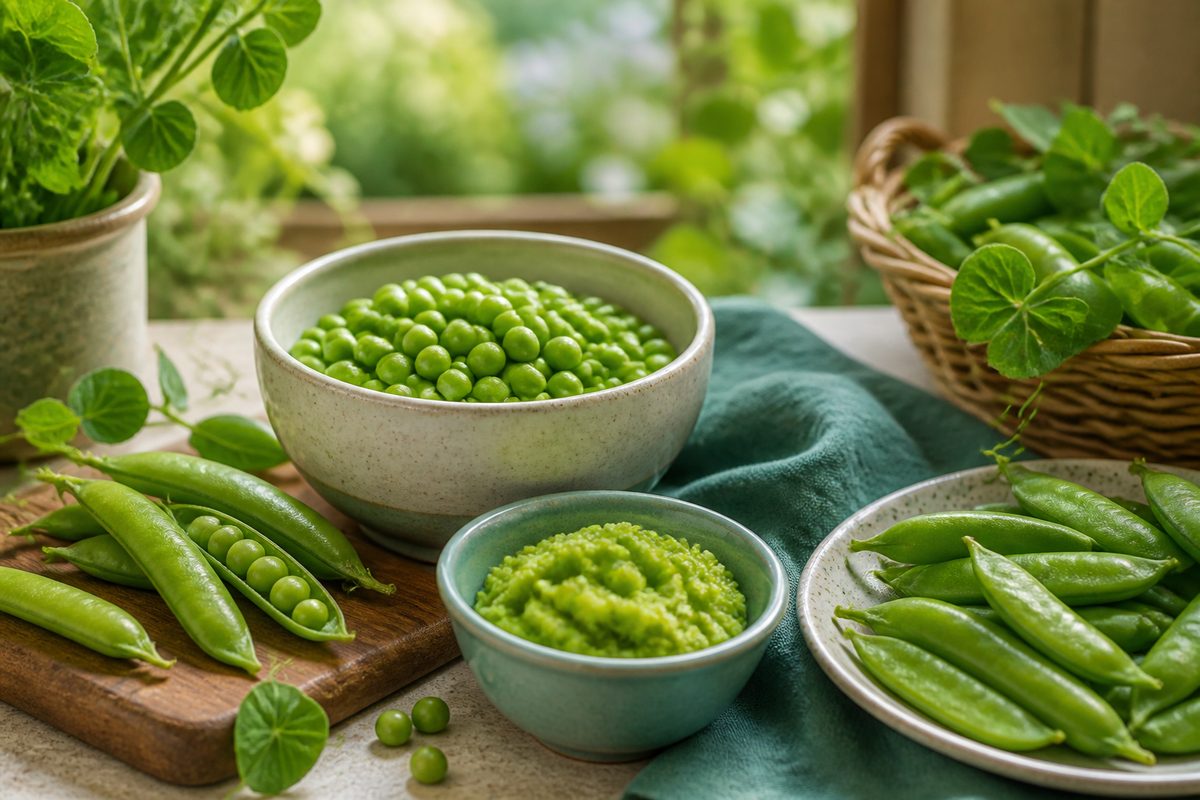
Pea types compared per 100 g
- Garden peas (frozen) — 240 mg K, 110 mg P
- Mangetout — 200 mg K, 55 mg P
- Sugar snap peas — 210 mg K, 60 mg P
- Mushy peas (canned, with salt) — 240 mg K, 400+ mg Na
- Petit pois — similar to garden peas
- Pea shoots (salad) — low; treat like lettuce
Portion by CKD stage
- Stage 1–3: 100 g portions, fine.
- Stage 3b–4: 80 g portions.
- Stage 5 / dialysis: 60–80 g; favour mangetout/sugar snap.
- Dialysis with high phosphate: limit garden peas; use mangetout.
Practical CKD-friendly ideas
- Mangetout stir-fried with garlic and a splash of low-sodium soy.
- 80 g frozen peas added to plain rice for colour.
- Pea and mint side: peas, lemon zest, fresh mint, olive oil.
- Homemade mushy peas (frozen peas, butter substitute, mint) — no added salt.
- Avoid: pea + ham hock soup (sodium), pea + cheese pasta (phosphate).
Food first. If you are choosing a daily multivitamin alongside a balanced diet, Kidney Vitality was developed by a UK Consultant Nephrologist using renal nutrition principles. See the formulation.