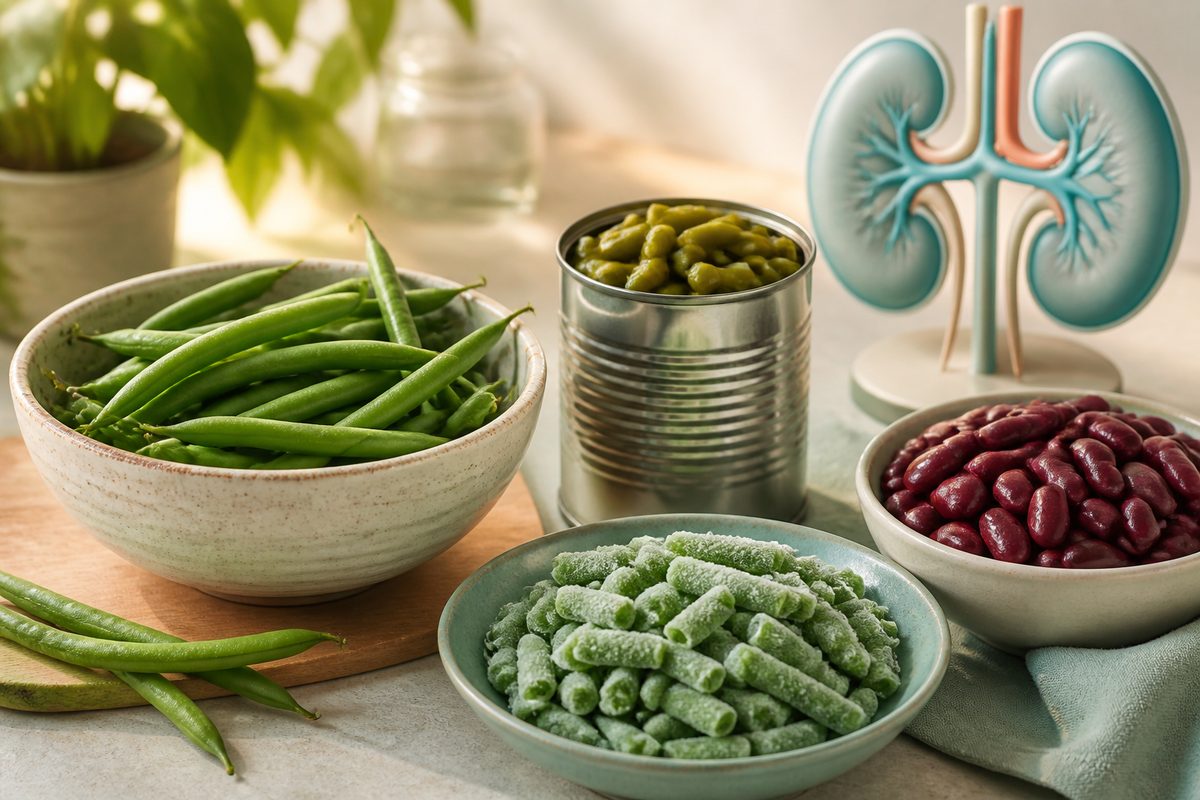
Green beans vs kidney beans — a common confusion
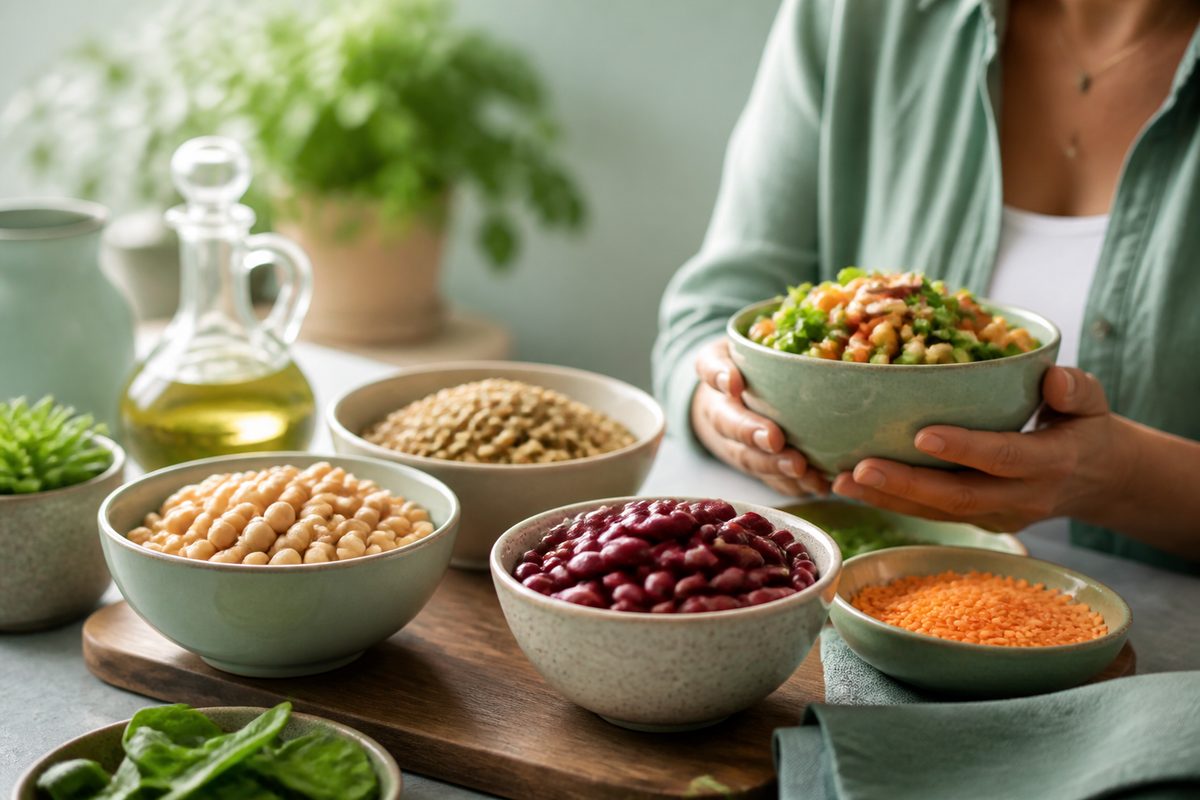
Green beans, French beans, runner beans and string beans are immature pods eaten whole. Kidney beans, butter beans, black beans and pinto beans are dried mature seeds (pulses). Pulses are much higher in potassium, phosphate and protein — they need portion control in CKD (see our pulses guide). Green beans do not.
Portion by CKD stage
- Stage 1–3: 100–150 g portions, daily.
- Stage 3b–4: 80–100 g portions.
- Stage 5 / dialysis: 80 g portions, fine.
- Hyperkalaemia: still safe in modest portions.
Fresh vs frozen vs tinned
- Fresh: ~ 240 mg K/100 g raw, ~ 210 mg boiled.
- Frozen: nutritionally near-identical to fresh; very practical.
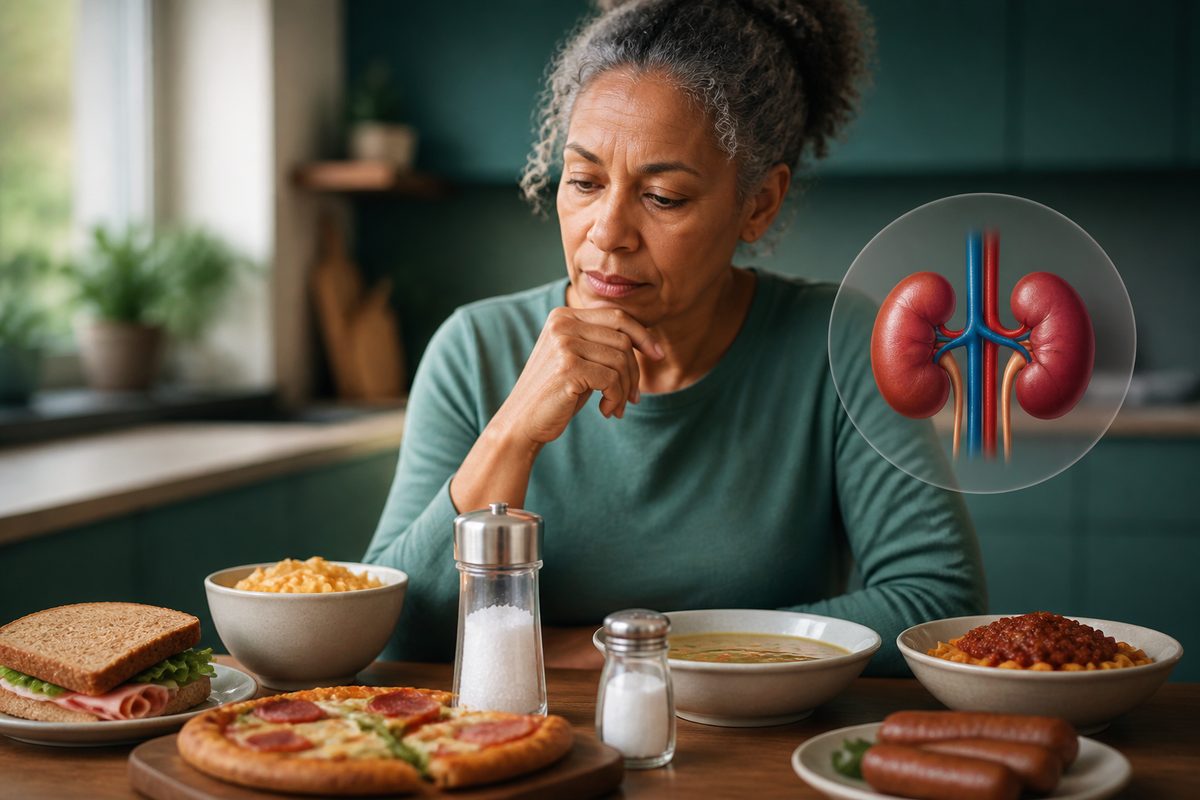
- Tinned in brine: ~ 250 mg sodium per 100 g — drain and rinse, this removes most surface sodium.
- Avoid tinned 'green bean casserole' style products with creamy sauces (phosphate additives).
Practical CKD-friendly ideas
- Boiled green beans with olive oil, lemon and pepper — classic side.
- Steamed green beans with garlic and toasted almonds (sprinkle, not handful — nuts are high-K).
- Stir-fried green beans with ginger and a splash of low-sodium soy.
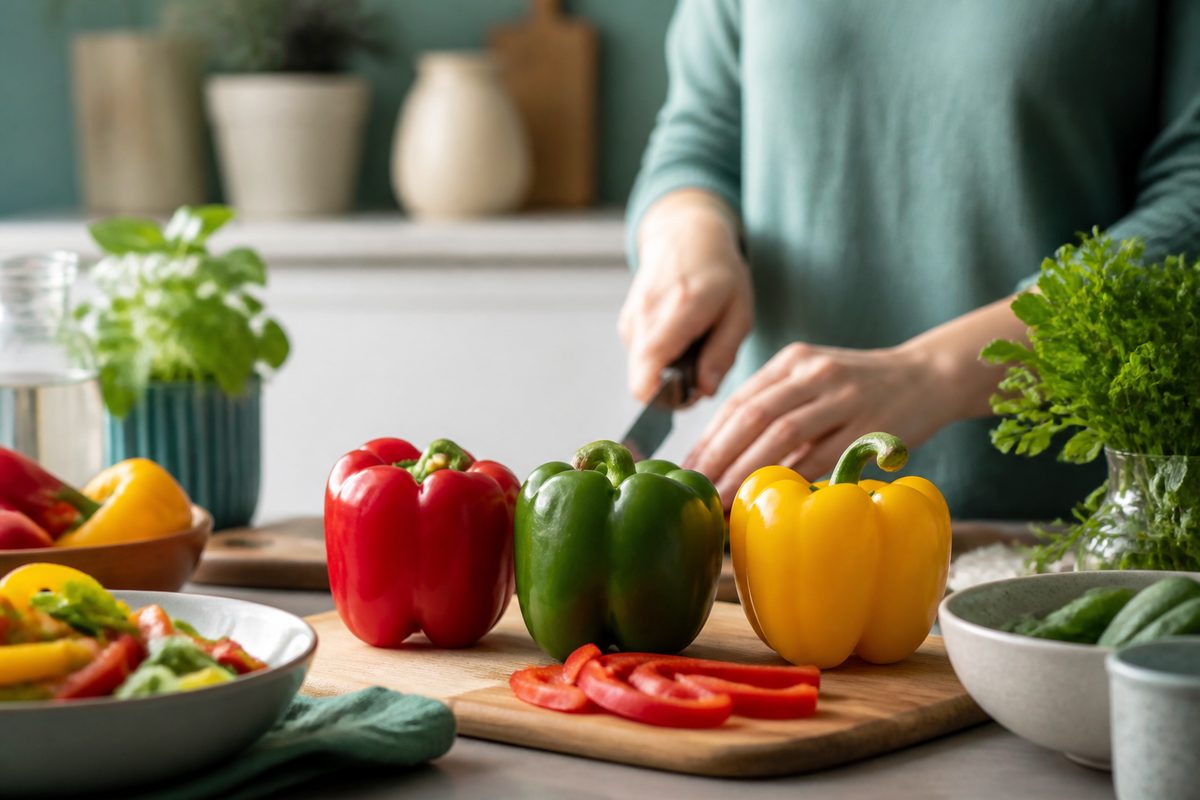
- Mixed-veg traybake: green beans + peppers + courgette + olive oil.
- Avoid: green bean casserole with cream of mushroom soup (sodium + phosphate).
Food first. If you are choosing a daily multivitamin alongside a balanced diet, Kidney Vitality was developed by a UK Consultant Nephrologist using renal nutrition principles. See the formulation.