What's in a typical UK sausage
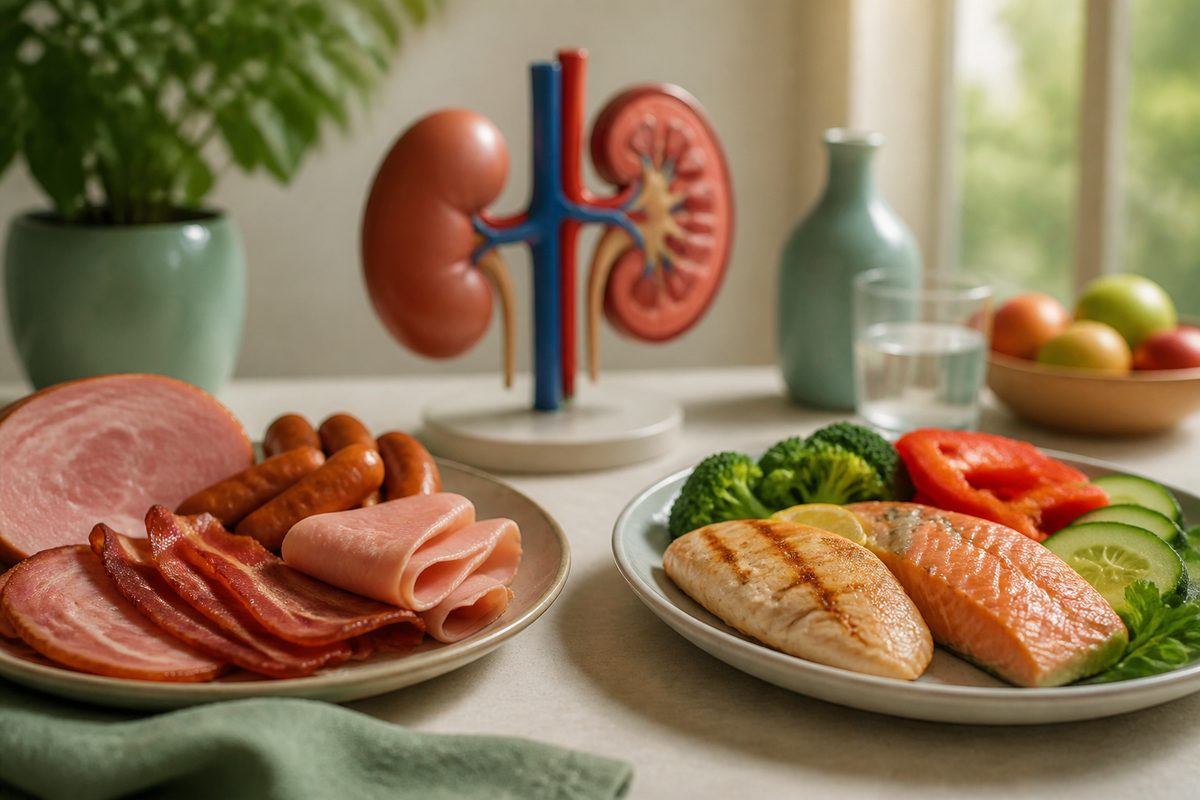
A standard pork sausage contains roughly 60–80% pork, rusk or breadcrumbs, water, salt (1.5–2.5%), preservatives and flavourings. Per 100 g: 250–350 kcal, 20–30 g fat (8–12 g saturated), 600–900 mg sodium, and 12–16 g protein. The problem for CKD is not the pork itself — it is the salt, the phosphate additives and the saturated fat added during processing.
Sodium — why sausages are a salt bomb
Salt is essential for sausage texture and preservation, which means most sausages are very salty. A single 50 g sausage can deliver 300–500 mg sodium. Eat two or three with a salty gravy and you have consumed most of a day's renal sodium target in one meal. People with CKD and high blood pressure should be especially cautious.
Phosphate additives in processed sausages
Mass-market sausages often contain E450 (diphosphates), E451 (triphosphates) or E452 (polyphosphates) to bind water and give a firm bite. These additive phosphates are absorbed at 80–100% in the gut, directly raising blood phosphate. In CKD, high phosphate accelerates vascular calcification and bone disease. Butcher-made sausages or brands that specifically state 'no artificial additives' usually avoid these E-numbers.
Saturated fat and cardiovascular risk
People with CKD have a 10–20× higher risk of cardiovascular disease than the general population. Sausages are high in saturated fat, which raises LDL cholesterol. The National Institute for Health and Care Excellence (NICE) recommends limiting saturated fat in CKD. Grilling rather than frying removes some fat, but the saturated fat inside the sausage remains.
Choosing a renal-friendly sausage
- Check the ingredients: avoid E450, E451, E452.
- Check sodium: aim for < 400 mg per 100 g (or < 200 mg per sausage).
- Choose leaner varieties: chicken, turkey or lean pork sausages.
- Buy from a butcher who makes sausages without phosphate additives.
- Avoid 'value' or economy ranges — these tend to have the most additives.
- Look for reduced-salt options, but still read the additive list.
Food first. If you are choosing a daily multivitamin alongside a balanced diet, Kidney Vitality was developed by a UK Consultant Nephrologist using renal nutrition principles. See the formulation.
How to build a renal-friendly sausage meal
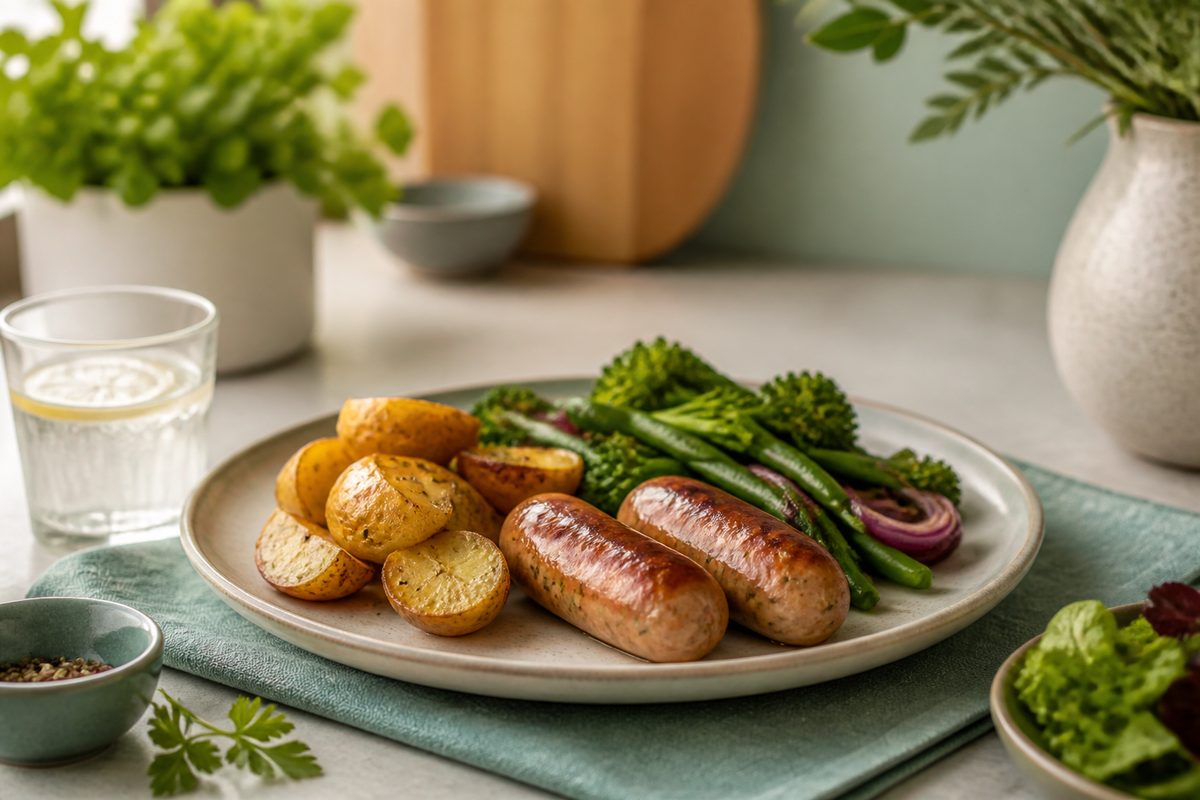
- Portion: 1–2 small sausages (not 3–4).
- Cooking: grill or bake on a rack so fat drips away.
- Sides: mashed potato (double-boiled if on potassium restriction), steamed cabbage or carrots, and plain gravy made from scratch (not granules).
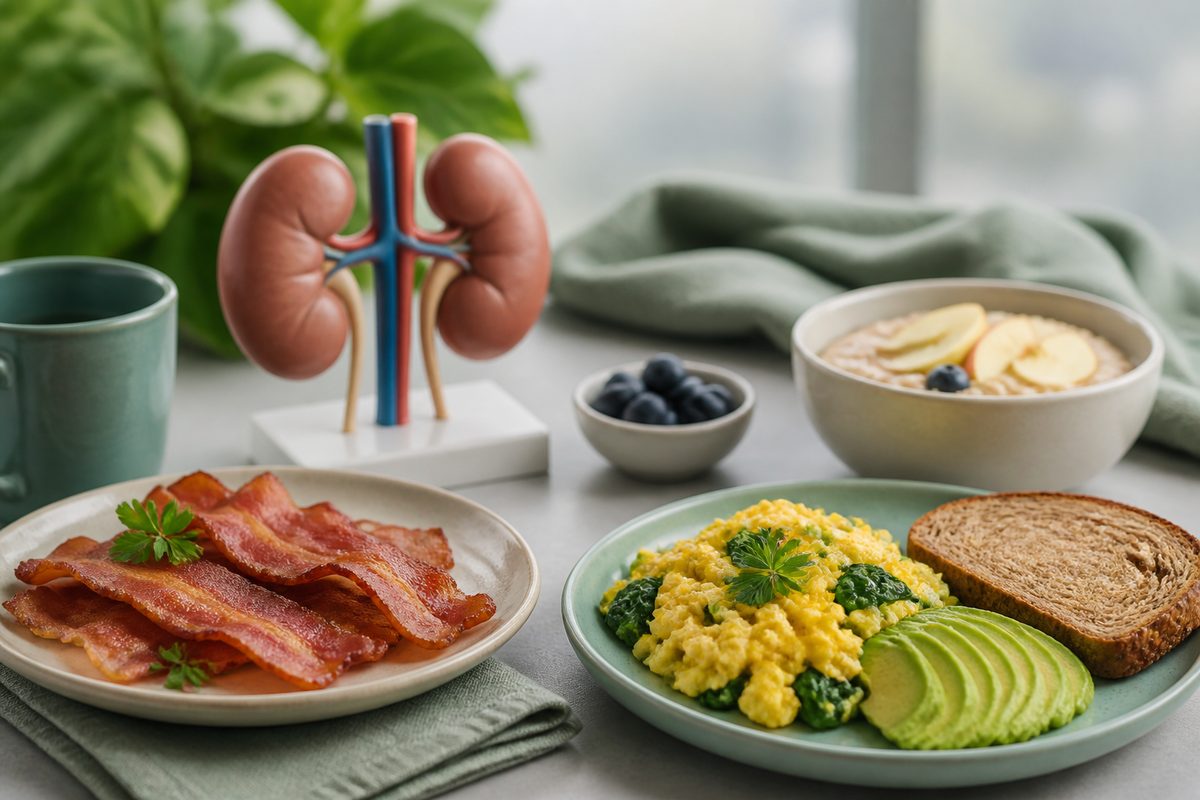
- Avoid: bacon alongside sausages, fried eggs, fried bread, baked beans in salty sauce, and processed meat 'mixed grill' combinations.
- Gravy: make your own with cornflour, meat juices and herbs — not stock cubes or granules.