The sodium load
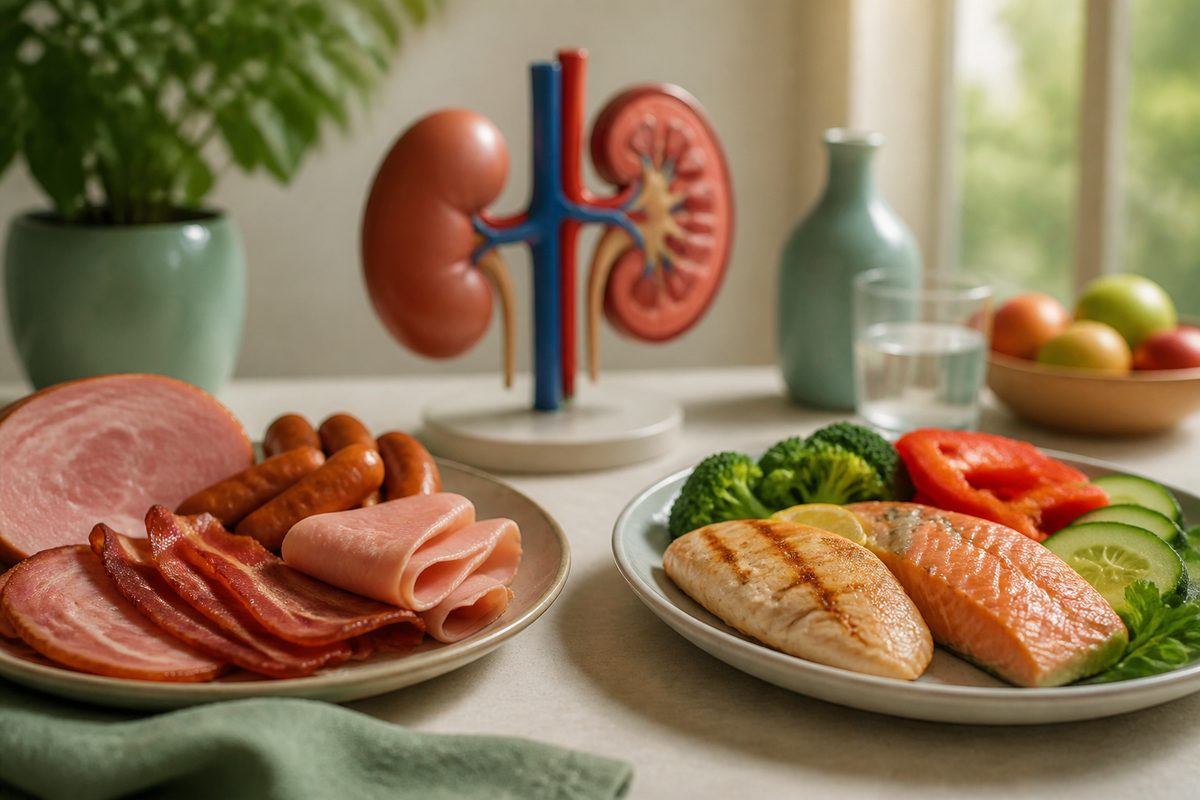
UK supermarket back bacon averages 1.7–2.5 g salt per 100 g. A typical two-rasher serving (~ 50 g) delivers 850–1,250 mg salt — roughly half the daily NHS 6 g salt target in one breakfast item. For CKD with hypertension or fluid overload, this is significant.
Phosphate additives in cured meats
Sodium phosphates (E339, E450, E451, E452) are used in bacon curing to retain water and improve texture. These inorganic phosphates are ~ 90% absorbed, compared with ~ 40–60% for plant-bound phosphate. In advanced CKD, repeated exposure raises serum phosphate, drives vascular calcification, and worsens bone-mineral disease.
Nitrites and cardiovascular risk
Bacon curing uses sodium nitrite (E250). The WHO IARC classifies processed meat as a Group 1 carcinogen (colorectal cancer). Cardiovascular disease is already the leading cause of death in CKD — every additional risk factor matters.
Renal-friendly breakfast swaps
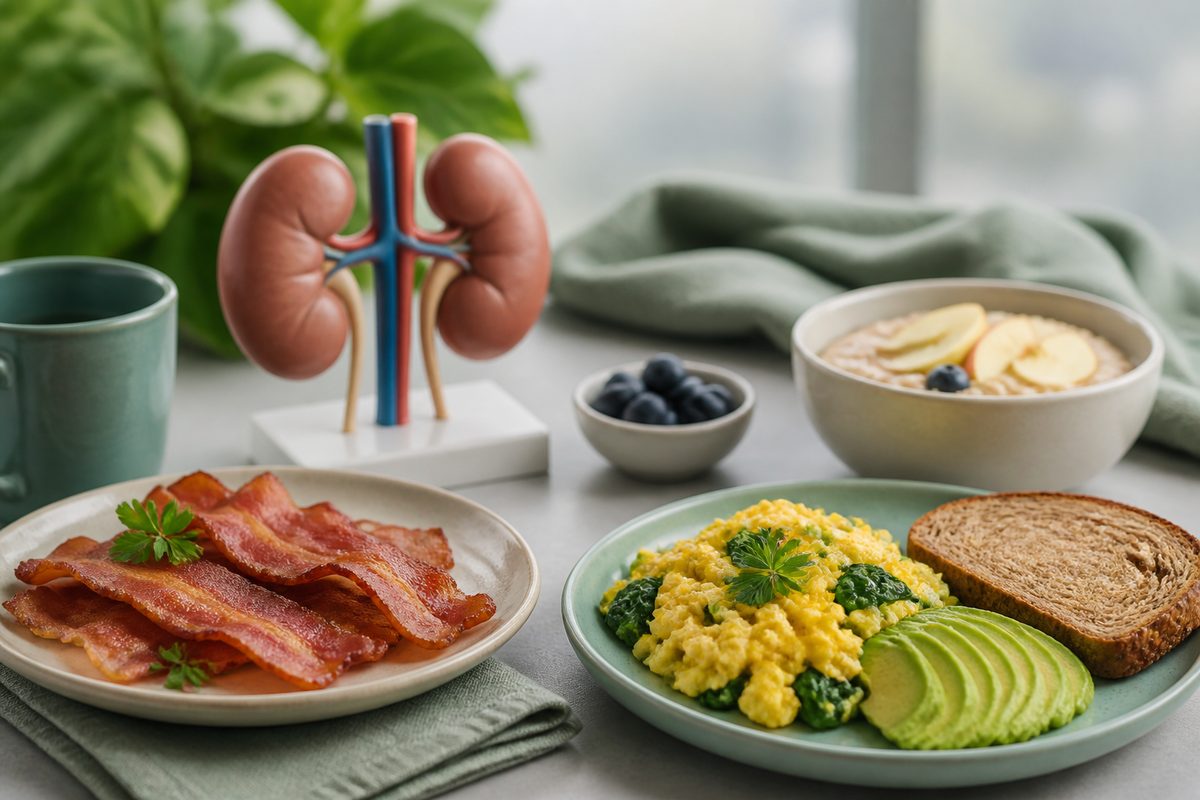
- 1–2 poached or scrambled eggs (use minimal salt).
- Small portion of plain grilled chicken thigh.
- 30 g cold smoked salmon (still salty — use sparingly).
- Mushrooms sautéed in olive oil with herbs.
- Avoid: bacon, sausages, ham, chorizo, black pudding on a regular basis.
Food first. If you are choosing a daily multivitamin alongside a balanced diet, Kidney Vitality was developed by a UK Consultant Nephrologist using renal nutrition principles. See the formulation.