Why kiwi sits between low- and high-K fruit
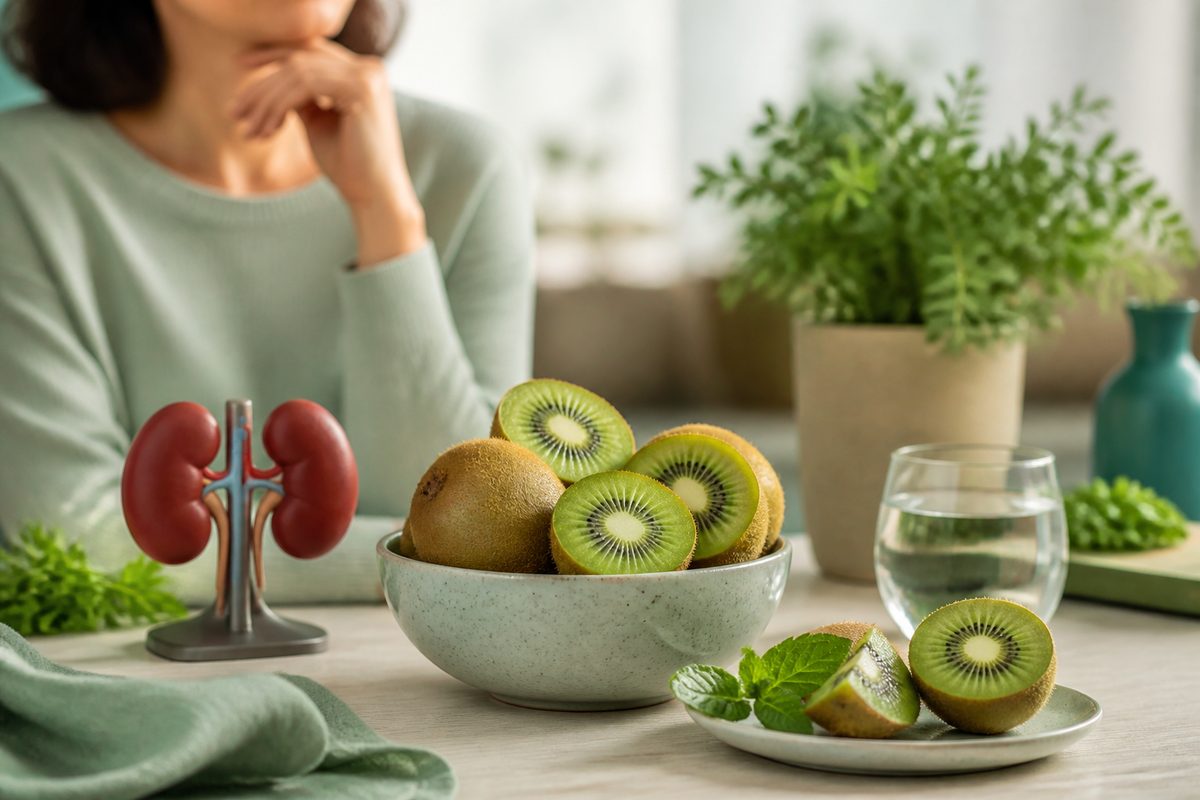
Kiwi is small but nutrient-dense. A single small fruit delivers more vitamin C than an orange and useful fibre, but its potassium per 100 g is genuinely higher than most renal-friendly fruits (apple, pear, berries, pineapple). It sits in the 'eat with awareness' bracket rather than the 'eat freely' or 'avoid' brackets.
Portion by CKD stage
- Stage 1–3: 1–2 kiwis per day, no restriction.
- Stage 3b–4: 1 small kiwi per day.
- Stage 5 / dialysis: 1 small kiwi per day if K is stable; halve if recently raised.
- Calcium-oxalate stone history: limit and pair with calcium-containing food.
Benefits worth keeping
- Vitamin C: ~ 90 mg per kiwi — supports iron absorption from plant foods, relevant in CKD anaemia.
- Soluble fibre: helps cholesterol and bowel function (constipation is common on phosphate binders).
- Actinidin: a natural enzyme that aids protein digestion.
- Low phosphate (~ 25 mg per 100 g).
Practical CKD-friendly ideas
- Slice one small kiwi into porridge.
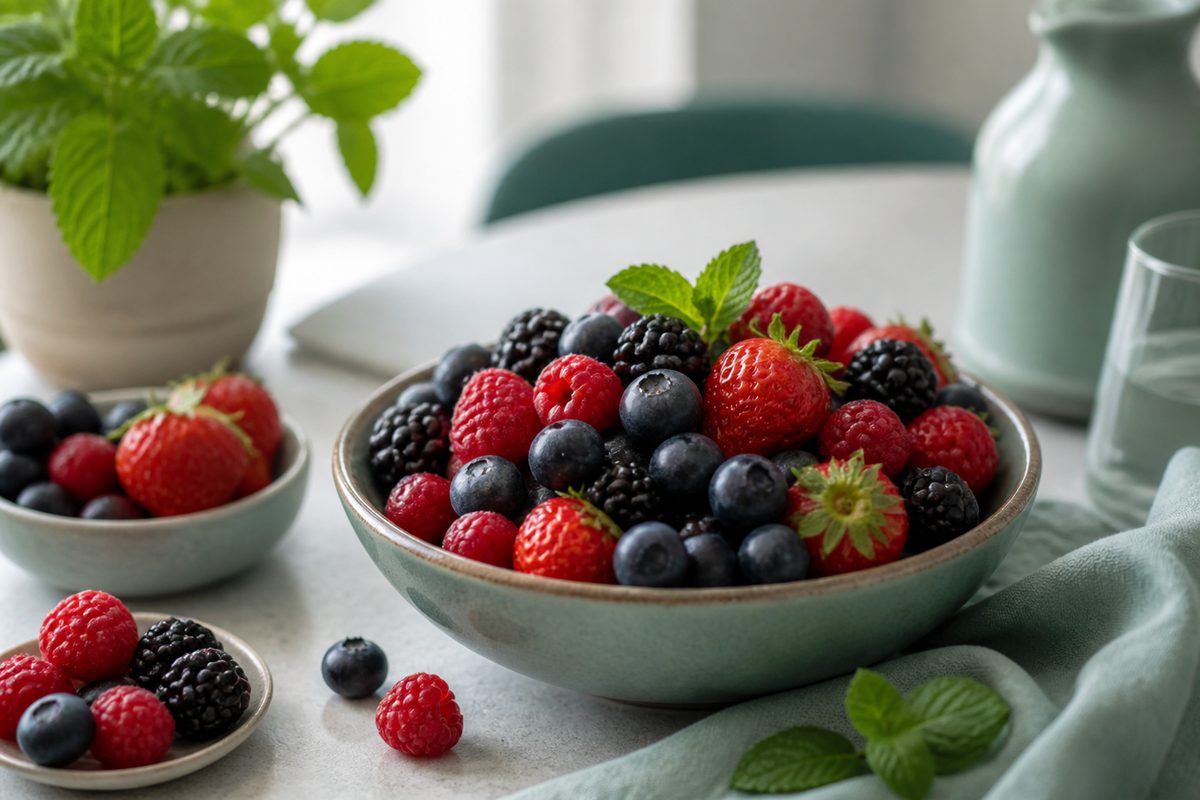
- Pair with low-fat yoghurt and a small handful of berries.
- Avoid 'tropical smoothie' blends combining kiwi + mango + banana + pineapple — total K easily over 700 mg.
- Kiwi sorbet (homemade) as a low-salt alternative to ice cream.
- Avoid dried kiwi — concentrated potassium and sugar.
Food first. If you are choosing a daily multivitamin alongside a balanced diet, Kidney Vitality was developed by a UK Consultant Nephrologist using renal nutrition principles. See the formulation.