Why oranges come up in renal clinics
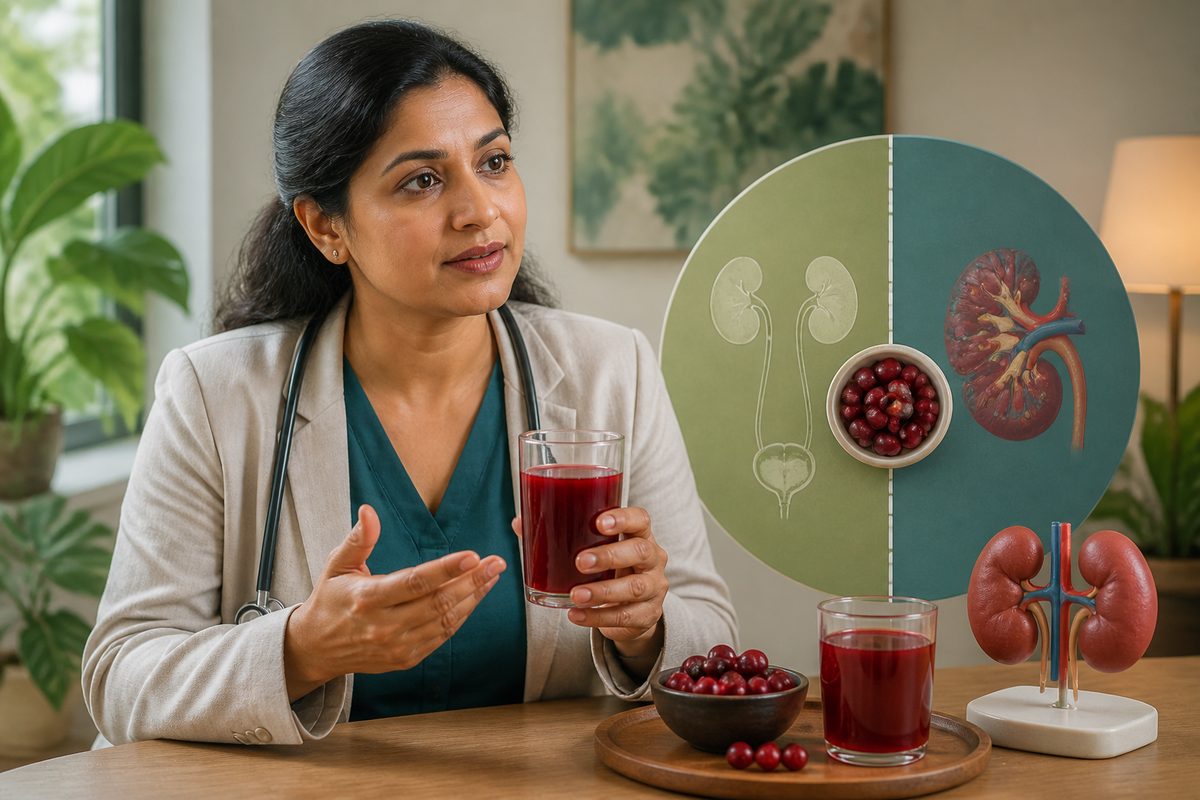
Oranges and orange juice appear on most renal-dietitian 'limit' lists for one reason: potassium. The kidneys keep serum potassium in a narrow range (3.5–5.0 mmol/L), and as kidney function declines, that control slips. High serum potassium (hyperkalaemia, > 5.5 mmol/L) can disturb the heart rhythm.
NICE NG203 and KDOQI 2020 recommend individualised potassium advice in CKD rather than blanket bans. So 'no oranges' is rarely the right answer — 'how much, in what form, and how often' usually is.
Whole fruit vs juice — the biggest distinction
A medium 130 g orange contains roughly 240–280 mg of potassium and brings fibre with it. A 200 ml glass of pure orange juice is 400–500 mg of potassium with almost no fibre and a large dose of fructose. From a CKD and metabolic perspective, whole fruit is almost always the better choice — it delivers less concentrated potassium, slower sugar absorption, and the additional fibre your gut microbiome benefits from.
If you're on a fluid restriction, juice also counts as fluid; many patients are surprised by how quickly a couple of juice glasses eat into their daily allowance.
Oranges, citrate and kidney stones
Oranges are a useful natural source of citrate. Urinary citrate binds calcium in urine and reduces the formation of calcium-oxalate stones — the most common stone type. Several international stone-prevention guidelines (American Urological Association, EAU) consider citrus juice (particularly lemon and orange) as a possible adjunct in some stone-formers.
In CKD, the potassium and calorie load of juice can offset that benefit, so a sensible compromise is whole fruit plus plain water for hydration. If you've formed two or more stones, a 24-hour urine analysis at a stone clinic is the proper way to personalise this.
When to be more careful
Be more careful with oranges — and especially orange juice — if any of the following apply:
- CKD Stage 4–5 or on dialysis.
- Last serum potassium ≥ 5.5 mmol/L.
- Taking ACE inhibitors (e.g. ramipril), ARBs (e.g. losartan), aldosterone antagonists (e.g. spironolactone) or potassium-sparing diuretics.
- Type 2 diabetes with weight-loss or blood-glucose goals — juice spikes glucose quickly.
- On a fluid restriction.
In any of these situations, share your most recent blood results and your typical fruit/juice intake with a renal dietitian for personalised advice.
Practical swaps and ideas
If you've been asked to reduce potassium without giving up the citrus hit:
- Swap a glass of orange juice for half a glass diluted with water, or for a small mandarin.
- Add a few slices of orange to a salad instead of a whole orange as a snack.
- Use lemon zest and juice generously — far less potassium per portion than orange juice, and the citrate effect is similar.
- Choose apple, berries, grapes, pineapple or watermelon for everyday snacking.
- Avoid 'multivitamin' fruit juices and 'green' smoothies fortified with banana, coconut water or spinach — they stack potassium quickly.
Food first. If you are choosing a daily multivitamin alongside a balanced diet, Kidney Vitality was developed by a UK Consultant Nephrologist using renal nutrition principles. See the formulation.
Bottom line
Whole oranges in sensible portions are a kidney-friendly food for most people with CKD, and they bring some genuine benefits (citrate, vitamin C, folate, fibre). Orange juice is the harder item — concentrated potassium and sugar, often counted in fluid restrictions. Bring your current intake and your latest potassium result to your renal clinic and let your dietitian fine-tune the limit for you.