Why beetroot needs careful framing
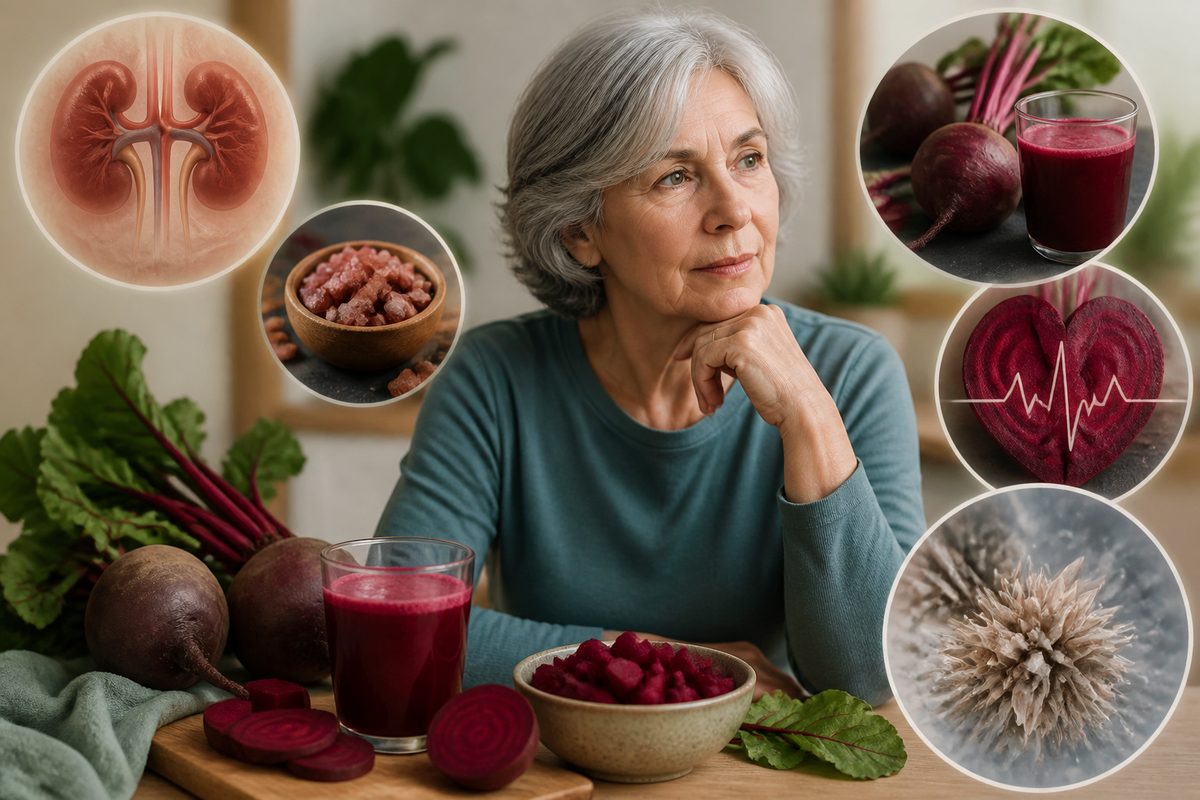
Beetroot has genuine cardiovascular benefits from dietary nitrate — meta-analyses in healthy adults and hypertensive patients show modest reductions in systolic BP. But it's one of the highest oxalate foods in the UK diet (alongside spinach, rhubarb and almonds). Concentrated beetroot juice has been linked in case reports to acute oxalate nephropathy and irreversible CKD progression.
Portion by CKD stage
- Stage 1–2 with normal K and no stone history: 50–80 g cooked beetroot, occasional 70 ml juice shot.
- Stage 3a: 50 g cooked beetroot, no juice.
- Stage 3b+ / dialysis / stone formers / nephrotic: avoid beetroot juice; cooked beetroot in 50 g portions only.
- Acute oxalate exposure (juice cleanses): don't.
Forms compared
- Roasted beetroot (50 g) — 160 mg K, 350 mg oxalate.
- Pickled (50 g, drained) — 130 mg K, 350 mg oxalate, + ~ 250 mg Na.
- Beetroot juice (70 ml shot) — ~ 230 mg K, ~ 200 mg oxalate.
- Beetroot juice (250 ml glass) — ~ 800 mg K, ~ 700 mg oxalate.
- Beetroot powder / pre-workout — variable; check label, often very concentrated.
Practical CKD-friendly approach
- Treat beetroot as an occasional flavour element, not a daily superfood.
- Roasted beetroot wedges in a salad with goat's cheese (small amount) and olive oil.
- Skip 'beetroot juice cleanses' regardless of CKD stage.
- For BP support, focus on the proven pillars: low sodium (< 6 g salt/day), DASH-style eating, weight, exercise, alcohol limits — not a single 'superfood'.
- Avoid pre-workout 'beet shots' if you have any oxalate risk.
Food first. If you are choosing a daily multivitamin alongside a balanced diet, Kidney Vitality was developed by a UK Consultant Nephrologist using renal nutrition principles. See the formulation.