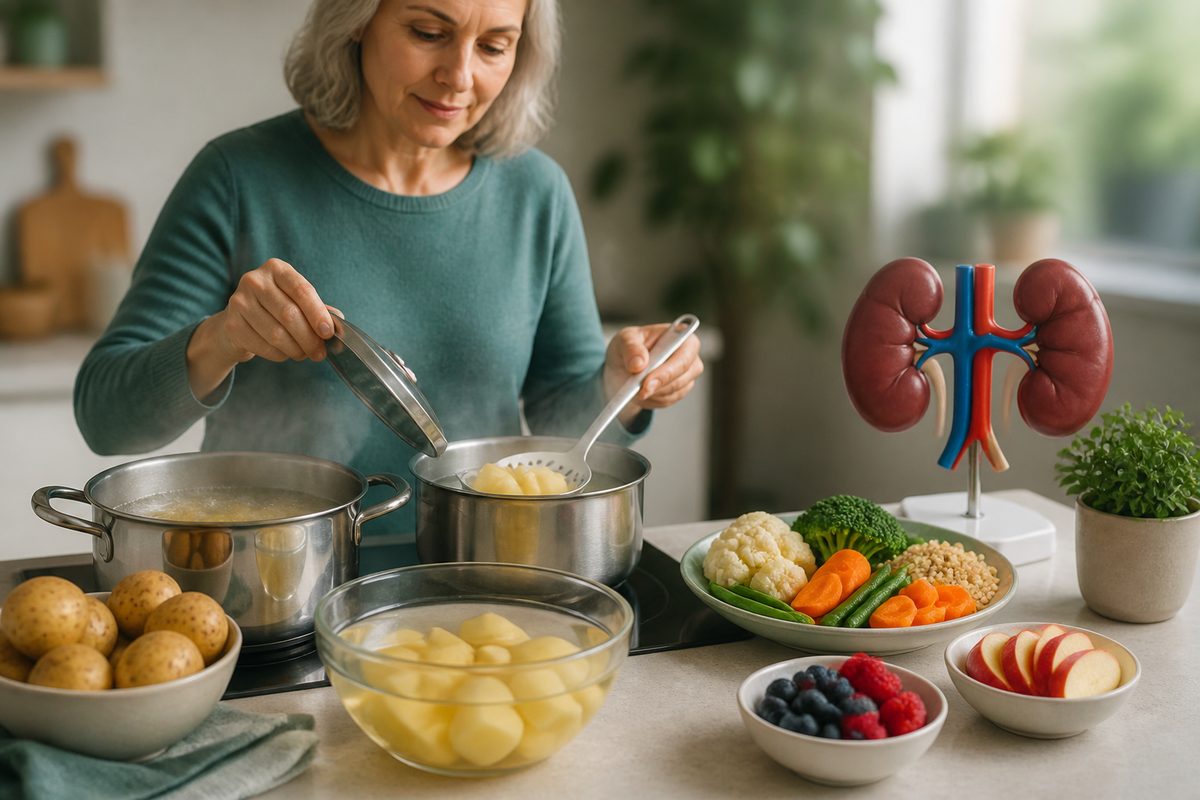
Why carrots fit a renal diet
Carrots sit in moderate-potassium territory and bring useful nutrients: beta-carotene (converted to vitamin A in the body — safer than supplemental vitamin A which can accumulate in CKD), fibre, and natural sweetness that helps replace salt as a flavour driver.
Boiling further reduces potassium by ~ 25%. Roasting concentrates K slightly because water evaporates.
Forms compared
- Raw carrot (one medium, 70 g) — ~ 170 mg K
- Boiled & drained carrot (100 g) — ~ 180 mg K
- Roasted carrot (100 g) — ~ 250 mg K
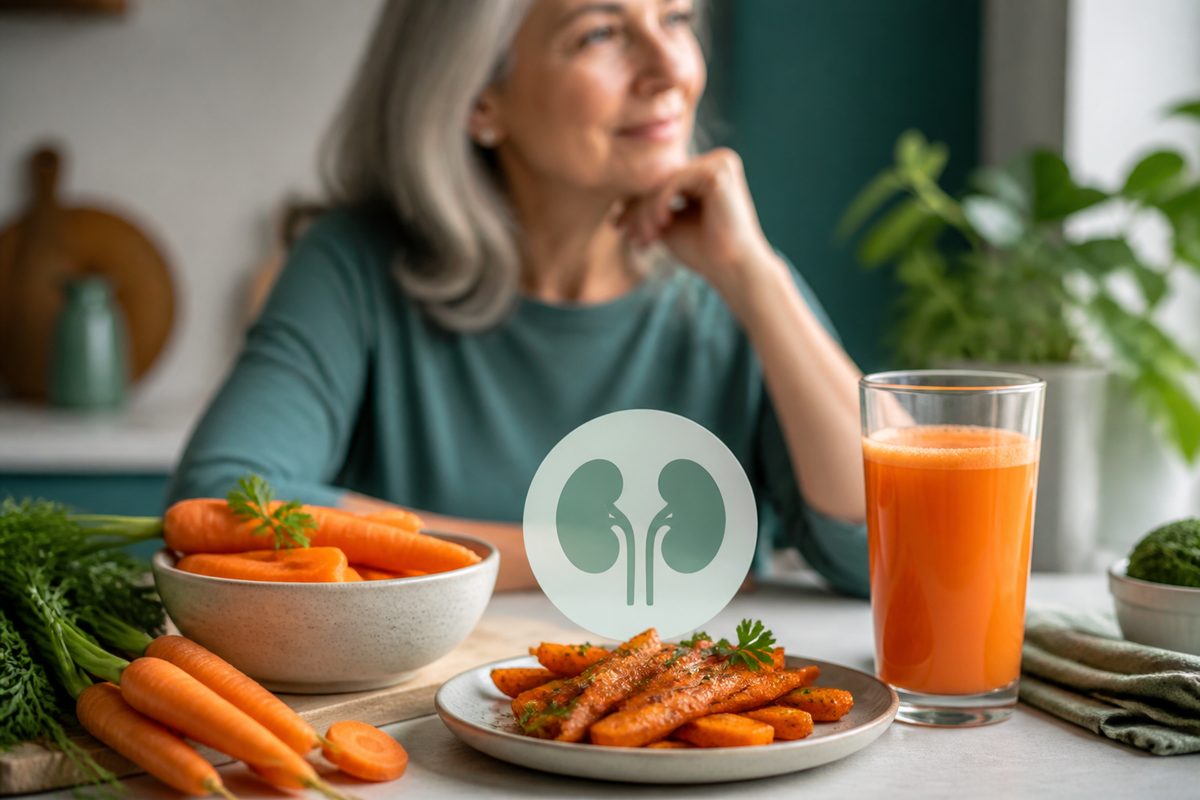
- Carrot juice (250 ml) — ~ 590 mg K ❌
- Carrot cake (60 g slice) — moderate K but high sugar + phosphate from baking powder
Portion by CKD stage
- Stage 1–4: 100–150 g per portion, daily.
- Stage 5 / dialysis: 80–100 g boiled per portion.
- Avoid carrot juice and raw carrot 'cleansing' regimes.
- Carrot batons as a snack: limit to 1 medium carrot at a time.
Practical CKD-friendly ideas
- Boil and mash with swede for a low-K orange mash (lower than potato).
- Roast carrot batons with olive oil and cumin — boil first for 5 min if stricter K target.
- Add grated carrot to bolognese to bulk it out and reduce mince per serving.
- Carrot and coriander soup with low-salt stock (not cubes).
- Avoid 'fresh vegetable juices' from juice bars — usually carrot-based and concentrated.
Food first. If you are choosing a daily multivitamin alongside a balanced diet, Kidney Vitality was developed by a UK Consultant Nephrologist using renal nutrition principles. See the formulation.