Why cauliflower is a renal staple
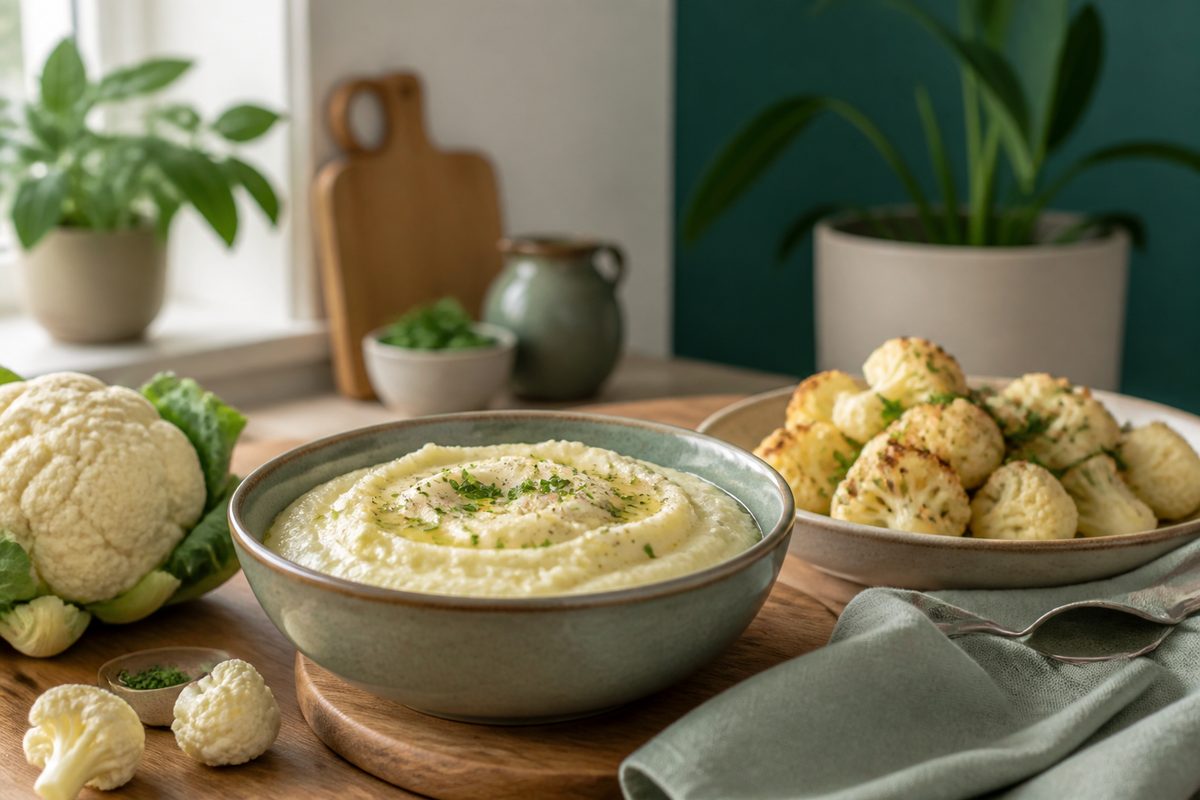
Cauliflower has one of the best nutrient profiles for CKD: low minerals, decent vitamin C, low oxalate, low phosphate and a neutral flavour that takes on whatever you cook it with. It's the standard 'safe' vegetable when dietitians need to swap out higher-K options.
Cauliflower mash recipe (renal-friendly)
Per portion: 200 g cauliflower florets, 1 tsp olive oil, garlic, black pepper, splash of unsweetened almond milk (or single cream).
- Boil florets 10 min in unsalted water; drain well.
- Mash with olive oil, garlic and pepper. Add a splash of milk for creaminess.
- ~ 280 mg K per portion — vs ~ 500–700 mg for a similar portion of mashed potato.
- No salt needed — garlic and pepper carry the flavour.
Cauliflower rice
- Pulse raw florets in a food processor to rice-sized grains.
- Pan-fry in 1 tsp olive oil for 4–5 minutes.
- Serves as a base for curries and stir-fries.
- Frozen cauliflower rice from supermarkets is fine — check no salt added.
- ~ 200 mg K per 150 g portion.
Portion and forms
- Stage 1–4: enjoy freely, 150–200 g portions.
- Stage 5 / dialysis: 120–150 g boiled per portion is fine.
- Pickled cauliflower: very high salt — avoid.
- Cauliflower cheese: combines low-K vegetable with high-Na/P sauce — avoid as a regular dish; have occasionally with a small cheese topping instead of a thick sauce.
Food first. If you are choosing a daily multivitamin alongside a balanced diet, Kidney Vitality was developed by a UK Consultant Nephrologist using renal nutrition principles. See the formulation.