Why pears fit a renal diet
Pears are one of three fruits UK renal dietitians most often recommend (alongside apples and berries). Key features:
- Low mineral load — well below high-K thresholds.
- Pectin and lignin fibre — supports cholesterol, blood glucose and bowel regularity (constipation is common in CKD on phosphate binders).
- Soft texture useful for older adults and those with poor dentition.
- Tinned-in-juice option means year-round availability.
Fresh vs tinned vs juice
- Fresh pear (150 g) — 175 mg K, 20 mg P, 4 g fibre. Best option.
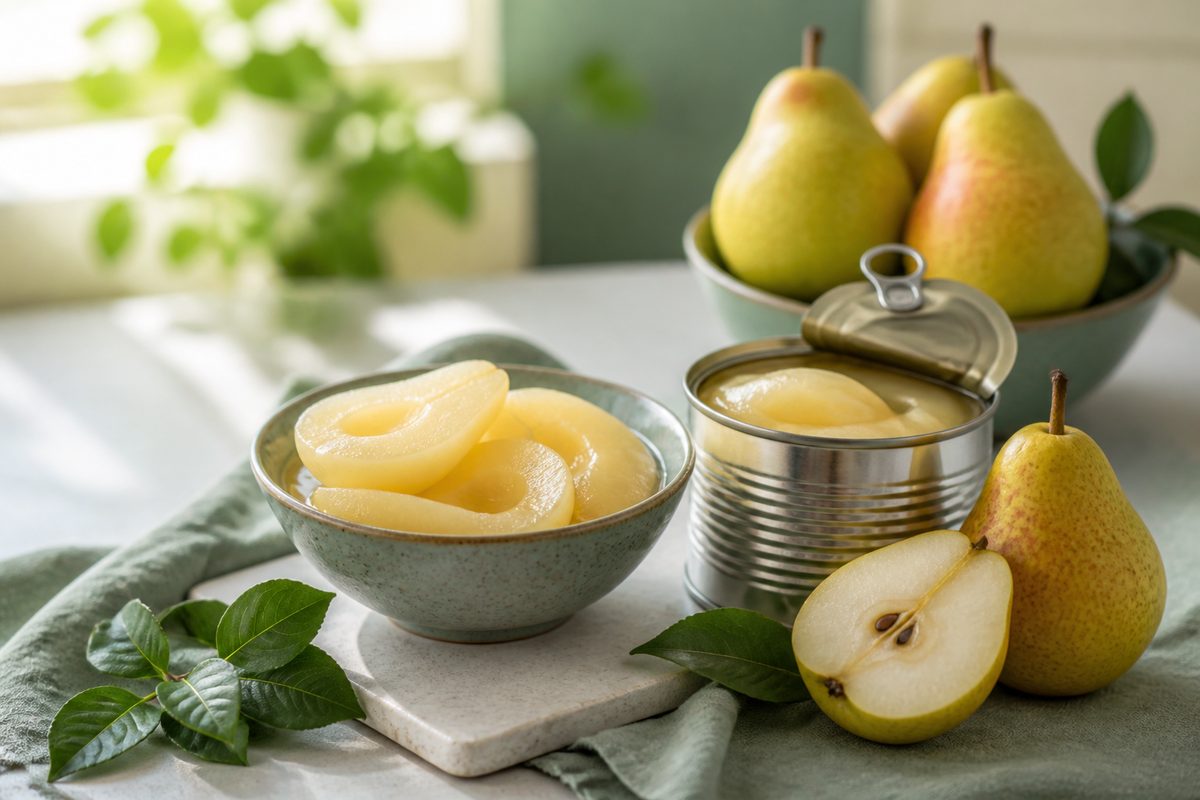
- Tinned pear halves in fruit juice — 80 mg K per half, no added phosphate. Excellent renal option; the canning process slightly leaches potassium into the juice (drain to reduce further).
- Tinned pears in syrup — same potassium, but high added sugar. Avoid if you have diabetes; drain syrup if you do use it.
- Pear juice / 'pear nectar' — concentrated sugar with no fibre; treat as a sugary drink, not a fruit serving.
- Stewed pears — make with water and a little cinnamon; avoid added sugar.
Portion guidance
- Stage 1–4: 1–2 fresh pears per day, no restriction.
- Stage 5 / dialysis: 1 fresh pear or 2 tinned halves per day, generally fine.
- Dried pears: concentrated potassium — limit to a small handful (~ 30 g) as one fruit portion.
Practical CKD-friendly ideas
- Sliced pear with a small piece of cheese — a balanced afternoon snack.
- Stewed pear with cinnamon as a pudding (replace apple crumble's apricots, which are high-K).
- Tinned pear halves with low-fat custard.
- Pear and rocket salad with olive oil and a few walnuts (mind portion if K-restricted).
- Avoid 'pear-flavoured' fruit drinks and ciders.
Food first. If you are choosing a daily multivitamin alongside a balanced diet, Kidney Vitality was developed by a UK Consultant Nephrologist using renal nutrition principles. See the formulation.