The herb and spice toolkit
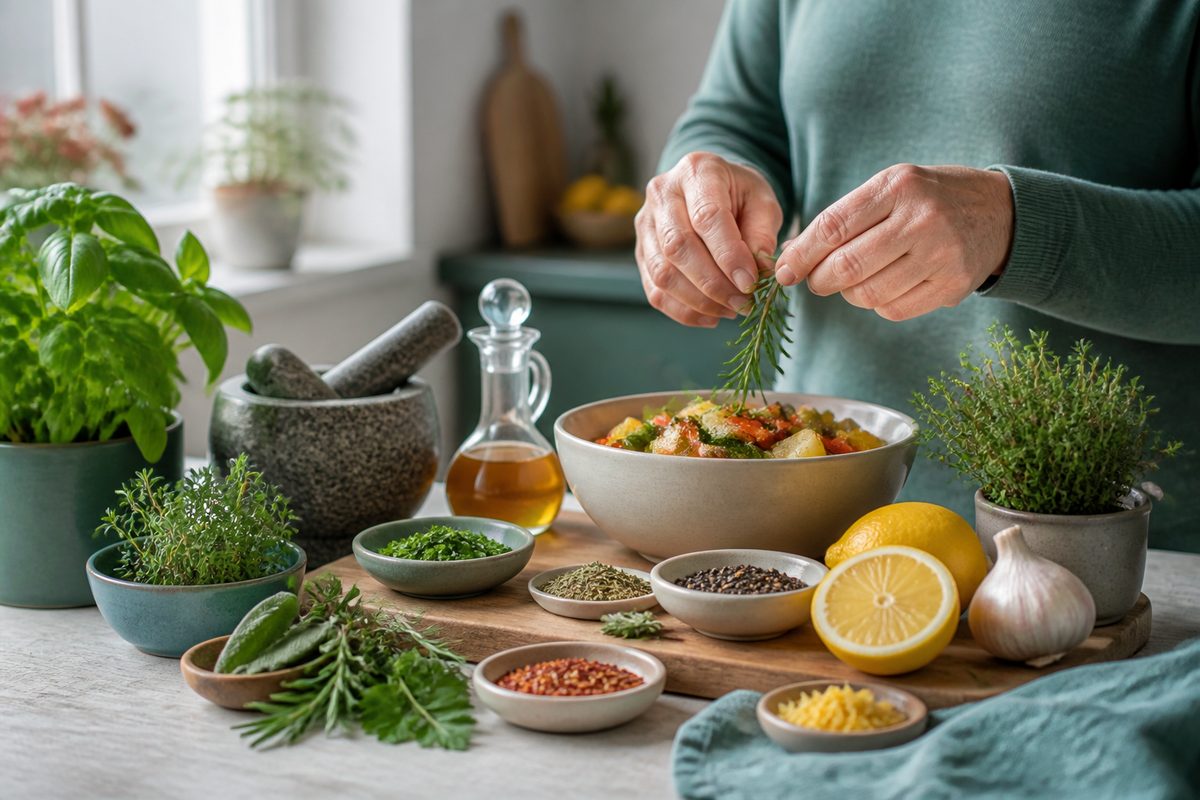
Fresh herbs add flavour without any minerals. Keep a windowsill pot of basil, parsley and coriander. Dried herbs are more concentrated — use half the amount of fresh. Spices like cumin, smoked paprika, coriander seed, fennel and turmeric (culinary amounts) transform simple dishes. Black pepper, chilli flakes and mustard powder add heat without salt.
Acids and aromatics
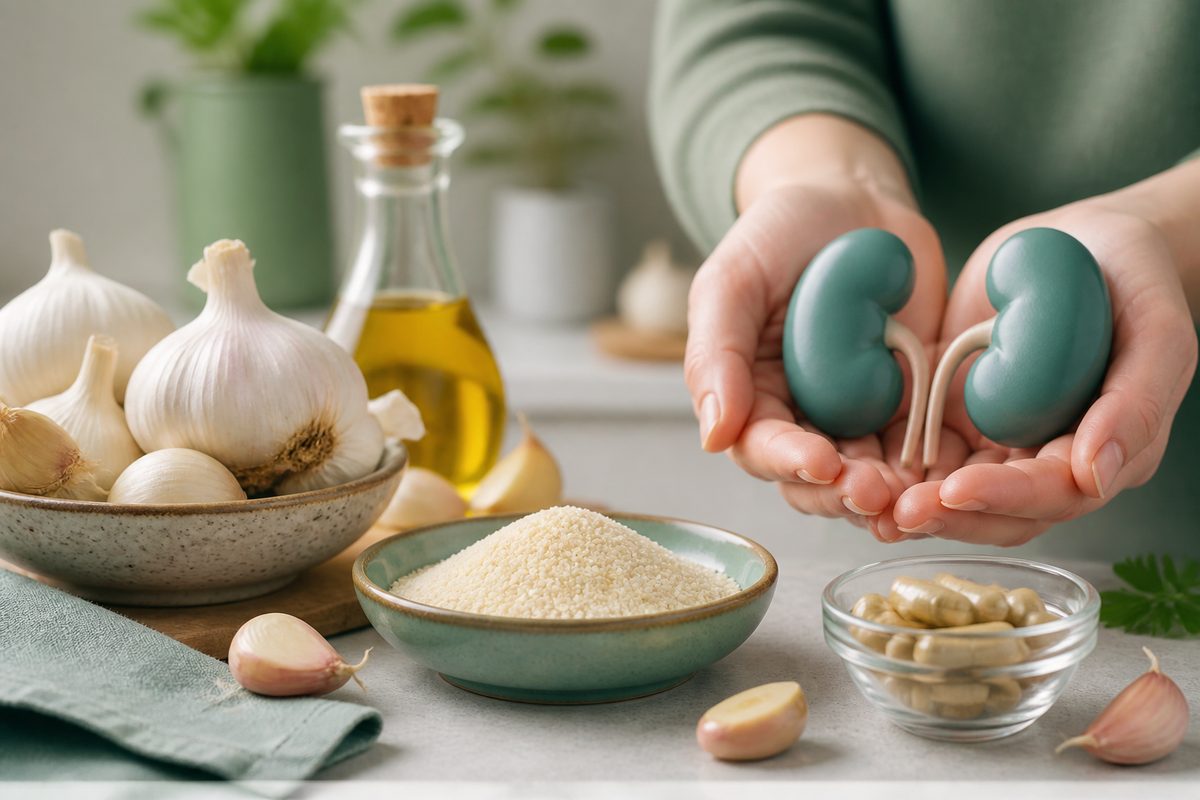
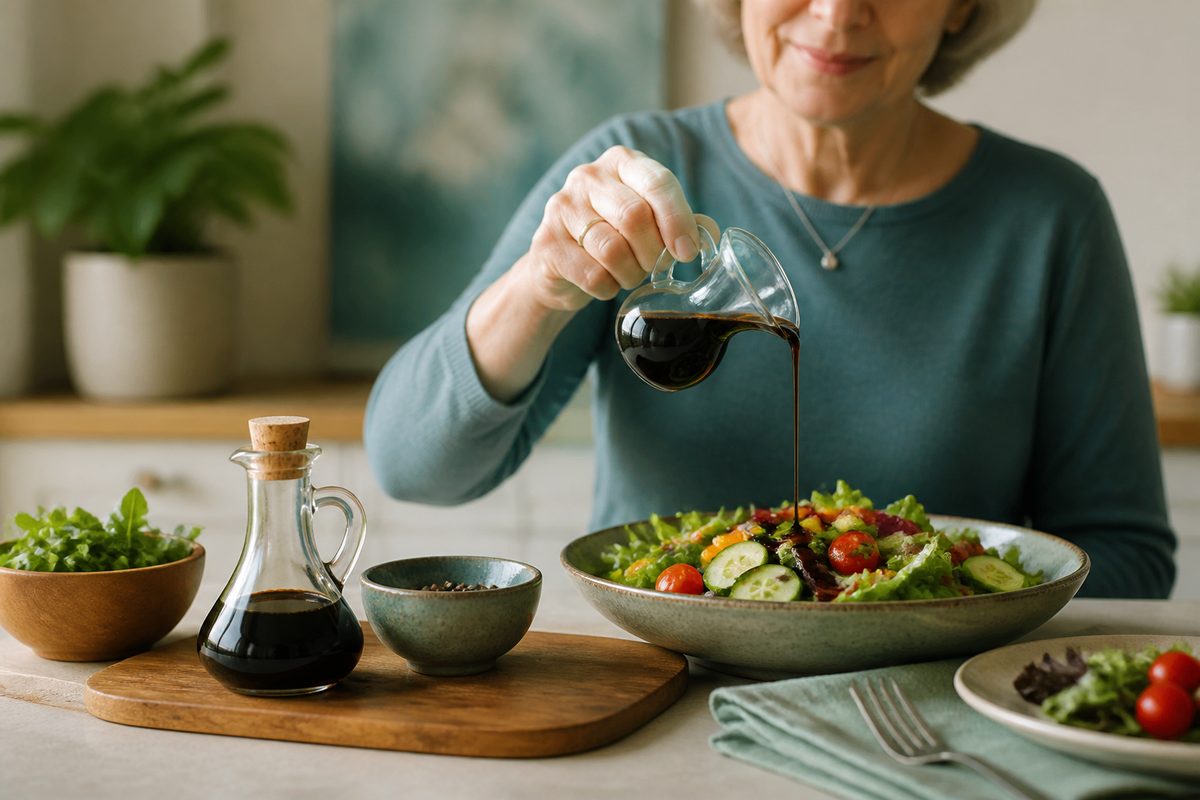
Lemon and lime juice add brightness and can trick the palate into tasting 'saltiness'. Balsamic vinegar, red wine vinegar and apple cider vinegar (in small amounts) add depth. Garlic, ginger, shallots and spring onions provide savoury base notes. Roast or caramelise onions to bring out natural sweetness that compensates for missing salt.
Techniques that boost flavour without salt
- Toast spices in dry pan or oil before adding other ingredients.
- Roast vegetables to concentrate natural sugars.
- Use a squeeze of lemon just before serving.
- Add fresh herbs at the end of cooking to preserve volatile oils.
- Make herb oil blends (basil + olive oil, parsley + lemon zest) for finishing dishes.
- Use nutritional yeast sparingly for a cheesy, savoury note — but check it doesn't have added potassium or phosphate.
What to avoid
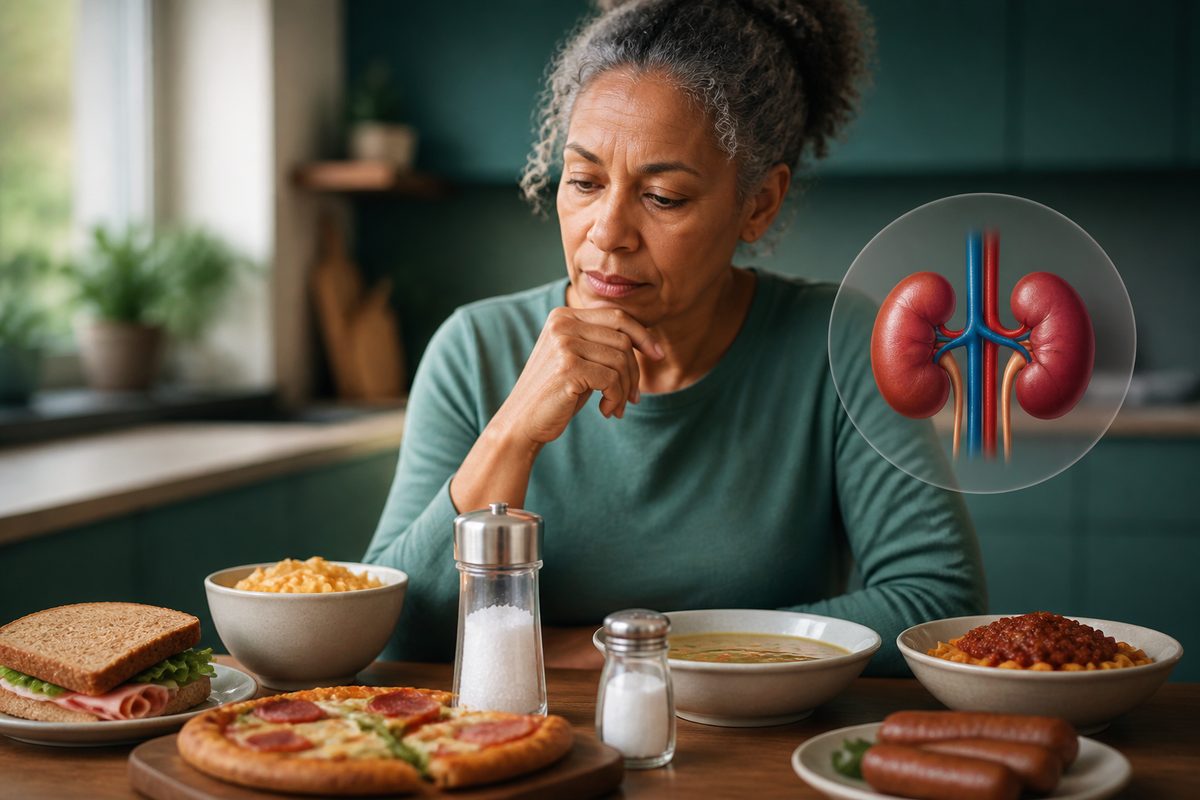
- Salt substitutes (Lo-Salt, Solo, potassium chloride) — dangerous potassium load.
- Standard stock cubes and gravy granules — very high sodium.
- Garlic salt, onion salt, celery salt — salt with a tiny amount of flavouring.
- Seasoning blends with 'salt' in the name — usually 50–80% sodium.
- Shop-bought marinades and stir-fry sauces — often salt + sugar + phosphate additives.
Kidney Vitality is a daily multivitamin developed by a UK Consultant Nephrologist using renal nutrition principles. It contains no added potassium, magnesium, phosphorus or iron, and no herbal blends. See the formulation.