Why salmon stands out in CKD
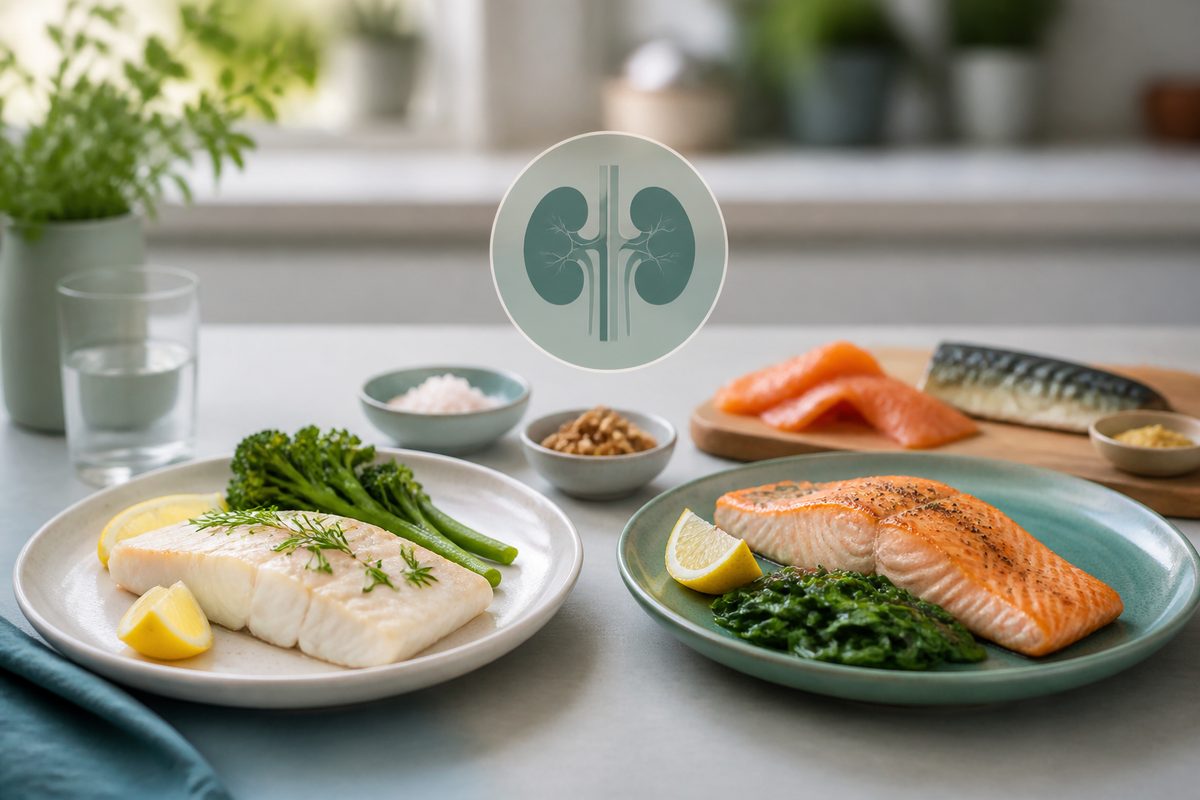
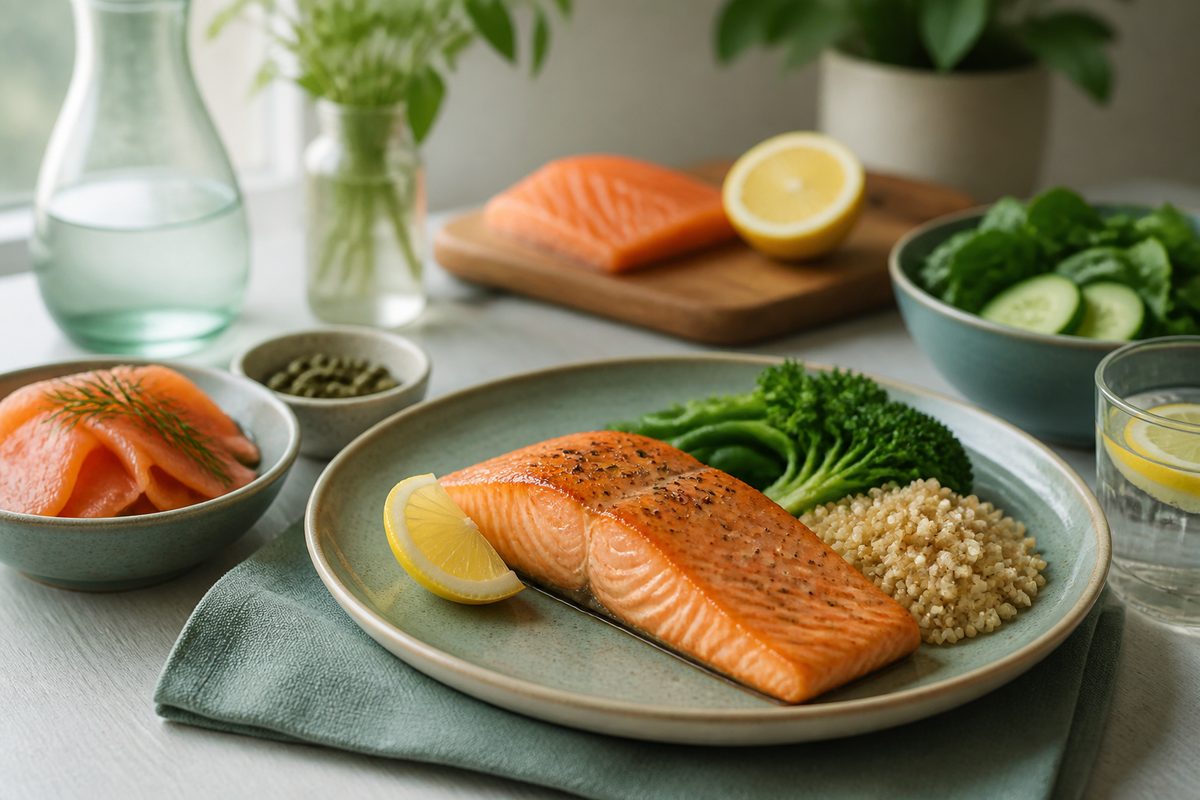
Cardiovascular disease is the leading cause of death in CKD. Long-chain omega-3 fatty acids (EPA and DHA) in oily fish help lower triglycerides, reduce inflammation and may modestly lower blood pressure. The KDIGO 2024 guideline supports oily fish as part of a renal-healthy eating pattern. Salmon delivers these benefits with a mineral profile that fits most CKD stages.
Forms compared (per 100 g)
- Fresh salmon, cooked: 240 mg P, 380 mg K, low sodium
- Tinned salmon (spring water, drained): 280 mg P, 320 mg K, 80 mg sodium
- Tinned salmon (brine): 280 mg P, 320 mg K, 350 mg sodium
- Smoked salmon: 200 mg P, 320 mg K, ~ 1,800 mg sodium ❌
- Salmon teriyaki / honey-glazed fillets: variable, high sugar + sodium
- Salmon en croûte: pastry + cheese = high P, fat, sodium
Portion by CKD stage
- Stage 1–3: 100–150 g cooked, 1–2 × per week.
- Stage 3b–4: 100 g cooked, 1 × per week.
- Stage 5 / dialysis: 100–120 g cooked, 1–2 × per week (dialysis raises protein needs and omega-3 benefit is preserved).
Practical CKD-friendly ideas
- Baked salmon with lemon, dill and olive oil, with steamed green beans and white rice.
- Salmon and cucumber sushi (small portion, low-salt soy).
- Salmon fishcakes (homemade, with leached mashed potato) — much lower sodium than shop-bought.
- Tinned salmon (spring water) on a salad with peppers, lettuce and lemon-oil dressing.
- Avoid: salmon en croûte ready meals, daily smoked salmon bagels, salmon pâté (often very salty).
Food first. If you are choosing a daily multivitamin alongside a balanced diet, Kidney Vitality was developed by a UK Consultant Nephrologist using renal nutrition principles. See the formulation.