Parmesan and phosphate
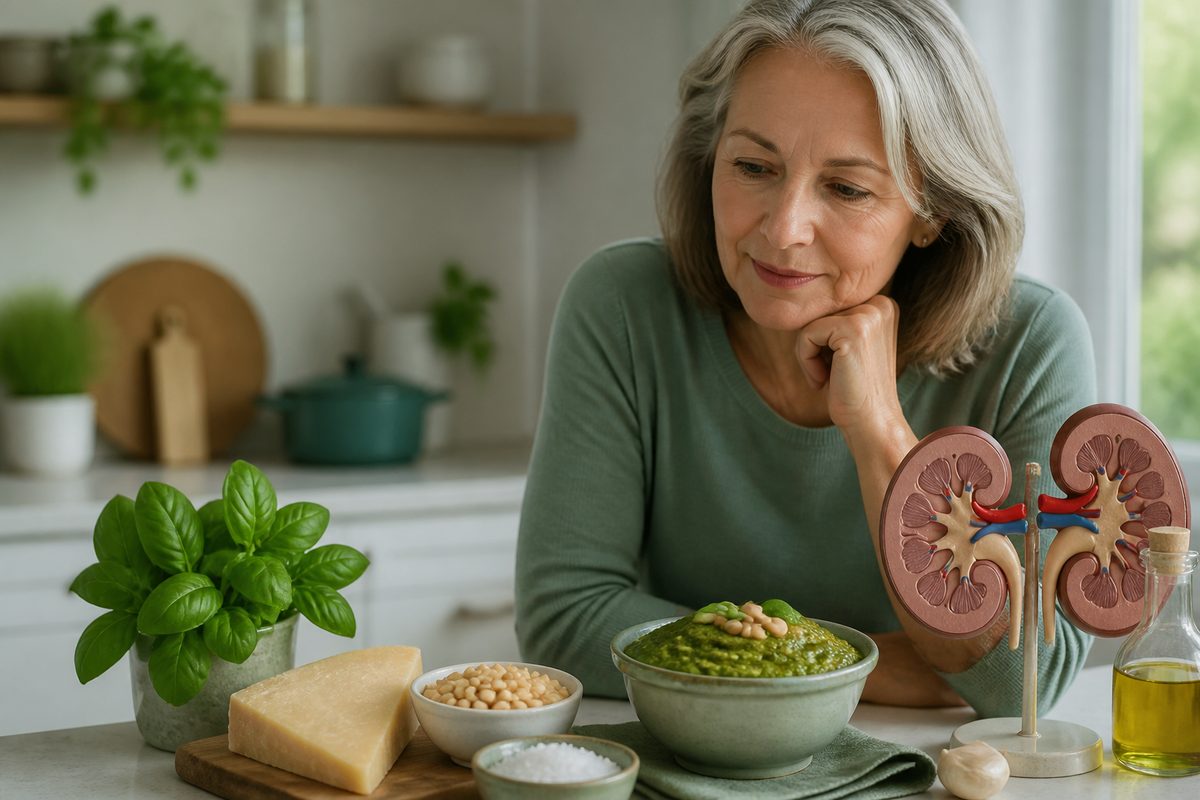
Hard aged cheeses — parmesan, pecorino, grana padano — are among the highest-phosphate dairy foods at 650–800 mg per 100 g. Pesto recipes typically use 15–25% cheese by weight. Crucially, this is natural phosphate (~60% absorbed), not the inorganic phosphate additives in processed cheese (~90% absorbed). Still, parmesan is concentrated, so a small amount goes a long way.
Pine nuts and potassium
Pine nuts contain ~600 mg potassium per 100 g. In a 50 g pesto portion, that's ~30 mg potassium from pine nuts — small in isolation, but it stacks with the basil (~200 mg per 100 g) and the parmesan (~90 mg per 100 g). Total per 50 g serving: roughly 150 mg potassium.
Salt — the biggest issue
UK shop-bought green pesto from Sacla, Tesco, Sainsbury's and Waitrose ranges from 2.5 g to 3.7 g salt per 100 g. Red (sun-dried tomato) pesto is similar or slightly lower. A 50 g serving adds 1.25–1.85 g salt — 20–30% of the NHS 6 g daily limit, before any pasta water salt, cheese on top, or salt in the bread on the side.
Renal-friendly homemade pesto
- 60 g fresh basil leaves.
- 30 g sunflower seeds (lower potassium than pine nuts).
- 20 g parmesan, finely grated.
- 2 cloves garlic.
- Juice of ½ lemon.
- 80 ml extra virgin olive oil.
- No added salt.
- Blend until smooth.
Makes ~6 portions. Each: ~120 kcal, ~80 mg sodium, ~80 mg potassium, ~40 mg phosphate.
Pesto pasta on a renal diet
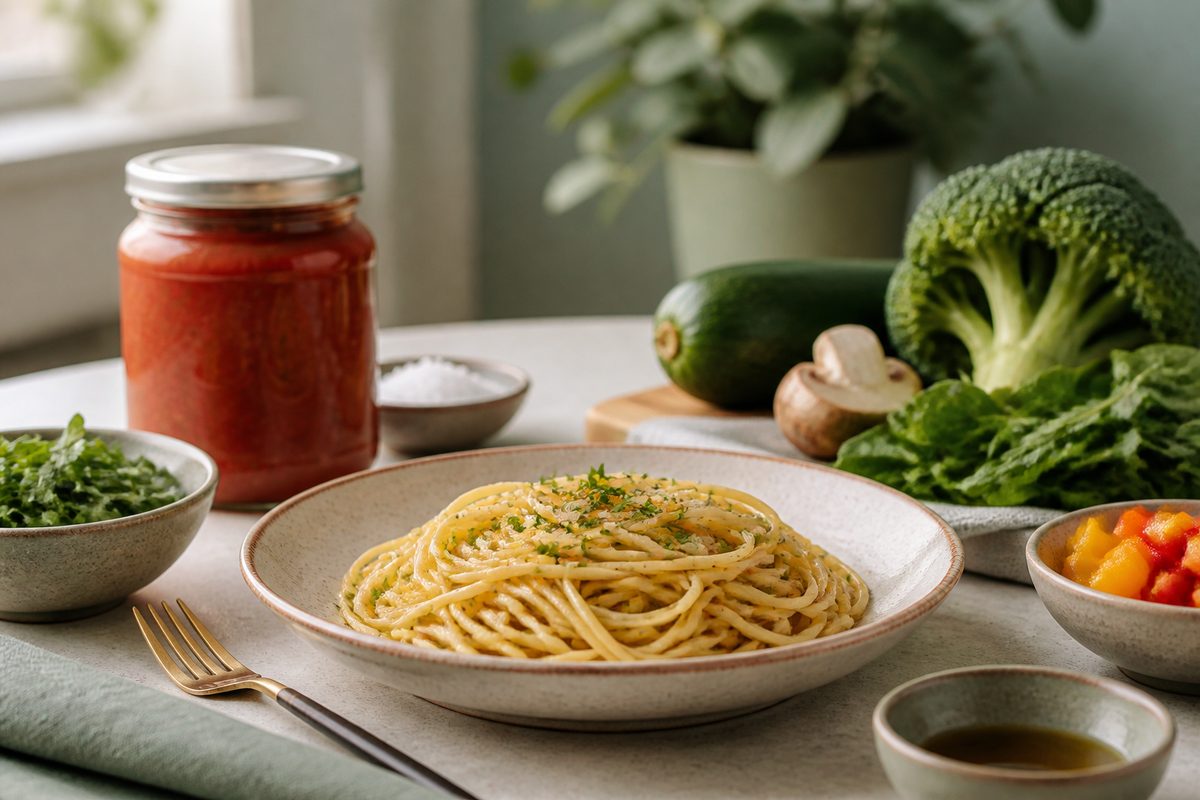
- Boil pasta in unsalted water (yes, it still tastes fine).
- Use 1 heaped tablespoon (15 g) of pesto per 80 g cooked pasta.
- Skip extra parmesan on top — the pesto already contains it.
- Add fresh halved cherry tomatoes (~300 mg potassium per 100 g — count it) and torn fresh basil for volume and flavour.
- Pair with grilled chicken or unsalted prawns for renal-friendly protein.
Food first. If you are choosing a daily multivitamin alongside a balanced diet, Kidney Vitality was developed by a UK Consultant Nephrologist using renal nutrition principles. See the formulation.