Juice concentrates everything
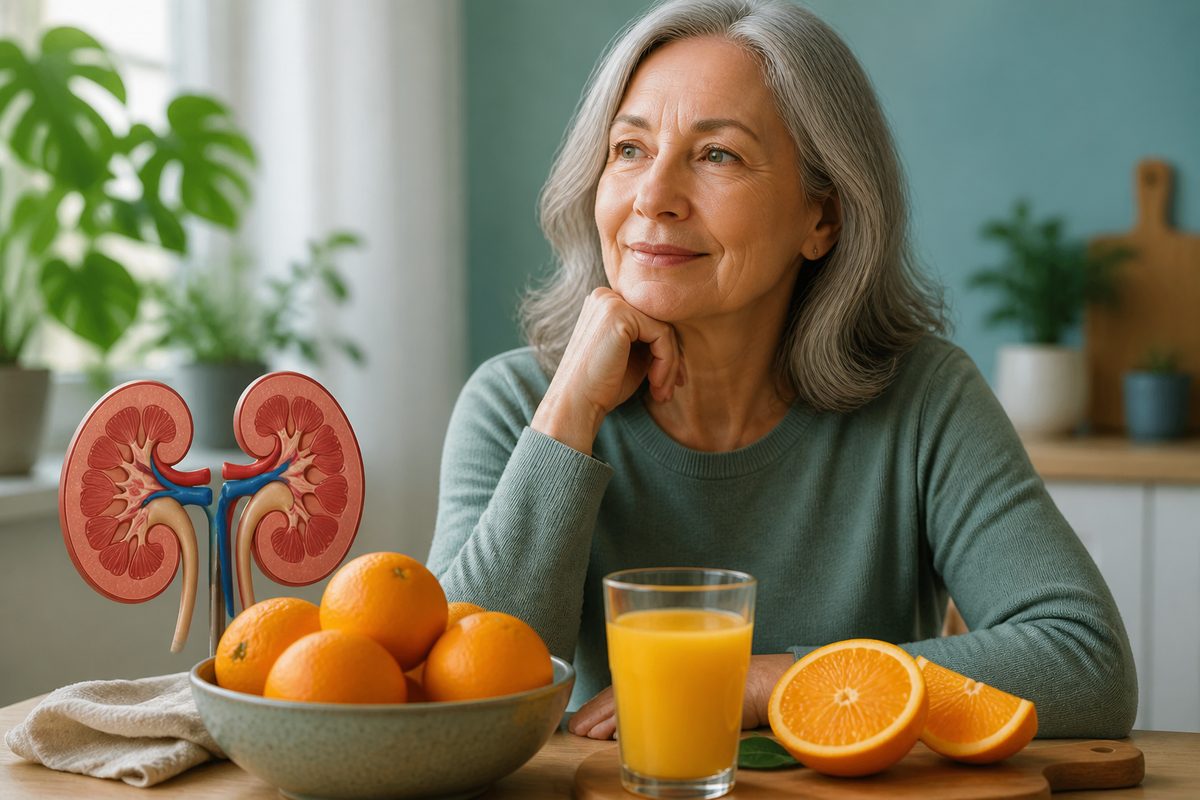
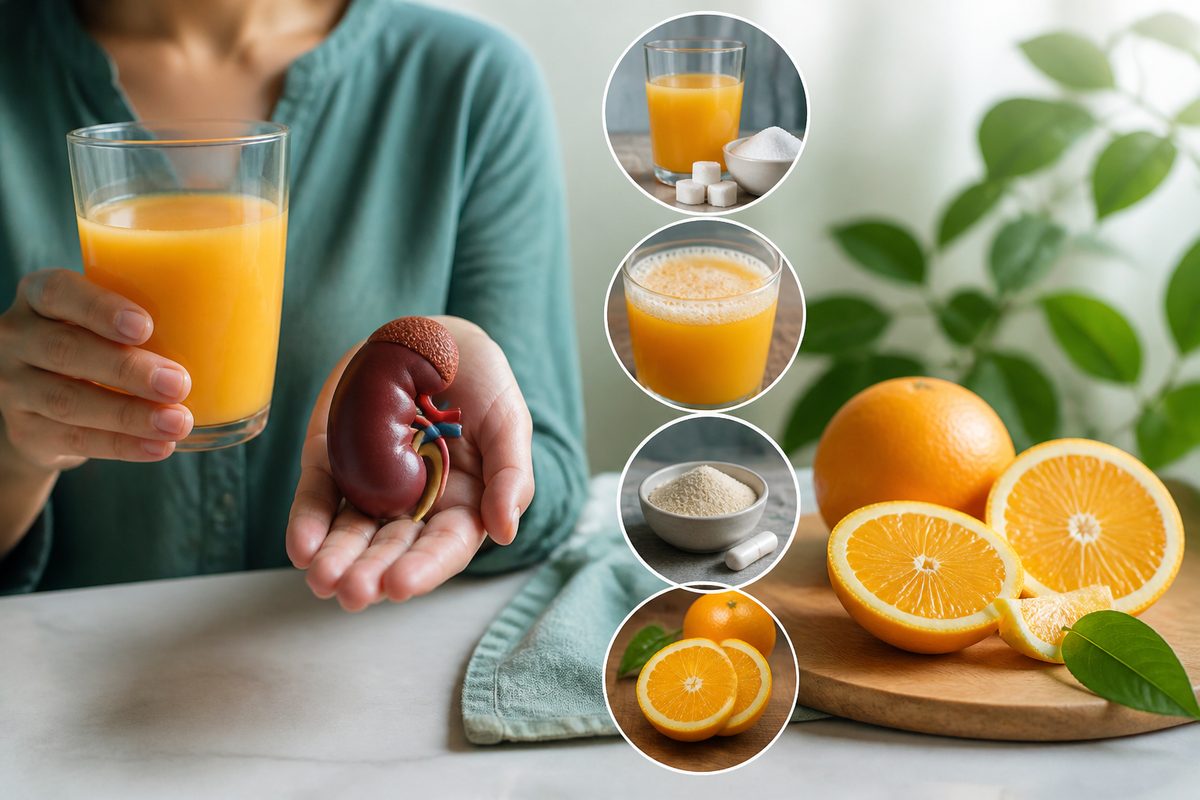
It takes 3–4 medium oranges to make 250 ml of juice. You would rarely eat 4 oranges in one sitting, but it is easy to drink a large glass. The fibre is removed during juicing, so the natural sugars hit the bloodstream rapidly — a problem for diabetic kidney disease and weight control.
Potassium by the glass
Per 100 ml, fresh orange juice contains ~ 200 mg potassium. A typical 250 ml glass = 500+ mg — more than a banana. For CKD stages 4–5 or dialysis patients on a 2,000 mg/day potassium limit, one glass uses a quarter of the entire daily budget. Whole oranges contain the same potassium per 100 g, but the fibre makes you feel full sooner and slows absorption.
Fortified juice traps
Many 'health' juices add calcium and vitamin D, sometimes using calcium phosphate or tricalcium phosphate as the calcium source. These inorganic phosphates are highly bioavailable and can raise serum phosphate in advanced CKD. Look for E341, E450, E452 on the ingredient list.
Safer swaps and portions
- Whole orange: 1 small orange (~ 150 g) = ~ 180 mg K, with fibre.
- Dilute a small splash (50 ml) of juice into a large glass of water.
- Fresh lemon water: negligible potassium, no sugar.
- Diluted no-added-sugar squash (phosphate-free).
- Avoid: large glasses of juice, 'freshly pressed' juice bars, fortified juices, juice smoothies with added protein powder.
Food first. If you are choosing a daily multivitamin alongside a balanced diet, Kidney Vitality was developed by a UK Consultant Nephrologist using renal nutrition principles. See the formulation.