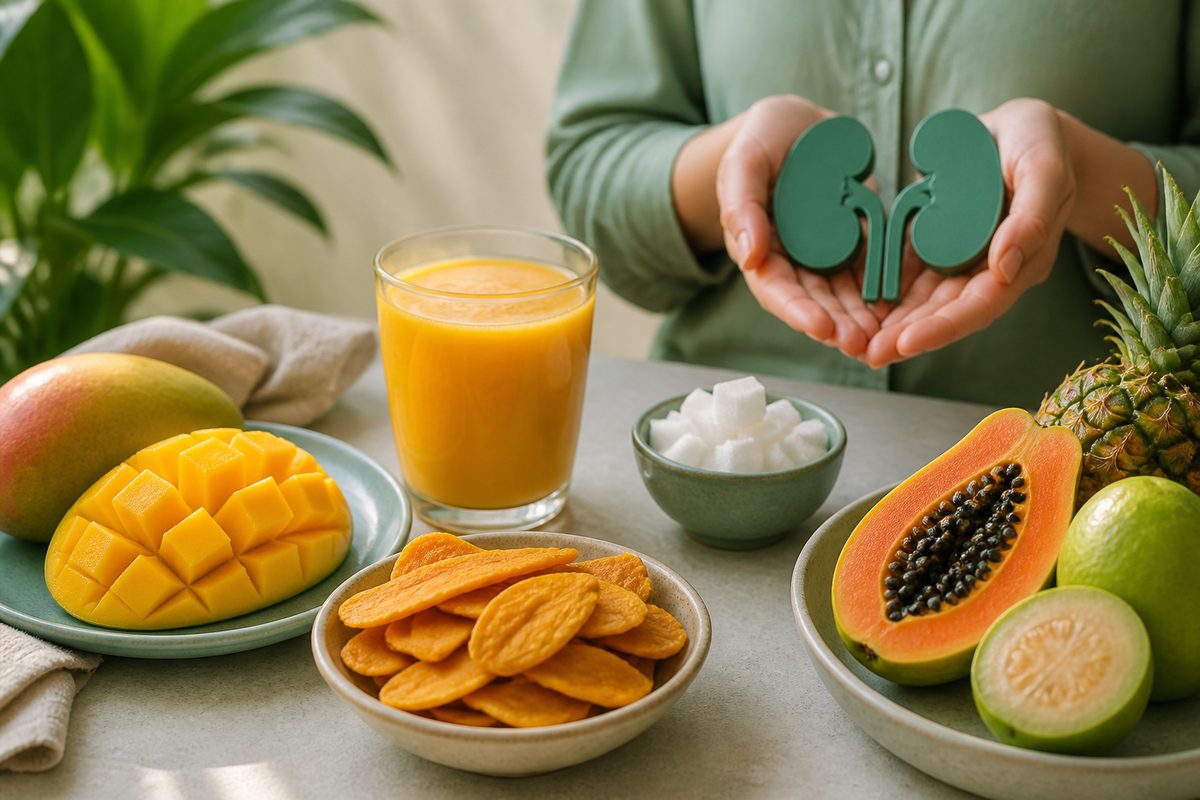
Why mango needs portioning
Mango is celebrated for vitamin C, vitamin A and polyphenols. For renal patients, the issues are:
- Moderate potassium that adds up with typical 'half-mango' portions.
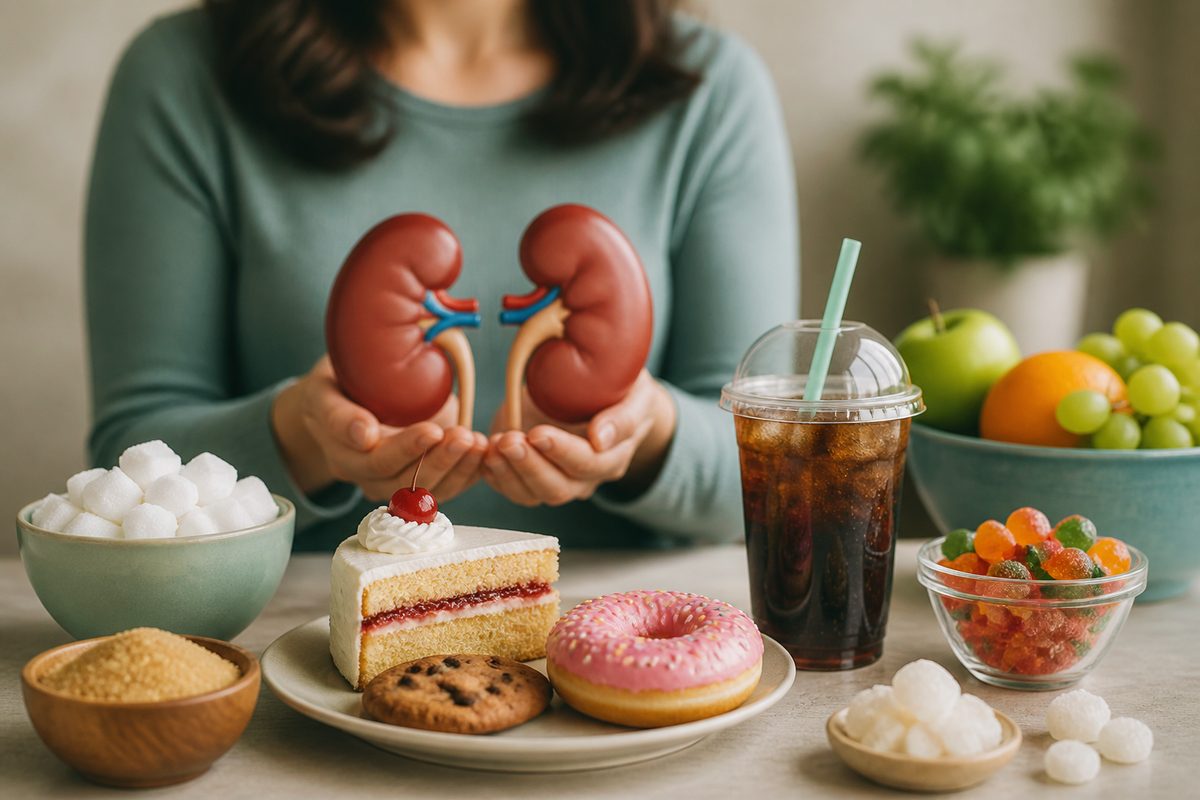
- High natural sugar — relevant in diabetes (the leading cause of CKD in the UK).
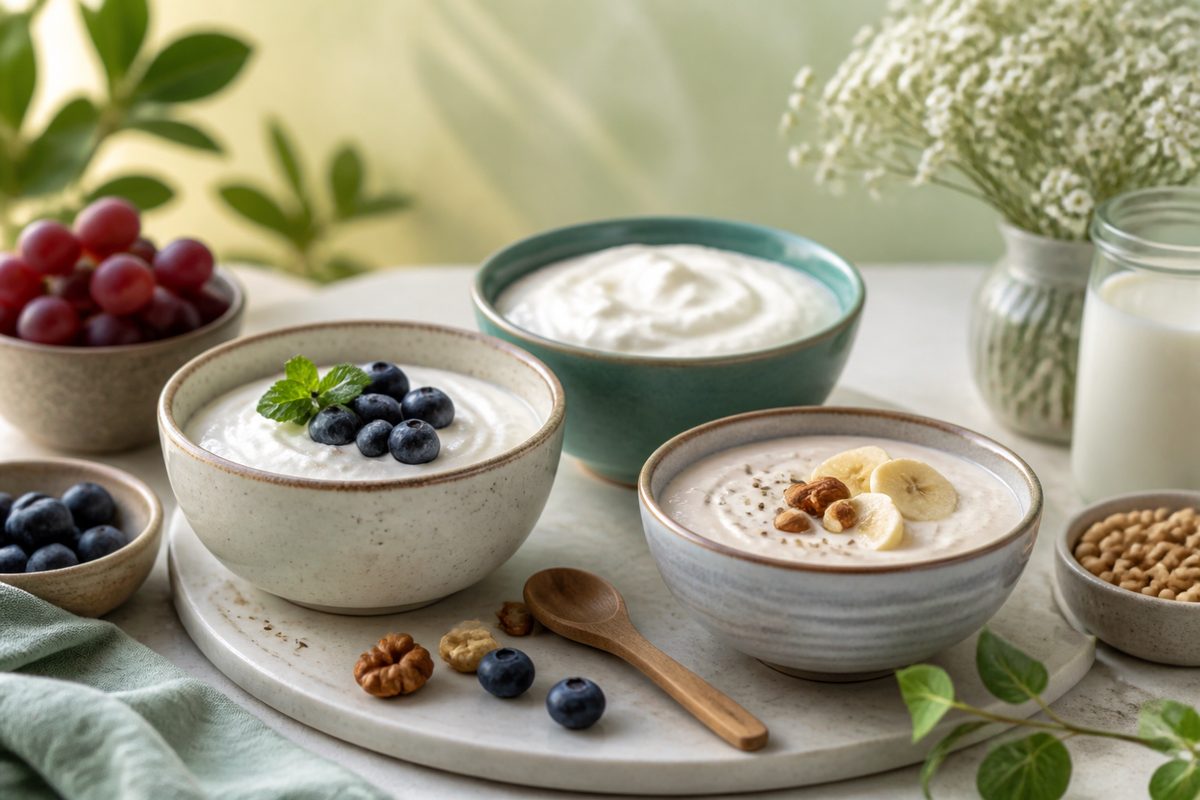
- Often combined with other high-K ingredients (banana, yoghurt, milk) in smoothies and lassis.
Portion by CKD stage
- Stage 1–3: 100–150 g per portion.
- Stage 3b–4: 80–100 g per portion, occasionally.
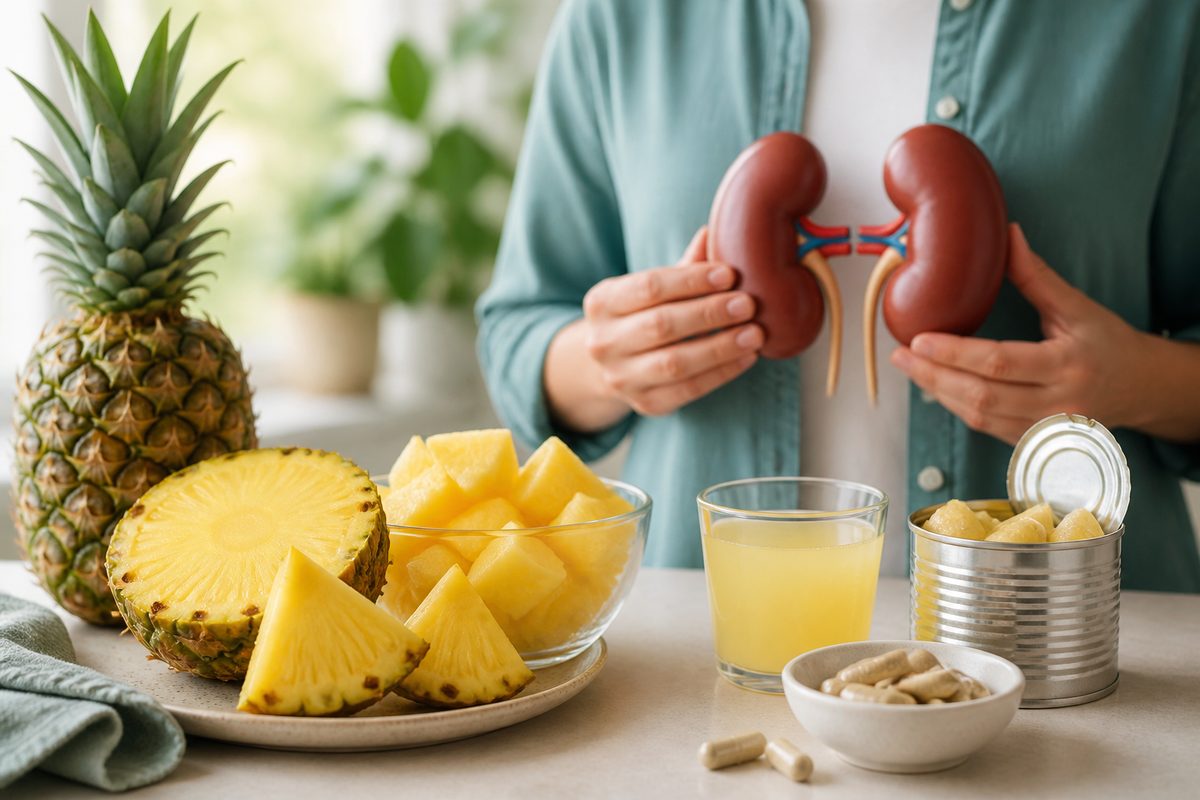
- Stage 5 / dialysis: 80 g (small slice) — swap to pineapple if K runs high.
- With diabetes: take with food, not on an empty stomach.
Forms compared
- Fresh mango (80 g) — ~ 135 mg K, ~ 11 g sugar.
- Tinned mango in juice (80 g drained) — ~ 100 mg K.
- Dried mango (30 g) — ~ 285 mg K, 21 g sugar. Limit.
- Mango juice (200 ml) — ~ 320 mg K, 27 g sugar.
- Mango lassi (250 ml) — ~ 450 mg K, ~ 200 mg P from yoghurt + milk.
Practical CKD-friendly ideas
- Cube 80 g into a low-K fruit salad with apple and berries.
- Pair fresh mango with chilli and lime as a salsa for white fish.
- Skip 'mango smoothies' from coffee shops — usually combined with banana and yoghurt.
- Use diced mango (small amount) to brighten plain chicken — avoids needing high-salt sauces.
- Avoid dried-mango snack packs labelled 'healthy' — concentrated sugar and K.
Food first. If you are choosing a daily multivitamin alongside a balanced diet, Kidney Vitality was developed by a UK Consultant Nephrologist using renal nutrition principles. See the formulation.