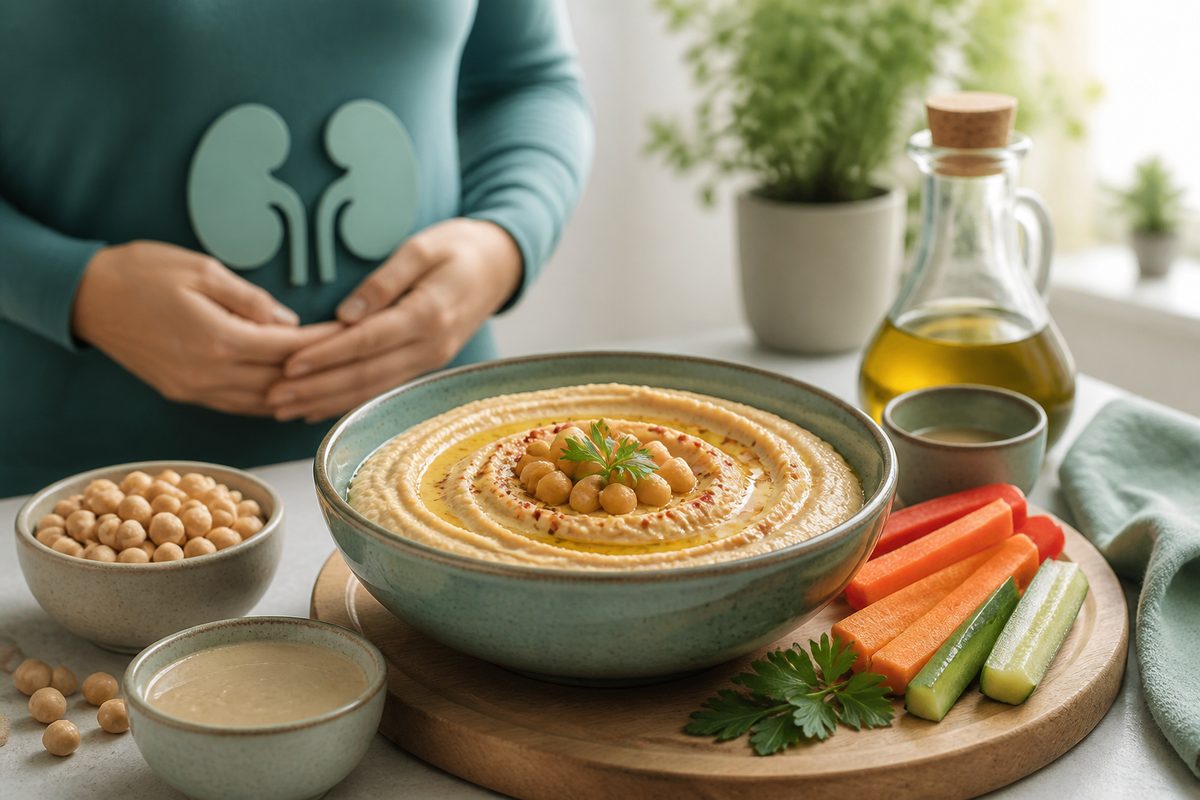
Sodium — the main CKD concern
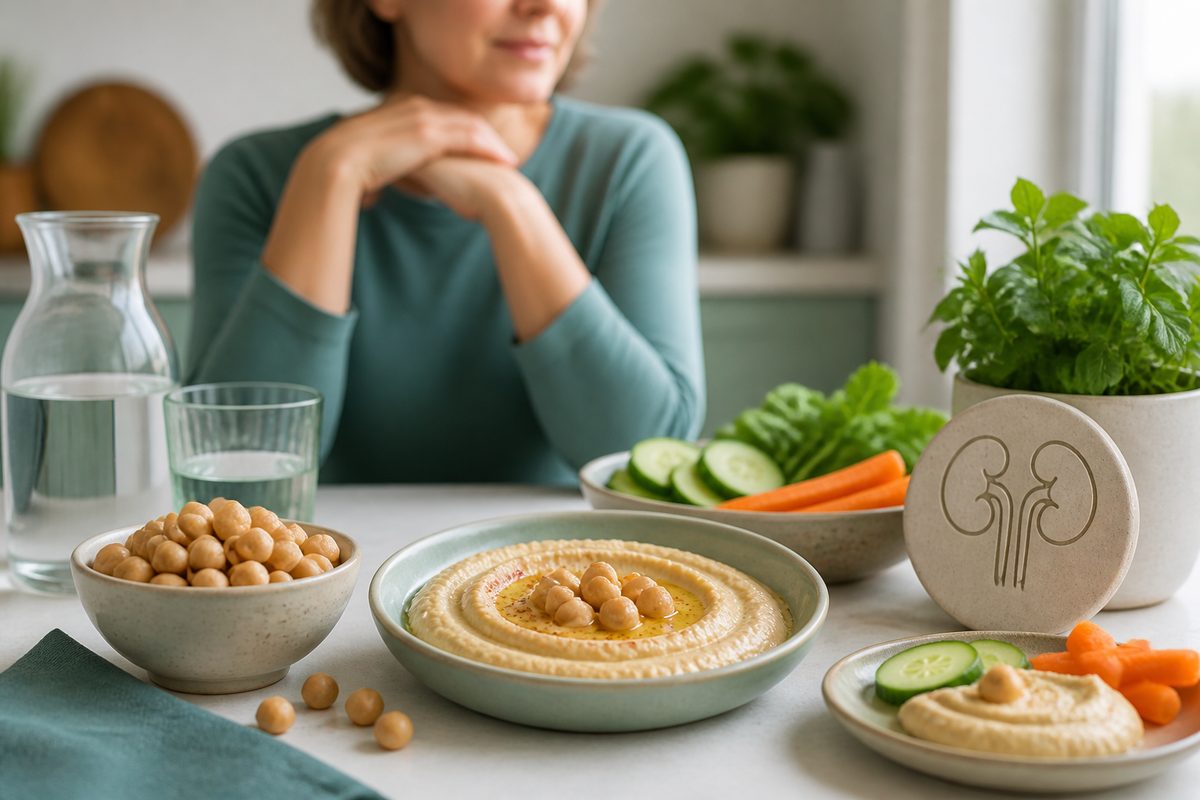
UK supermarket hummus typically contains 0.8–1.4 g salt per 100 g. A 50 g portion (about 2 heaped tablespoons) adds 0.4–0.7 g salt. Eat it with salted pita or crackers and you can easily reach 1.5 g salt from one snack — a quarter of the NHS 6 g daily limit. Choose 'reduced salt' tubs (look for ≤ 0.5 g salt per 100 g) or make your own.
Phosphate in tahini and chickpeas
Tahini (sesame seed paste) is naturally high in phosphate — about 730 mg per 100 g. A 1-tbsp serving of hummus contains 60–80 mg phosphate. The good news: plant-bound phosphate is only 40–60% absorbed, compared to 90% absorption from inorganic phosphate additives. Hummus is not a high-phosphate food in normal portions.
Potassium load
Chickpeas contain ~290 mg potassium per 100 g cooked. A 30 g hummus portion delivers ~100–130 mg. Most adults with CKD Stage 3 can include this comfortably. CKD Stage 4–5 or dialysis patients on a tight potassium restriction should check with their dietitian.
Renal-friendly homemade hummus
- 1 tin (240 g) chickpeas, drained and rinsed (cuts sodium ~40%).
- 1 tbsp tahini.
- Juice of 1 lemon.
- 2 cloves garlic.
- 1 tsp ground cumin.
- 2 tbsp olive oil.
- Blend smooth, add 2–3 tbsp cold water for texture.
- No added salt.
Makes ~6 portions. Each: ~70 kcal, ~80 mg sodium, ~110 mg potassium, ~50 mg phosphate.
Best dippers for CKD
Pair hummus with renal-friendly dippers: cucumber sticks, carrot sticks, red pepper strips, sourdough toast (lower salt than mass-market bread), or unsalted oatcakes. Avoid salted tortilla chips, pretzels, and shop-bought pita with added phosphate.
Food first. If you are choosing a daily multivitamin alongside a balanced diet, Kidney Vitality was developed by a UK Consultant Nephrologist using renal nutrition principles. See the formulation.