Why couscous works in a renal diet
Couscous is small steamed semolina pasta. Per 100 g cooked it has:
- Potassium ~ 60 mg (low)
- Phosphate ~ 30 mg (low)
- Sodium ~ 5 mg (when cooked plain)
- Protein ~ 3.5 g
This puts it alongside white rice and white pasta as one of the easiest low-mineral carbohydrate options for CKD. It's fast (5-minute soak), versatile, and works as a base for salads, warm grain bowls and tagine-style stews.
The flavoured-packet problem
Many UK 'flavoured' couscous packets contain 1.0–1.5 g salt per typical portion — close to a third of a CKD patient's daily salt target. They also often add yeast extract (concentrated glutamate + sodium), dried vegetables (concentrated potassium), and preservatives.
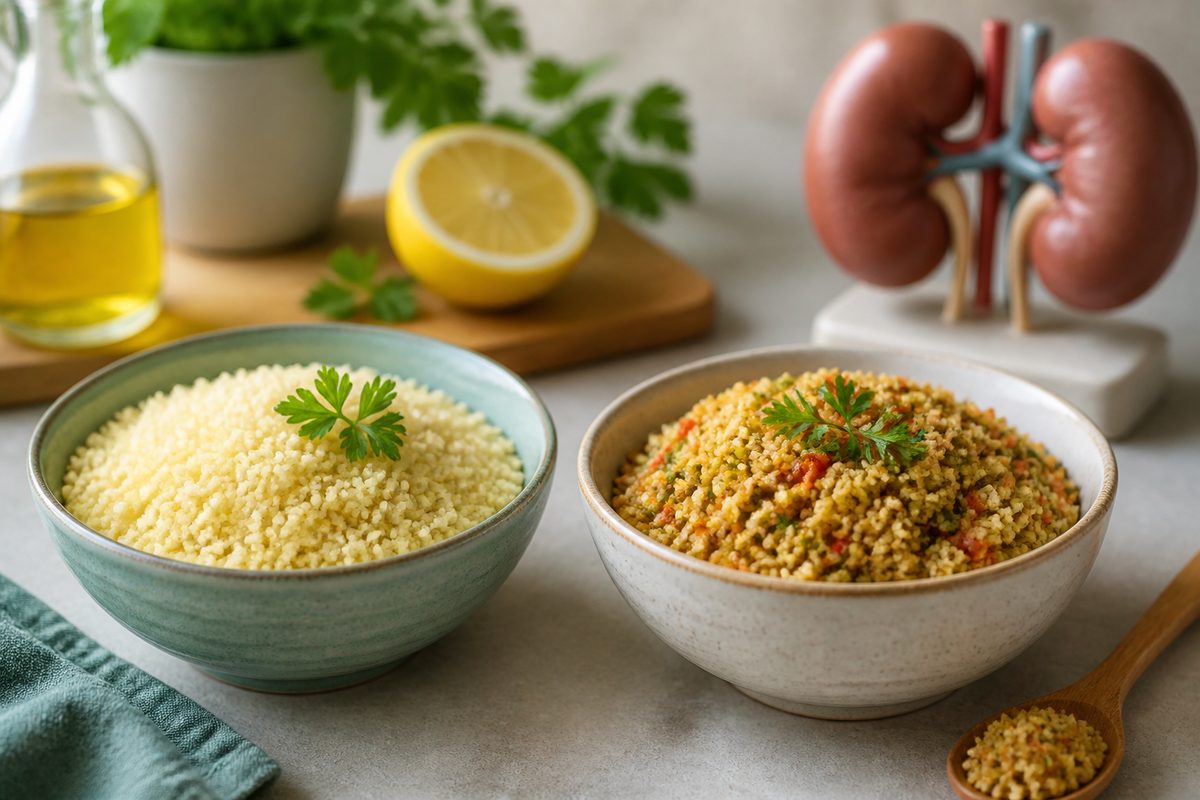
A 100 g plain couscous portion + lemon, parsley, fresh tomato, cucumber and olive oil delivers more flavour, more freshness and a fraction of the salt — for less money.
Couscous vs other low-K carbs (per cooked 100 g)
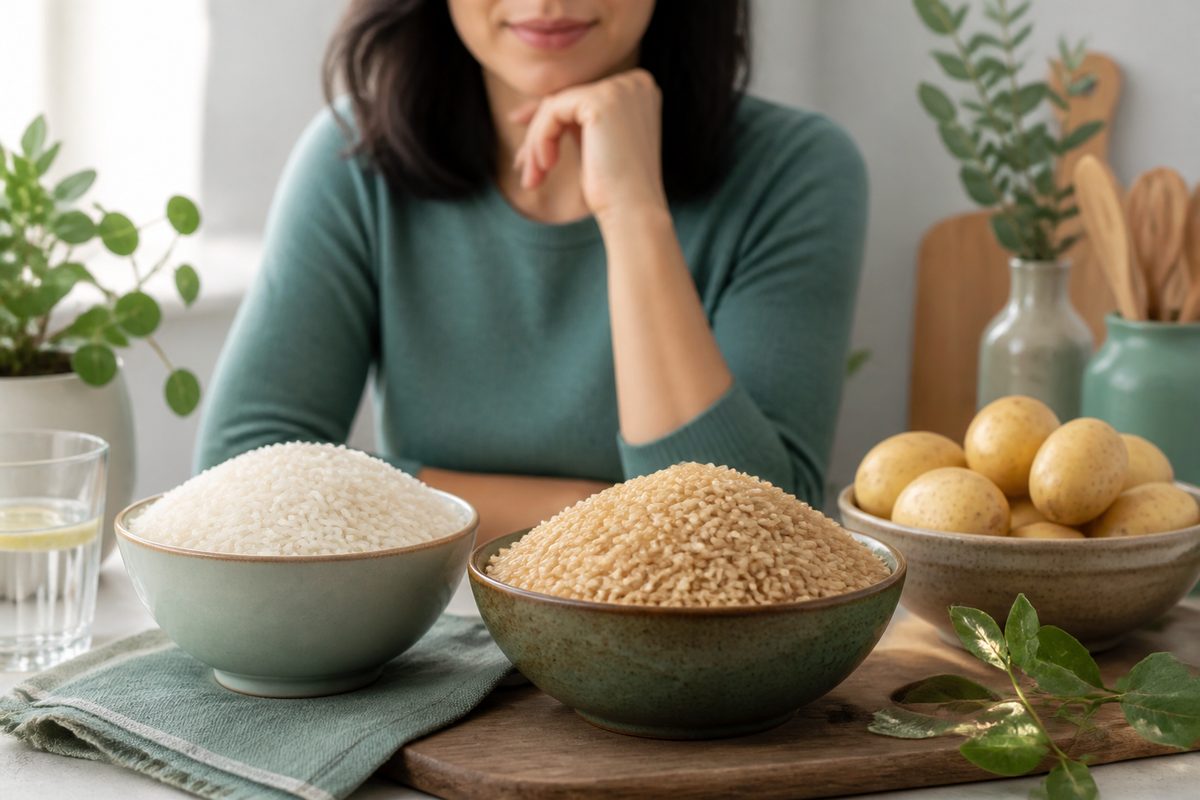
- White rice: ~ 35 mg K, ~ 30 mg P
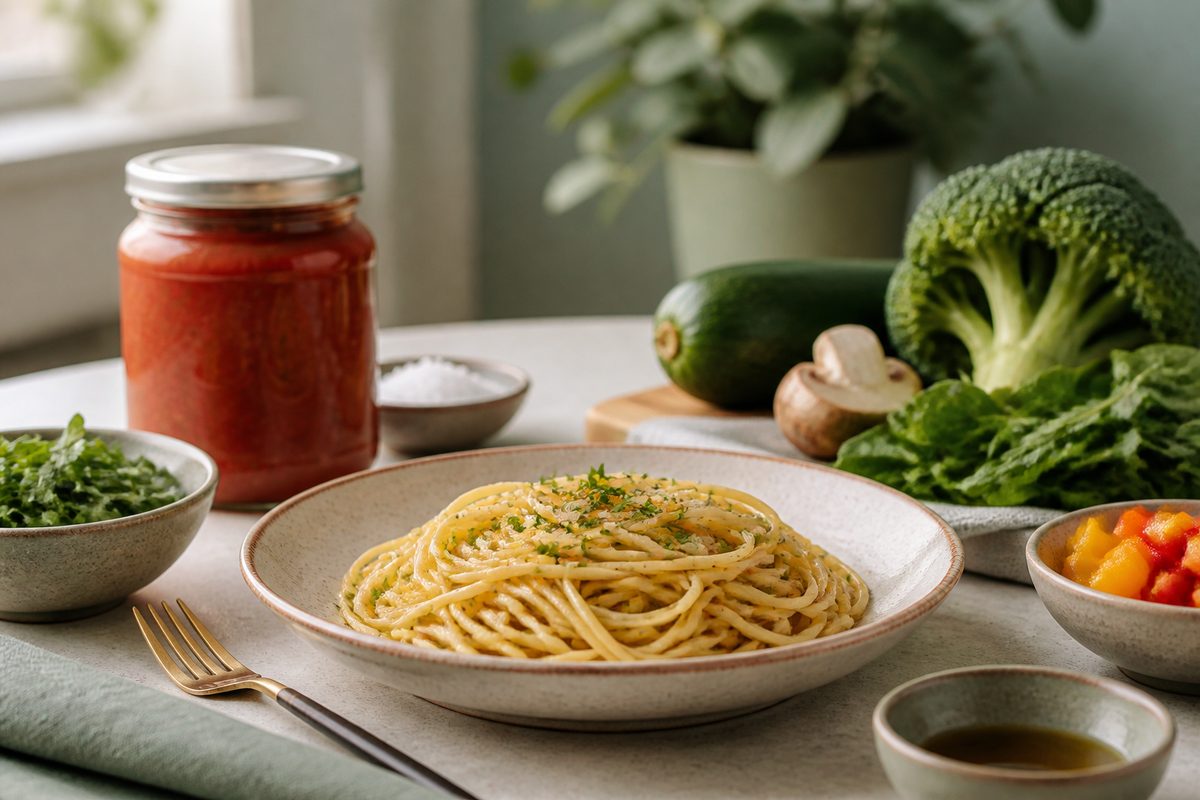
- White pasta: ~ 50 mg K, ~ 60 mg P
- Couscous: ~ 60 mg K, ~ 30 mg P
- Wholewheat couscous: ~ 120 mg K, ~ 80 mg P
- Quinoa: ~ 170 mg K, ~ 150 mg P
- Brown rice: ~ 90 mg K, ~ 80 mg P
For a strict low-K, low-P meal, white rice → couscous → white pasta is the order to think in. Couscous wins on speed.
Practical guidance
- Buy plain couscous; never flavoured packets.
- Cook by soaking in just-boiled water with a drizzle of olive oil — no salt.
- Build flavour with lemon zest and juice, fresh herbs (parsley, mint, coriander), garlic, black pepper, smoked paprika.
- Pair with low-K vegetables and a small protein portion.
- In early CKD, wholewheat couscous is a fine fibre upgrade.
Food first. If you are choosing a daily multivitamin alongside a balanced diet, Kidney Vitality was developed by a UK Consultant Nephrologist using renal nutrition principles. See the formulation.