Why courgette suits a renal diet
Courgette is mostly water (~ 94%), with modest potassium and very low phosphate. It absorbs flavour well, which helps when reducing salt — herbs, garlic, lemon and olive oil carry the dish without needing salty sauces.
Portion by CKD stage
- Stage 1–3: 100–150 g portions, no restriction.
- Stage 3b–4: 80–100 g portions.
- Stage 5 / dialysis: 80 g portions; mind cumulative K with other vegetables.
Cooking methods compared
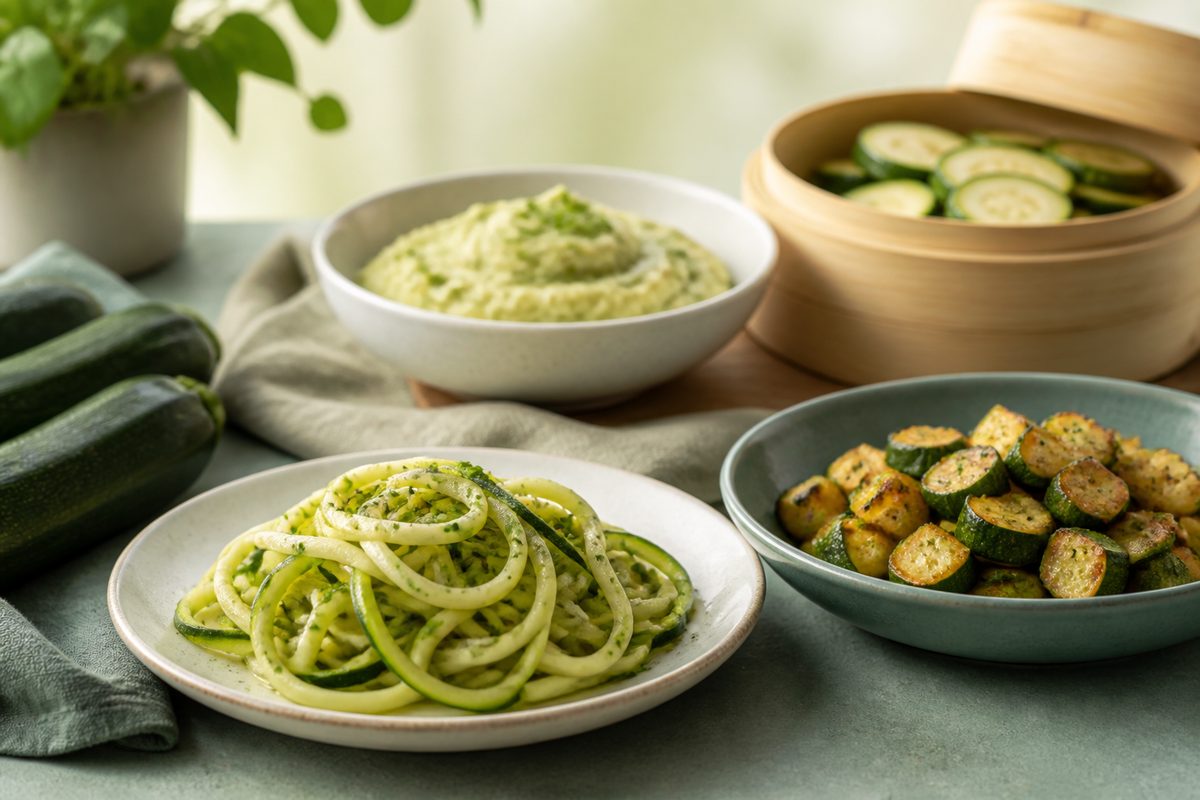
- Raw (spiralised noodles): K retained, ~ 260 mg/100 g.
- Steamed: K retained.
- Boiled (drained): some K leaches out (~ 200 mg/100 g).
- Roasted: water evaporates, K per gram rises slightly.
- Grilled / pan-fried: similar to roasted.
Practical CKD-friendly ideas
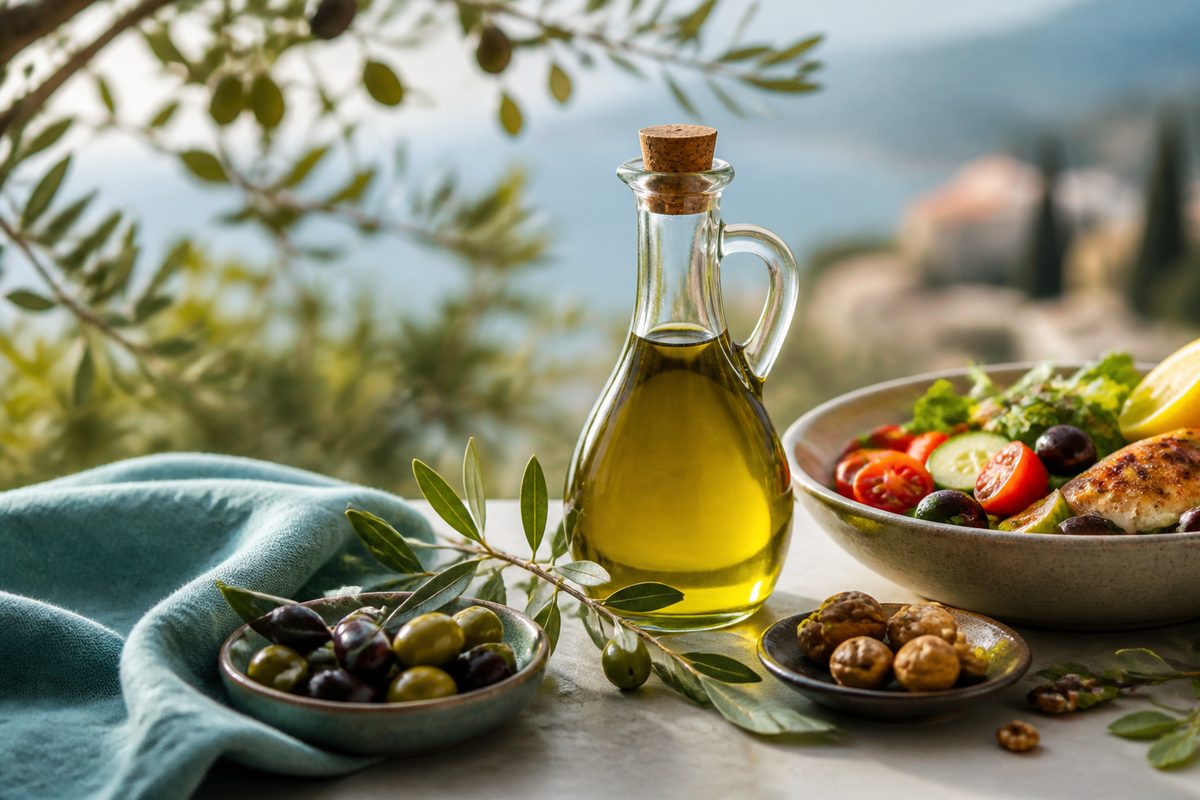
- Courgette ribbons with olive oil, lemon, black pepper — a side that pairs with white fish.
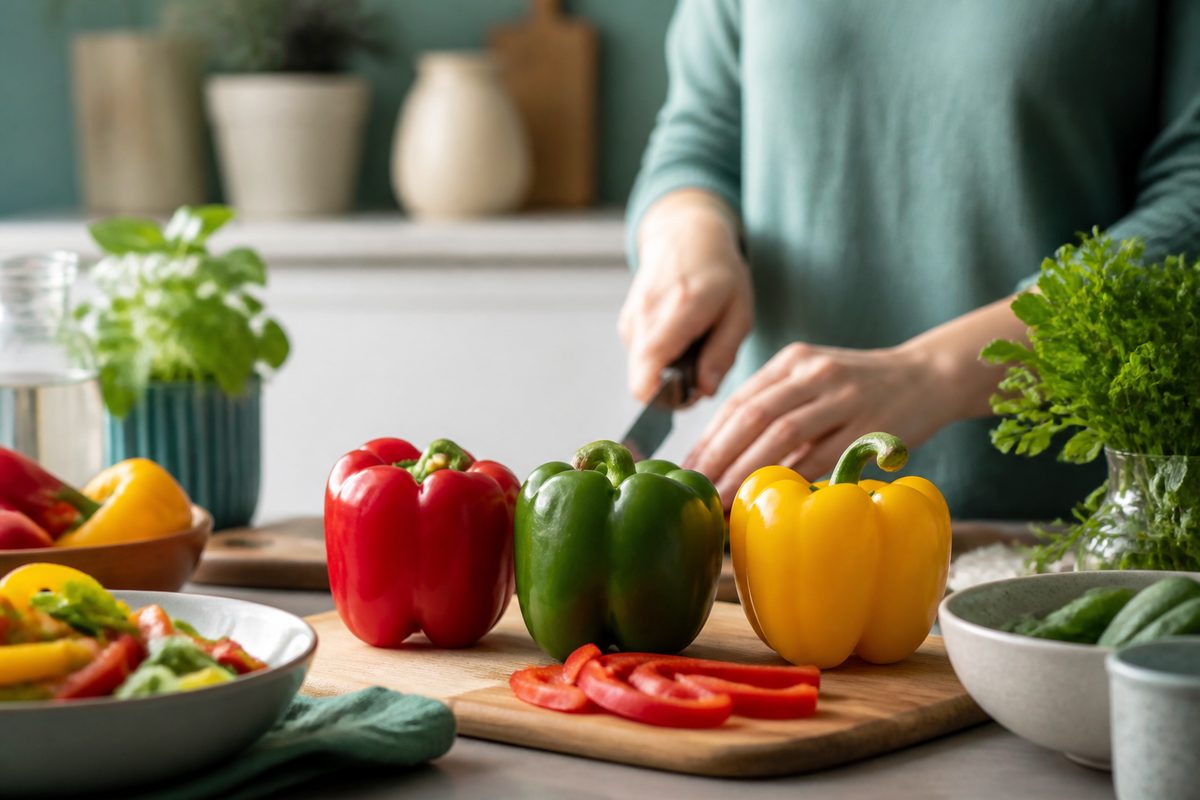
- Roasted courgette and pepper traybake (skip tomato in late CKD).
- Courgetti (spiralised) with homemade pesto — small portion, low salt.
- Courgette fritters (grated + egg + flour, pan-fried in olive oil) as a low-K alternative to potato rosti.
- Avoid 'stuffed courgette with cheese' — phosphate from cheese is the issue, not the courgette.
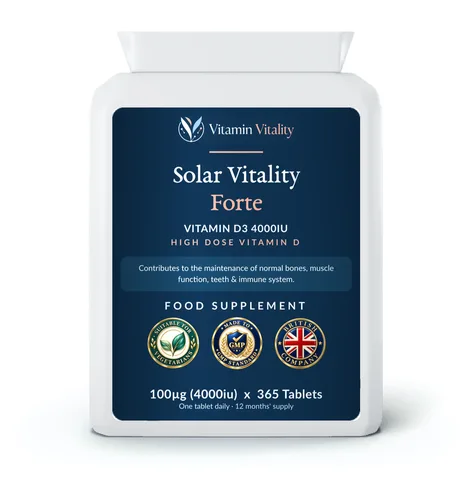
Food first. If you are choosing a daily multivitamin alongside a balanced diet, Kidney Vitality was developed by a UK Consultant Nephrologist using renal nutrition principles. See the formulation.