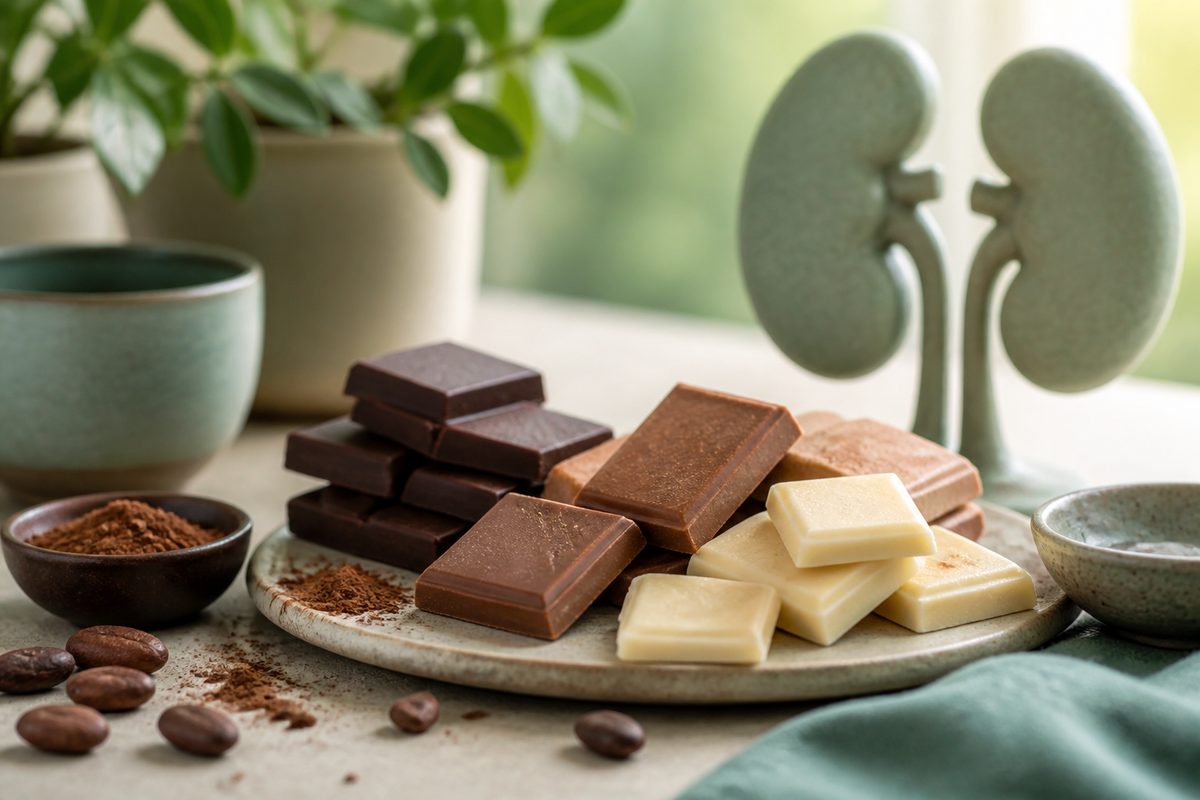
Why chocolate is on most renal-diet 'limit' lists
Chocolate's reputation in CKD comes down to one ingredient: cocoa. Cocoa solids are unusually high in both potassium and phosphate by weight. They also contain a small amount of oxalate (relevant for kidney-stone formers), and a modest amount of caffeine and theobromine.
The more cocoa solids a chocolate contains, the higher its potassium and phosphate. That is why dark chocolate (70% or 85% cocoa) is the most concentrated, milk chocolate (typically 25–30% cocoa solids) is in the middle, and white chocolate (cocoa butter only, no cocoa solids) is the lowest.
Chocolate by type — approximate numbers per 50 g
- Dark chocolate, 70% cocoa: ~ 360 mg potassium, ~ 150 mg phosphate, ~ 60–100 mg oxalate, ~ 40 mg caffeine.
- Dark chocolate, 85% cocoa: ~ 400 mg potassium, ~ 175 mg phosphate, ~ 80–120 mg oxalate.
- Milk chocolate (UK standard, ~ 25% cocoa): ~ 190 mg potassium, ~ 100 mg phosphate, ~ 30 mg oxalate, ~ 10 mg caffeine.
- White chocolate: ~ 140 mg potassium, ~ 95 mg phosphate, negligible oxalate, no caffeine.
- Chocolate-coated nut bars (e.g. Snickers 50 g): ~ 200 mg potassium, ~ 110 mg phosphate.
- Chocolate-coated raisins (50 g): ~ 400 mg potassium — high.
- Cocoa powder (1 tbsp, 6 g): ~ 80 mg potassium, ~ 40 mg phosphate.
For reference, a CKD Stage 4 daily potassium target is usually 2,000–3,000 mg and phosphate target 800–1,000 mg. A 100 g bar of 70% dark chocolate can deliver 720 mg potassium and 300 mg phosphate — a quarter of the daily potassium budget and a third of the phosphate budget in one sitting.
Hot chocolate and chocolate drinks
Hot chocolate is often the bigger surprise for CKD patients. A typical UK mug (250 ml semi-skimmed milk + 1 sachet of standard hot chocolate powder) contains roughly:
- Potassium: 500–700 mg
- Phosphate: 250–350 mg
- Sugar: 20–25 g
The combination of dairy and cocoa makes hot chocolate one of the highest single-serve potassium loads in a normal diet. If you love a daily hot chocolate, two practical options: make it weaker (½ sachet, more water, less milk), or switch to a lower-potassium hot chocolate (some brands now offer reduced-mineral 'renal-friendly' versions, or use plain cocoa with hot water).
Chocolate and kidney stones
Chocolate contains a moderate amount of oxalate. For someone who has formed calcium-oxalate kidney stones, the standard renal-dietetic advice is:
- Keep chocolate to small occasional portions (20–30 g).
- Choose milk over dark when you can.
- Take it with milk or a meal that contains calcium — the calcium binds oxalate in the gut.
- Drink plenty of plain water across the day.
For people without a stone history, chocolate-related oxalate is not usually a clinically important issue.
Caffeine and theobromine
A 50 g bar of 70% dark chocolate contains about 40 mg of caffeine — less than half a cup of brewed coffee. It also contains theobromine, a related stimulant with a milder cardiovascular effect. For most adults with CKD this is irrelevant. If you have very tight blood pressure control issues, palpitations, or take a stimulant medication, count it in your daily caffeine total (NHS adult guidance: ≤ 400 mg/day, ≤ 200 mg in pregnancy).
Food first. If you are choosing a daily multivitamin alongside a balanced diet, Kidney Vitality was developed by a UK Consultant Nephrologist using renal nutrition principles. See the formulation.
How to keep chocolate in your week
Practical strategies that work in clinic:
- Choose milk chocolate over dark if you are on a phosphate or potassium restriction.
- Treat-portion size: aim for 20–30 g (2–3 squares), not 100 g bars.
- Use chocolate as a planned daily 'small treat', not an open snack you graze on.
- Avoid chocolate-coated dried fruit (raisins, dates, apricots) — the dried fruit itself is very high in potassium.
- Watch chocolate-coated nut bars — both the nuts and the chocolate contribute potassium and phosphate.
- Make hot chocolate with more water and less milk, or swap to a renal-friendly powder.
- If chocolate cravings are a struggle, talk to your renal dietitian — there are usually better swaps than going cold turkey.