Why beef needs portion discipline in CKD
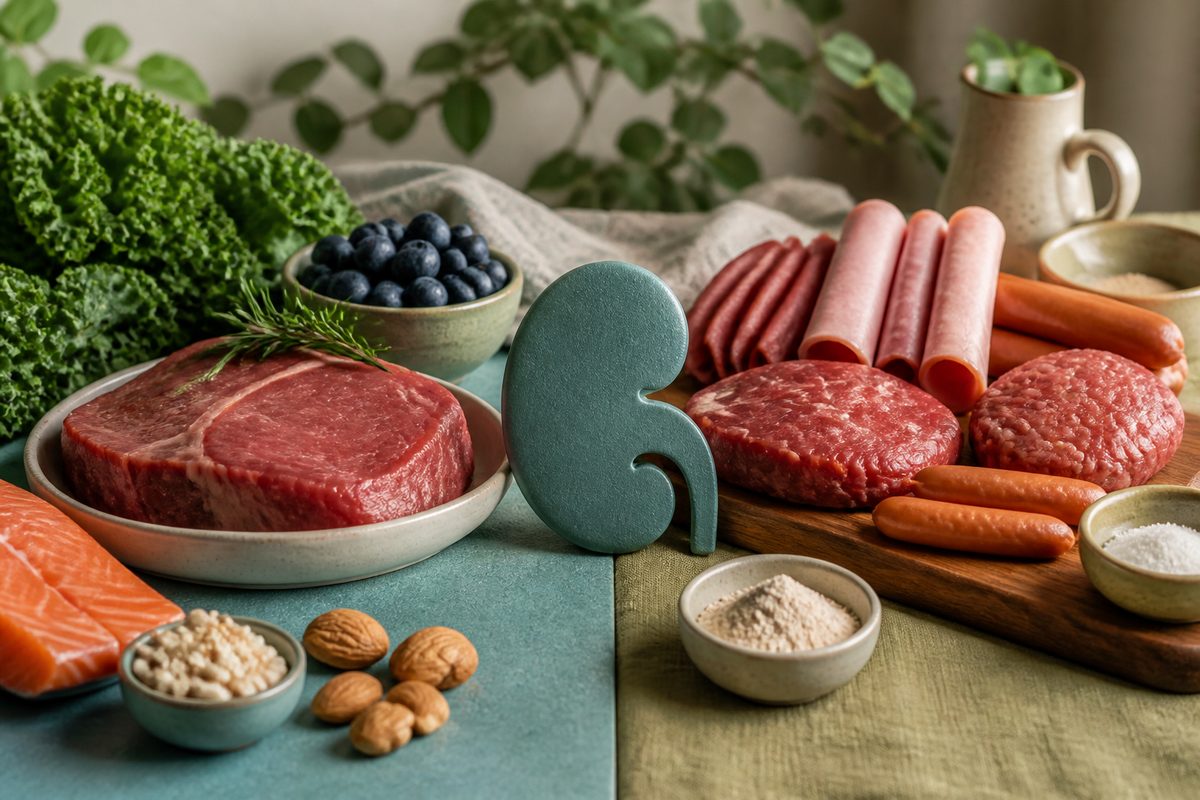
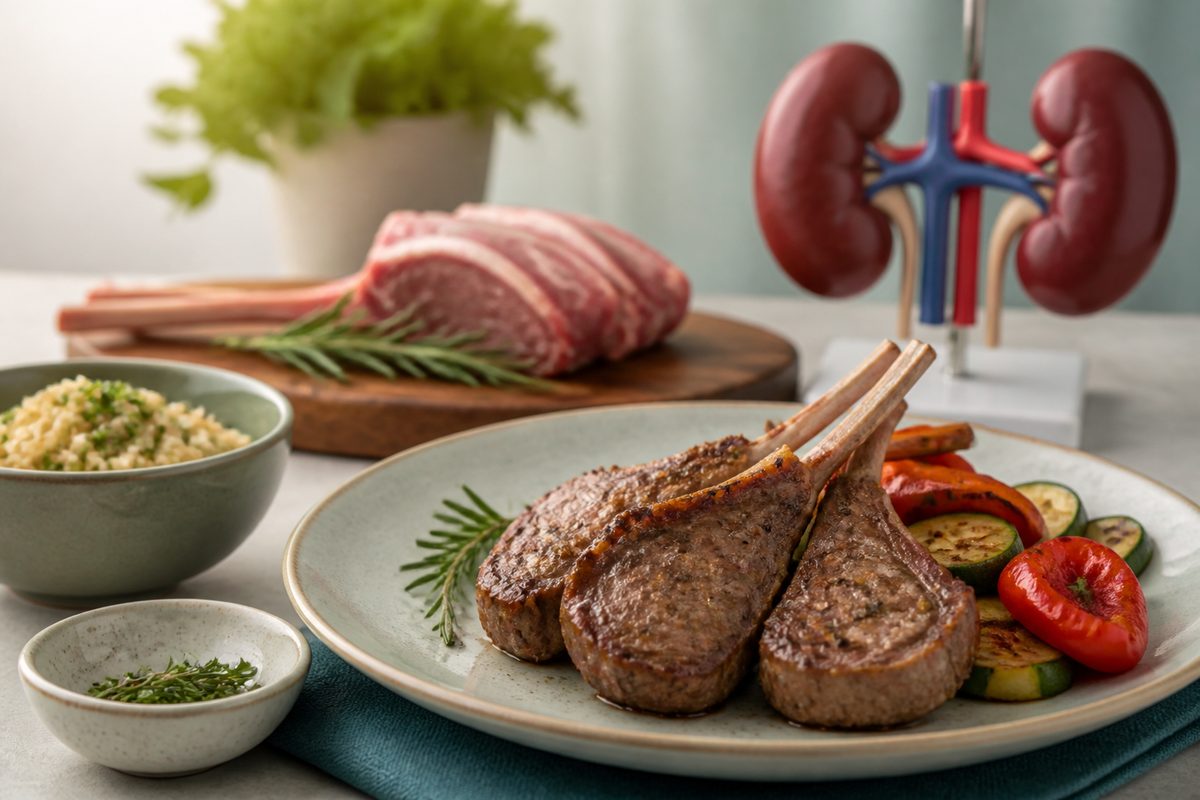
Beef is a complete protein with iron, zinc and B12, but like all red meats it generates a higher dietary acid load than poultry or fish. Observational data links high red-meat intake to faster CKD progression, partly through acid load and inflammation. The saturated fat content also raises cardiovascular risk — the leading cause of death in people with kidney disease.
Beef cuts compared (per 100 g cooked)
- Sirloin steak, grilled, lean: ~ 200 mg P, ~ 350 mg K, 5 g fat
- Fillet steak, grilled: ~ 190 mg P, ~ 340 mg K, 4 g fat
- Extra-lean mince (5% fat): ~ 180 mg P, ~ 300 mg K, 5 g fat
- Standard mince (20% fat): ~ 170 mg P, ~ 290 mg K, 17 g fat
- Beef brisket, slow-cooked: ~ 210 mg P, ~ 330 mg K, 15 g fat
- Corned beef (tinned): ~ 220 mg P, ~ 350 mg K, 15 g fat, very high sodium
Practical CKD-friendly ideas
- Beef stir-fry: 80 g lean sirloin strips, peppers, courgette, ginger, garlic, olive oil — no soy sauce.
- Beef and vegetable stew: 80 g extra-lean mince, carrots, celery, leeks, low-salt stock.
- Small steak (80 g) with boiled leached potatoes and green beans.
- Avoid: shop-bought beef burgers (phosphate additives), corned beef hash (salt + P), beef dripping on toast, large rib-eye steaks (> 200 g).
Food first. If you are choosing a daily multivitamin alongside a balanced diet, Kidney Vitality was developed by a UK Consultant Nephrologist using renal nutrition principles. See the formulation.