Why tomatoes show up on 'kidney lists'
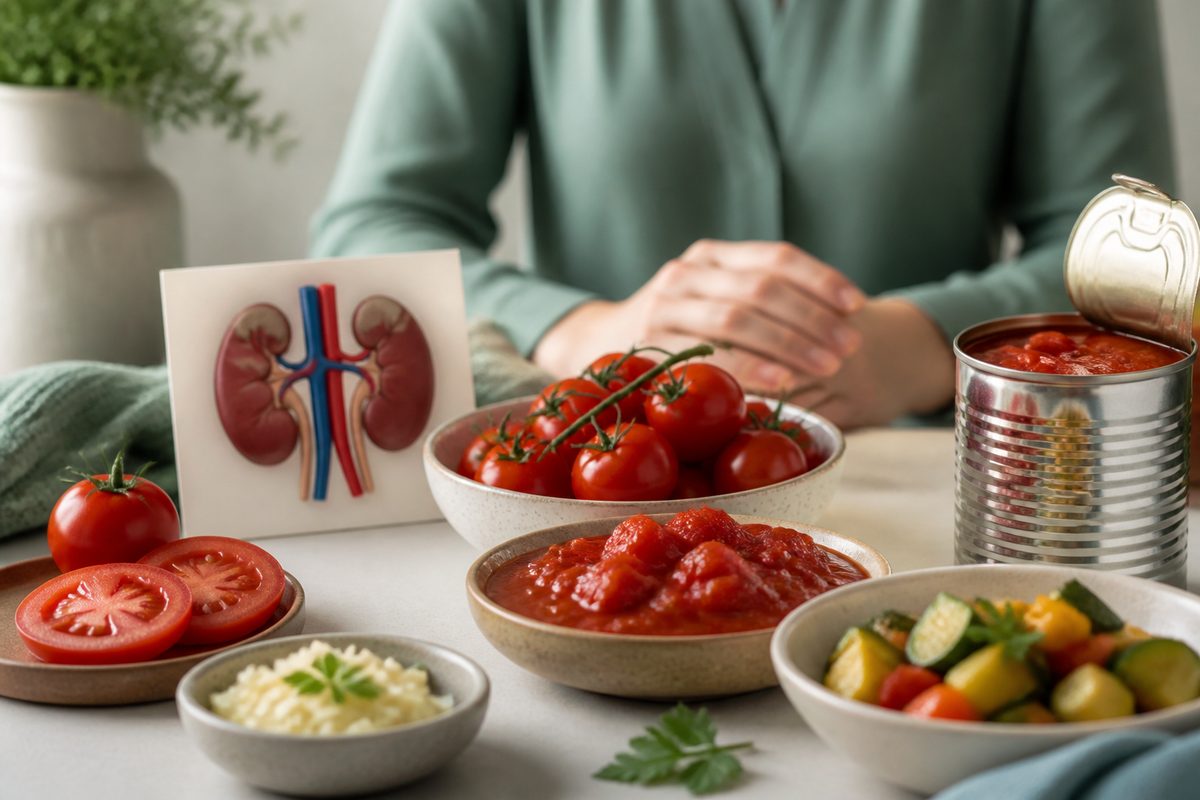
Tomatoes are repeatedly listed as a 'food to limit in kidney disease' for one reason: potassium. The potassium content of a fresh tomato is moderate (~ 290 mg in a medium fruit), but tomatoes concentrate dramatically when cooked, reduced or dried. A tablespoon of tomato purée contains as much potassium as a third of a fresh tomato, and 30 g of sun-dried tomatoes contains as much as four fresh tomatoes.
For someone in CKD Stages 1–3 with a normal serum potassium (3.5–5.0 mmol/L), this is not a problem — you have plenty of headroom. For someone in Stages 4–5 or on dialysis, where the daily potassium target is often 2,000–3,000 mg, the same dish can use a large slice of that budget.
Potassium by tomato product
Approximate potassium content (per typical portion):
- Fresh medium tomato (120 g): 290 mg
- Cherry tomatoes (5 pieces): 100 mg
- Tinned chopped tomatoes (200 g): 460 mg
- Tomato passata (100 g): 350 mg
- Tomato purée (1 tbsp / 16 g): 175 mg
- Tomato juice (200 ml): 460 mg
- Sun-dried tomatoes (30 g): 1,000 mg
- Tomato ketchup (1 tbsp): 60 mg
- Tomato-based pasta sauce, jarred (100 g): 280–450 mg
The practical message: fresh and ketchup are low-to-moderate, jarred sauces and tinned chopped tomatoes are moderate-to-high, and sun-dried and tomato juice are very high.
Tinned vs fresh: sodium also matters
Tinned tomatoes and most jarred pasta sauces contain added salt. A 400 g tin of standard chopped tomatoes can contain 0.4–0.8 g salt; a 500 g jar of pasta sauce can contain 3–5 g. Because most adults with CKD are advised to stay below 6 g salt/day (NHS) — and ideally lower — the sodium in tinned tomato products is often a bigger practical issue than the potassium.
Look for 'no salt added' tinned tomatoes (now widely available) or buy plain passata and season at home. Rinsing does not reduce sodium meaningfully in tinned tomatoes (unlike beans).
Tomatoes and kidney stones
Tomatoes are sometimes blamed for kidney stones, but fresh tomatoes are actually low in oxalate (around 5–10 mg per fresh fruit) compared with high-oxalate foods like spinach, rhubarb or almonds. For most calcium-oxalate stone formers, fresh tomatoes in normal portions are not a problem.
Concentrated tomato products (tomato sauce, paste, sun-dried) contain more oxalate per gram. If you have been advised to follow a low-oxalate diet, treat these as 'moderate' foods — small amounts are fine, large daily portions are not.
Eating tomato when you need to lower potassium
Practical strategies that work:
- Use fresh tomatoes rather than purée when you have the choice.
- Halve the tomato content of recipes — most pasta sauces taste fine with 50% tomato + 50% stock or cream.
- Mix red pepper into tomato sauce — peppers add colour and sweetness with less potassium.
- Swap sun-dried tomatoes for fresh roasted tomatoes or pesto.
- Avoid tomato juice and tomato-based 'detox' or 'cleanse' drinks.
- Use lower-potassium sauces (red pepper, pesto, béchamel) on alternate days.
Lycopene — the red antioxidant in tomatoes — is not harmful to kidneys. There is no kidney reason to avoid the colour itself.
Food first. If you are choosing a daily multivitamin alongside a balanced diet, Kidney Vitality was developed by a UK Consultant Nephrologist using renal nutrition principles. See the formulation.
When to ask for individualised advice
If your most recent blood test shows a serum potassium above 5.0 mmol/L, or you have been started on a potassium binder (patiromer, sodium zirconium cyclosilicate), or you are in CKD Stage 4–5 or on dialysis, ask your renal dietitian for an individualised plan rather than relying on a generic list. They can tell you exactly how much tomato fits into your day, what to pair it with, and which products to choose at the supermarket.