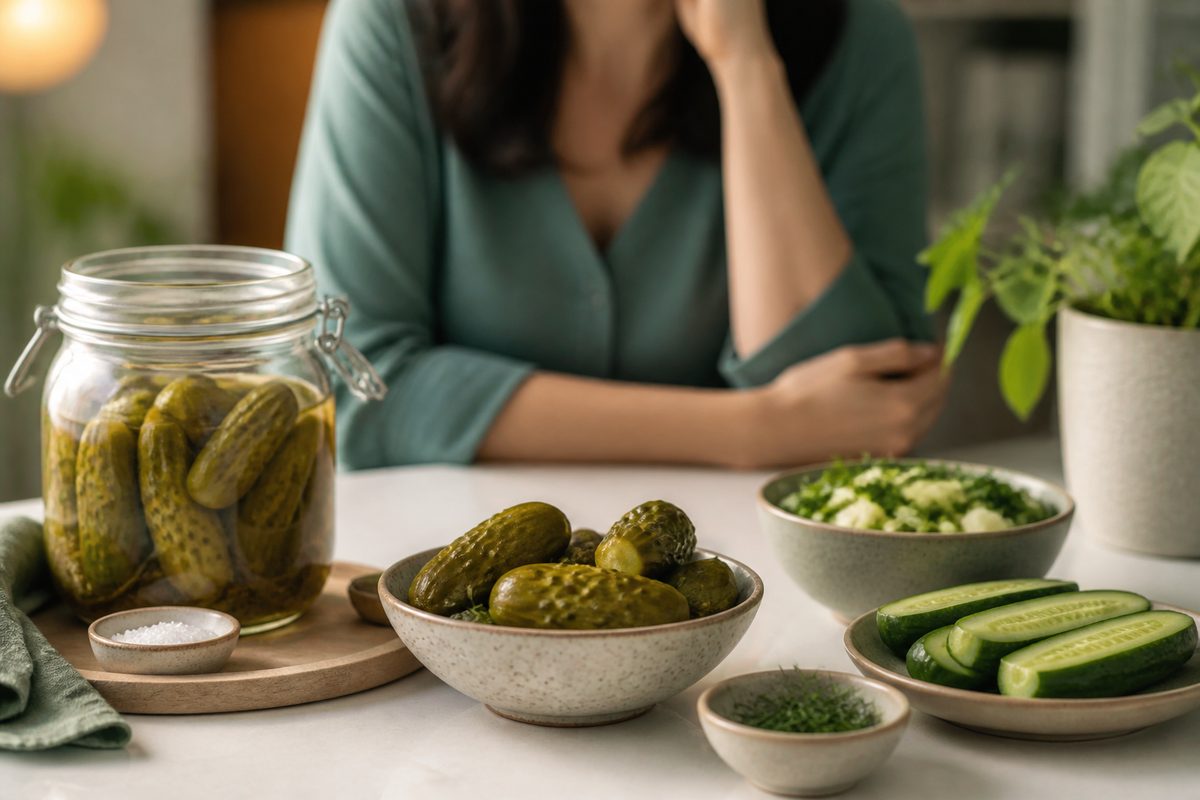
Why pickles are sodium bombs
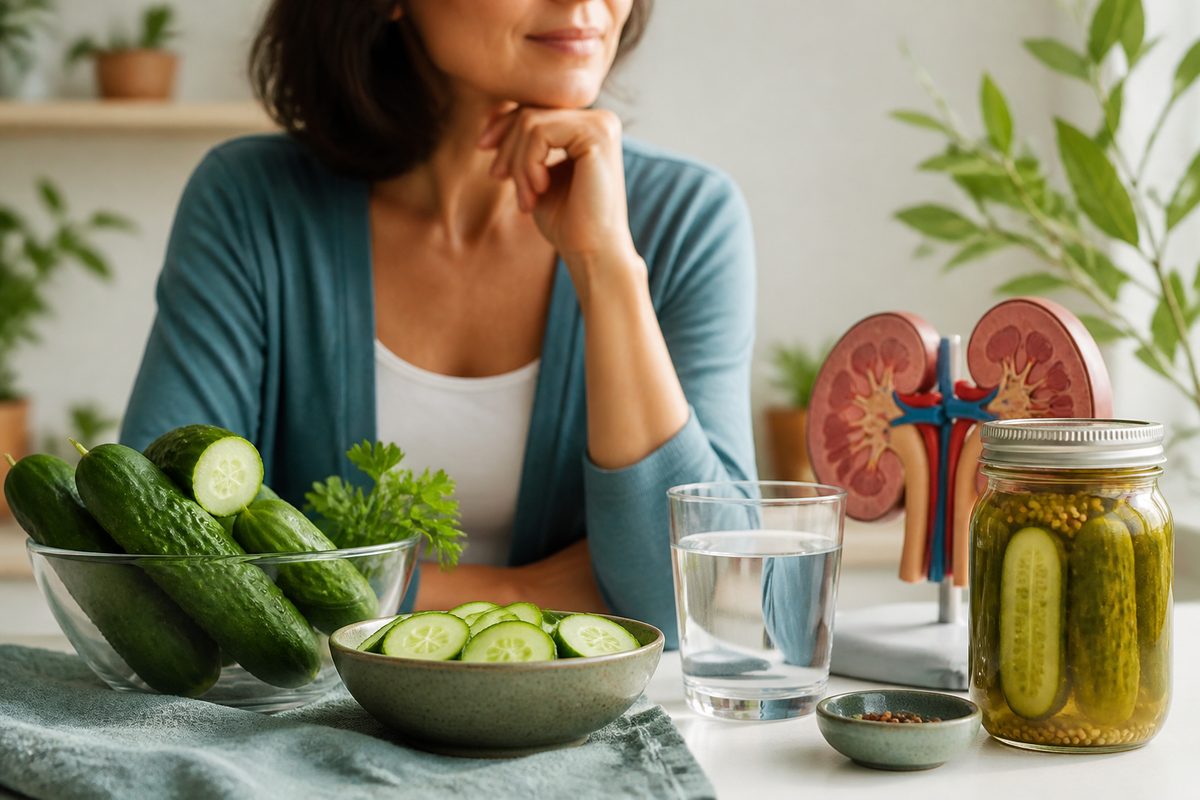
Traditional pickling uses 3–8% salt brine to inhibit spoilage organisms and drive fermentation. The cucumber absorbs sodium throughout the flesh, not just on the surface. Even after rinsing, most of the salt stays in the vegetable. Modern jarred gherkins use a vinegar + salt brine with similar sodium levels.
Blood pressure and fluid
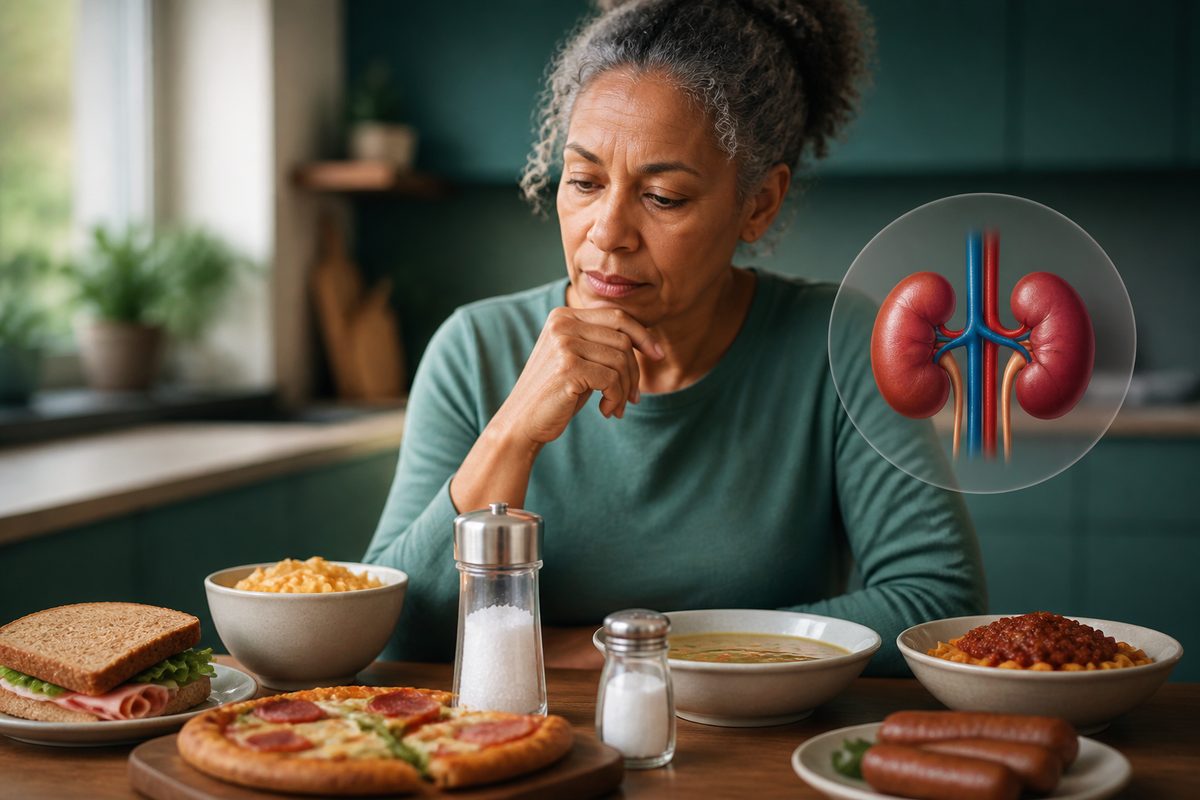
Sodium drives water retention and raises blood pressure — the leading modifiable driver of CKD progression. NHS guidance is < 2,400 mg sodium (6 g salt) per day; renal teams often target lower. Three pickle slices on a sandwich plus everything else in the meal can quietly push you over.
What about probiotic claims?
Lacto-fermented pickles do contain live cultures, but most shop-bought jars are heat-treated (pasteurised) and contain no live bacteria. Even when they do, the sodium load outweighs the modest gut-health benefit for most CKD patients. Plain unsweetened yoghurt or kefir (in small portions) is a better probiotic source.
Renal-friendly swaps
- Fresh cucumber slices with cider vinegar, dill and black pepper.
- Pickled red onion (homemade, low salt) as a garnish.
- Capers — also salty, but used in tiny amounts (1–2 per plate).
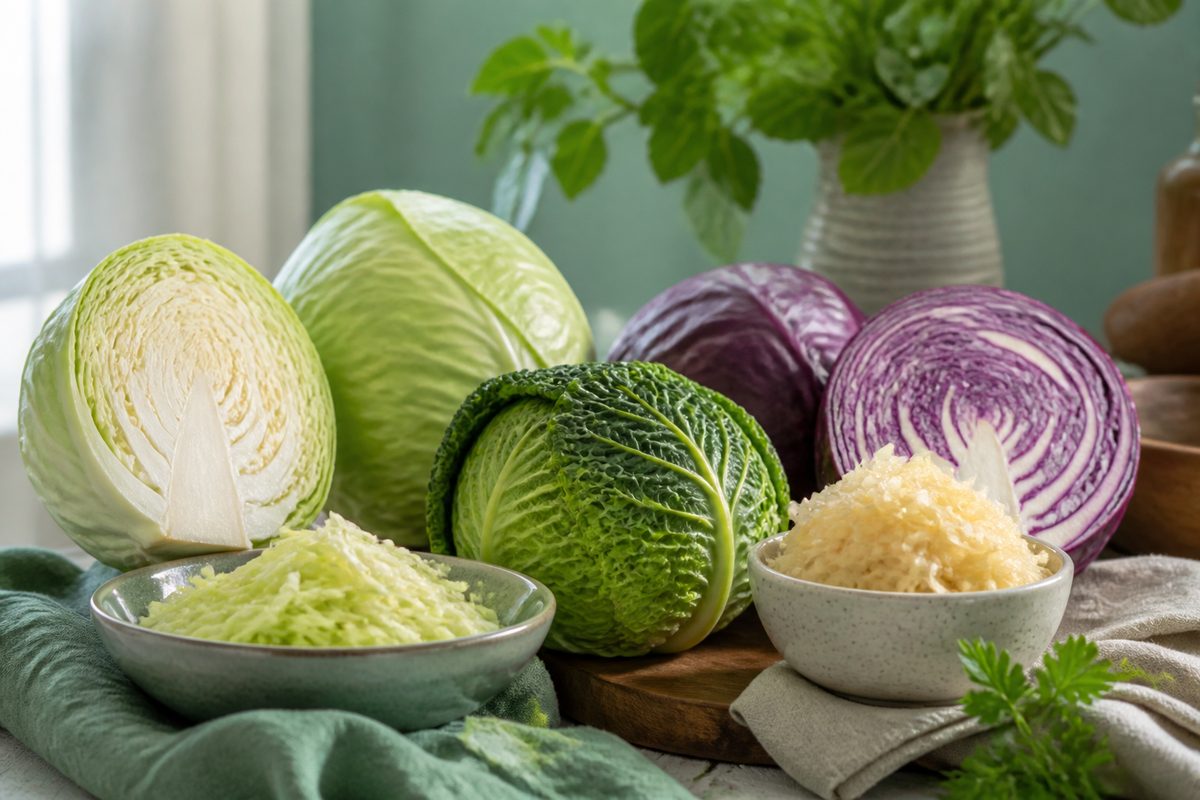
- Avoid: piling pickles on burgers/sandwiches, jarred gherkins as a side, sauerkraut and kimchi by the spoonful.
Food first. If you are choosing a daily multivitamin alongside a balanced diet, Kidney Vitality was developed by a UK Consultant Nephrologist using renal nutrition principles. See the formulation.