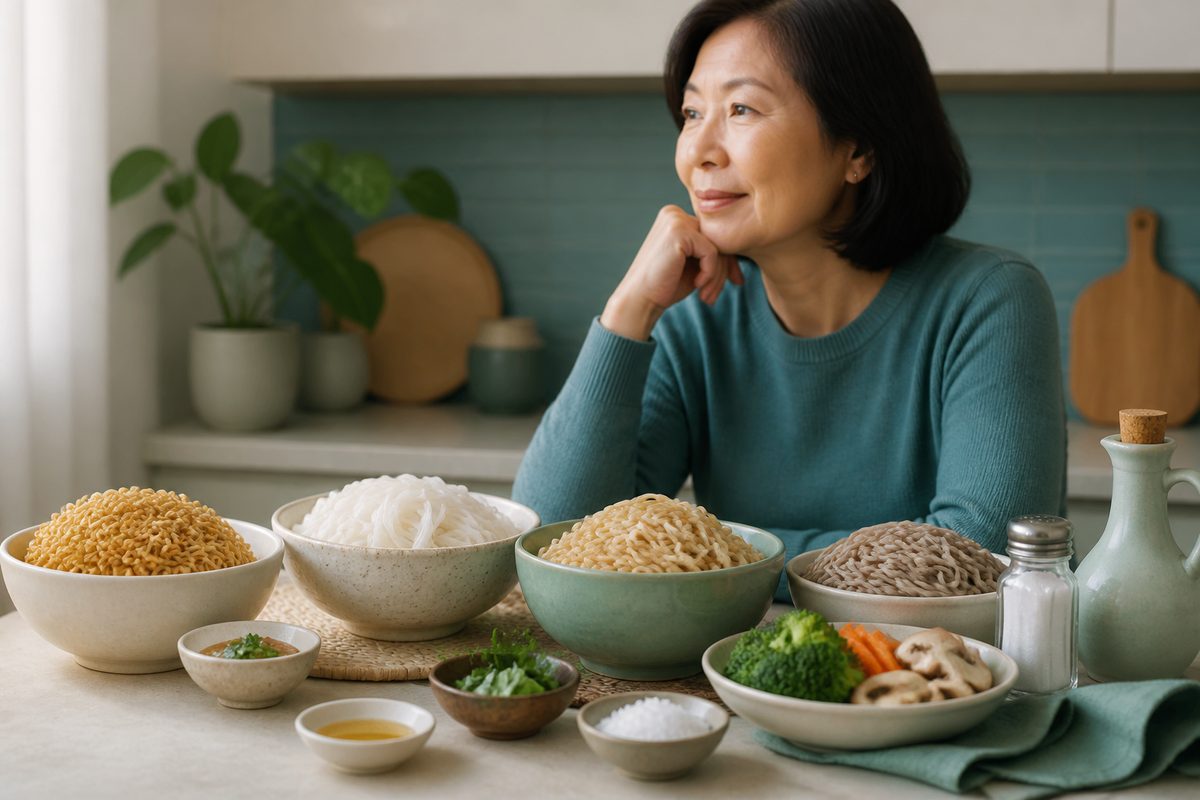
The instant noodle problem
Instant noodles are designed for shelf stability and intense flavour. The dried noodle block itself is usually just wheat flour, palm oil and salt — modest. The danger is the sachet: a concentrated mix of salt, MSG, flavour enhancers, colourings and often phosphate salts (E450, E451) to prevent caking. A single pot can exceed a renal patient's entire daily sodium budget, and regular consumption is strongly linked to hypertension and reduced kidney function in population studies.
Noodle types compared (per 100 g plain, cooked)
- Wheat noodles (udon, lo mein): ~ 10 mg K, ~ 20 mg P, ~ 5 mg sodium
- Egg noodles: ~ 20 mg K, ~ 30 mg P, ~ 10 mg sodium
- Rice noodles: ~ 5 mg K, ~ 10 mg P, ~ 5 mg sodium
- Instant noodle block only (no sachet): ~ 50 mg K, ~ 40 mg P, ~ 1,000 mg sodium (from the noodle manufacturing process)
- Instant noodle pot with sachet: ~ 100 mg K, ~ 80 mg P, 2,000–3,000 mg sodium
Practical CKD-friendly ideas
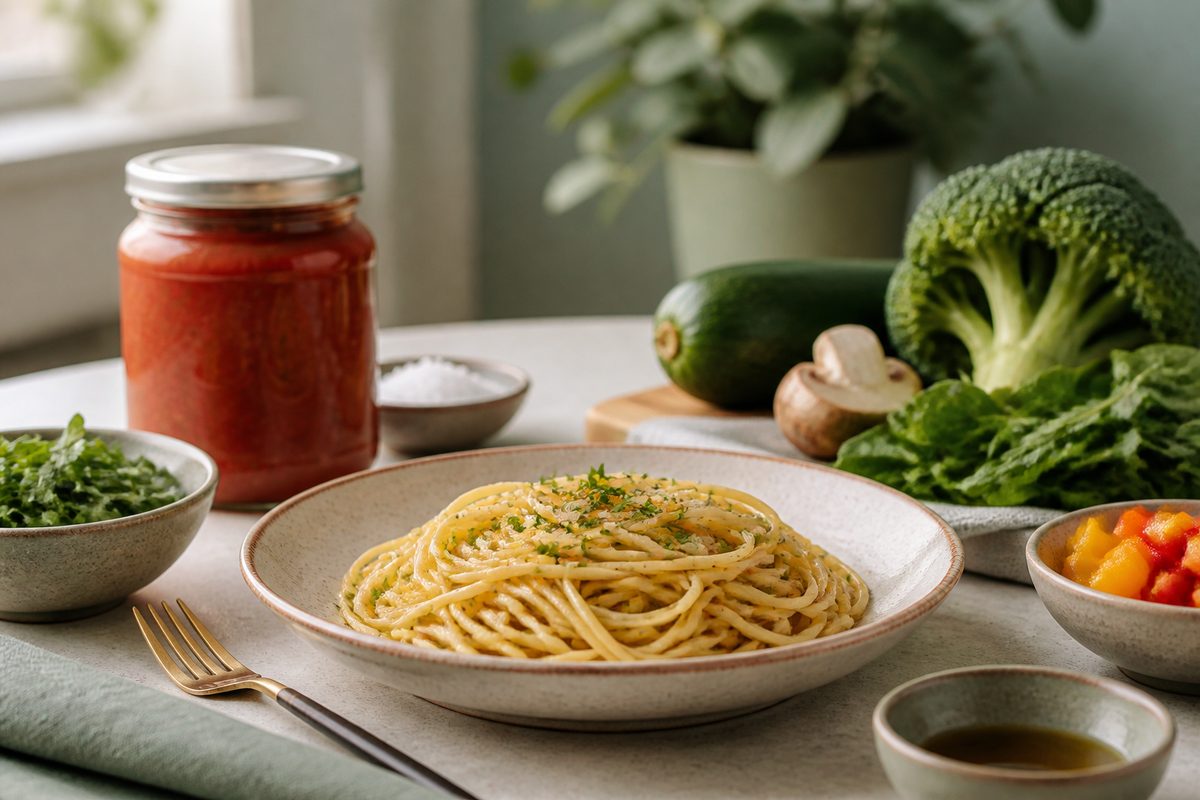
- Stir-fried rice noodles: rice vermicelli + garlic + ginger + spring onion + bok choy + sesame oil + lime.
- Udon in low-salt broth: homemade chicken or vegetable stock (no salt) + 1 tsp low-sodium miso + udon + spinach.
- Egg noodle 'chow mein' style: egg noodles + cabbage + carrot + bean sprouts + five-spice + drop of sesame oil.
- Avoid: instant noodle pots, instant ramen sachets, shop-bought stir-fry sauces (high sodium), noodle soups from takeaways.
Food first. If you are choosing a daily multivitamin alongside a balanced diet, Kidney Vitality was developed by a UK Consultant Nephrologist using renal nutrition principles. See the formulation.