The kidney-BP vicious cycle
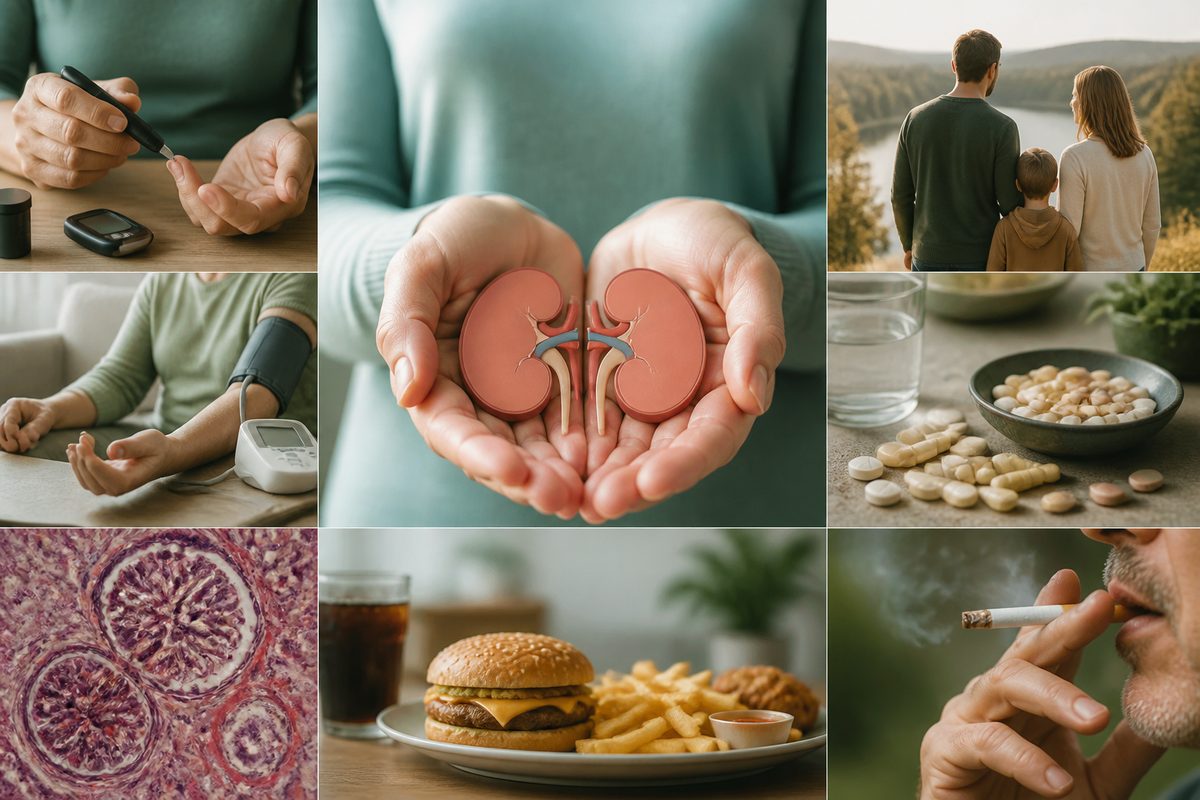
Healthy kidneys filter waste, control salt and water, and release hormones that regulate blood pressure. When arteries inside the kidney are damaged by high pressure, blood flow falls. The kidneys respond by releasing more renin, raising systemic blood pressure even higher to force blood through narrowed vessels. This compensatory mechanism backfires — it further damages the kidneys. Breaking this cycle requires both lowering blood pressure and protecting the kidney's filtering units.
How hypertension damages kidneys
Persistent high pressure causes hyaline arteriosclerosis — thickening and narrowing of the small arteries in the kidney. The filtering units (glomeruli) then scar and die. Over years, eGFR falls and protein appears in the urine. The damage is usually slow and silent, which is why screening with eGFR and urine ACR is critical for anyone with long-standing hypertension.
Blood pressure targets in CKD
NICE NG203 recommends a clinic blood pressure target under 140/90 mmHg for CKD without albuminuria, and under 130/80 mmHg for CKD with albuminuria (ACR ≥30 mg/mmol) or diabetes. Home blood pressure targets are roughly 5 mmHg lower. Ambulatory (24-hour) monitoring is the gold standard and helps diagnose white-coat hypertension or masked hypertension.
First-line kidney-protective medicines
ACE inhibitors and ARBs block the renin-angiotensin-aldosterone system (RAAS), reducing pressure inside the glomerulus and decreasing protein leak. They are proven to slow CKD progression. Common ACE inhibitors: ramipril, lisinopril, perindopril. Common ARBs: losartan, valsartan, irbesartan. A small initial dip in eGFR (up to 30%) is expected and not harmful. Check potassium and creatinine 1–2 weeks after starting or increasing the dose.
Lifestyle measures that matter
Salt restriction to under 5–6 g/day (ideally under 4 g for maximal effect) is the single most powerful dietary change. The DASH diet — rich in vegetables, fruits, whole grains and low-fat dairy, and low in saturated fat and sugar — lowers blood pressure by 8–14 mmHg. Weight loss of 5–10% if overweight, 150 minutes/week of moderate exercise, limiting alcohol to 14 units/week, and smoking cessation all add substantial benefit.
Kidney Vitality adds no sodium and is formulated without added potassium, magnesium, phosphorus or iron. See the formulation.
When to see a nephrologist
Referral to a kidney specialist is recommended if eGFR is under 30, urine ACR is over 70 mg/mmol, blood pressure remains above target despite three medicines, there is a rapid eGFR decline (>15% in a year), or there is visible blood in the urine. Resistant hypertension (uncontrolled on three drugs including a diuretic) often has an underlying kidney or hormonal cause worth investigating.