How kidneys normally protect bones
Healthy kidneys perform two vital jobs for bone health. First, they convert inactive vitamin D (25-OH vitamin D) into active vitamin D (1,25-OH2 vitamin D, also called calcitriol). Active vitamin D helps the gut absorb calcium from food. Second, kidneys filter excess phosphate from the blood. When kidneys are damaged, both processes falter: less active vitamin D is made, so calcium absorption drops. Phosphate builds up because less is excreted. The body senses low calcium and high phosphate and responds by releasing parathyroid hormone (PTH) from four small glands in the neck. PTH tries to correct the balance by pulling calcium from bones — but at the cost of bone strength.
The stages of bone disease in CKD
In early CKD (stages 1–3), bone turnover may be high as PTH rises to compensate. Bones are being broken down faster than they are rebuilt. In stage 4, this high-turnover state becomes more pronounced. By stage 5 and on dialysis, the picture can shift: some people develop low-turnover bone disease (adynamic bone disease) where bones become too still and do not remodel properly. This is equally dangerous because bones become brittle. The exact type can only be confirmed by bone biopsy, which is rarely done in routine care. Instead, renal teams use blood tests and clinical judgment to guide treatment.
Blood test targets by CKD stage
NICE NG203 and KDIGO provide stage-specific targets. For phosphate: keep it within the normal range (roughly 0.9–1.5 mmol/L, though local targets vary). For calcium: maintain normal albumin-corrected calcium. For PTH: in stages 3a–3b, aim for normal range. In stage 4, up to 2–3 times the upper limit of normal may be acceptable. In stage 5 and on dialysis, up to 2–9 times the upper limit may be tolerated, though lower is better. For 25-OH vitamin D: aim for at least 50 nmol/L (20 ng/mL), ideally 75 nmol/L. Your renal team will set individual targets based on your history and other health conditions.
Medications used to protect bones in CKD
Active vitamin D analogues (alfacalcidol, calcitriol) or selective vitamin D receptor activators (paricalcitol) help suppress PTH and improve calcium absorption. Phosphate binders (calcium acetate, calcium carbonate, sevelamer, lanthanum, sucroferric oxyhydroxide) are taken with meals to bind dietary phosphate in the gut so it is not absorbed. Cinacalcet lowers PTH by sensitising the parathyroid glands to calcium. Calcimimetics may be used when PTH is very high and surgery is being considered. Bisphosphonates are generally avoided in advanced CKD because they are cleared by the kidneys and can cause low-turnover bone disease.
Diet strategies for bone protection
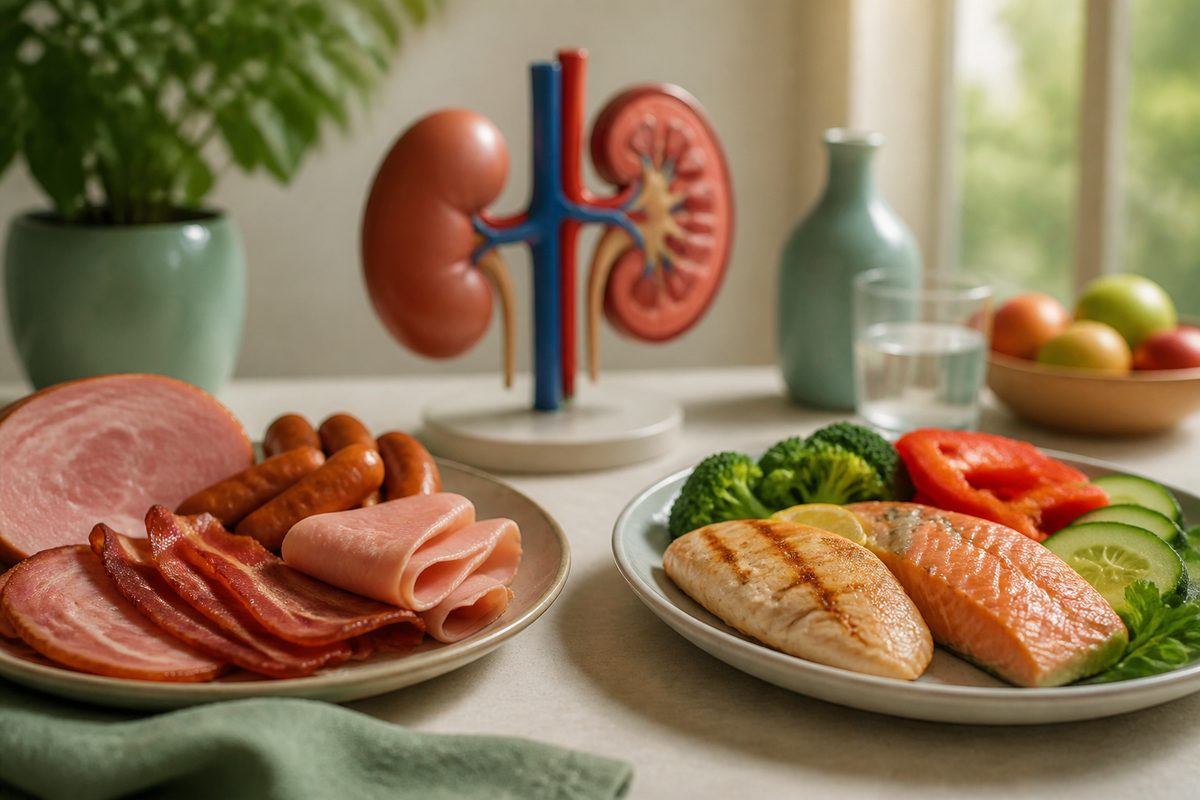
Phosphate control is the dietary priority. Avoid phosphate additives in processed meats, cola, instant sauces and baked goods. Choose fresh, unprocessed foods. Ensure adequate protein for bone matrix — lean meats, fish, eggs and dairy if phosphate allows. If your phosphate is high, your team may recommend limiting cheese, milk and yoghurt. Get calcium from foods approved by your dietitian: this might include dairy, calcium-fortified plant milks (check they are not phosphate-fortified), or leafy greens. Maintain vitamin D through safe sun exposure and prescribed supplements. Do not take over-the-counter calcium or vitamin D without renal team approval.
Kidney Vitality is a daily multivitamin developed by a UK Consultant Nephrologist using renal nutrition principles. It contains no added potassium, magnesium, phosphorus or iron, and no herbal blends. See the formulation.
Exercise and lifestyle for stronger bones
Weight-bearing exercise stimulates bone formation. Walking, dancing, stair climbing, and light resistance training with bands or light weights all help. Aim for 150 minutes of moderate activity per week plus two sessions of resistance exercise, adapted to your fitness level and CKD stage. Balance exercises reduce fall risk — important because fractures are more dangerous with weak bones. Avoid smoking and limit alcohol, as both accelerate bone loss. If you are on steroids for a kidney condition or transplant, bone protection becomes even more critical — discuss this explicitly with your team.