Patient Resources 9 min read·Updated 22 July 2026 Clinician-reviewed

Low-Phosphate Foods for CKD

A practical guide to foods that are naturally low in phosphate — with label-reading tips, a printable food list, and swaps for everyday meals.

  • Clinically Reviewed
  • NHS & NICE Aligned
  • UK Evidence-Based
  • Last Reviewed 22 July 2026

Professor Mohammed Mahdi Althaf

Consultant Nephrologist & Acute Physician

View Credentials

Professor Mohammed Mahdi Althaf

MD, MSc, PgDip (Clin Ed), FRCP, FHEA, FASN

Consultant Nephrologist & Acute Physician · GMC 7216325

View profile →

Direct answer

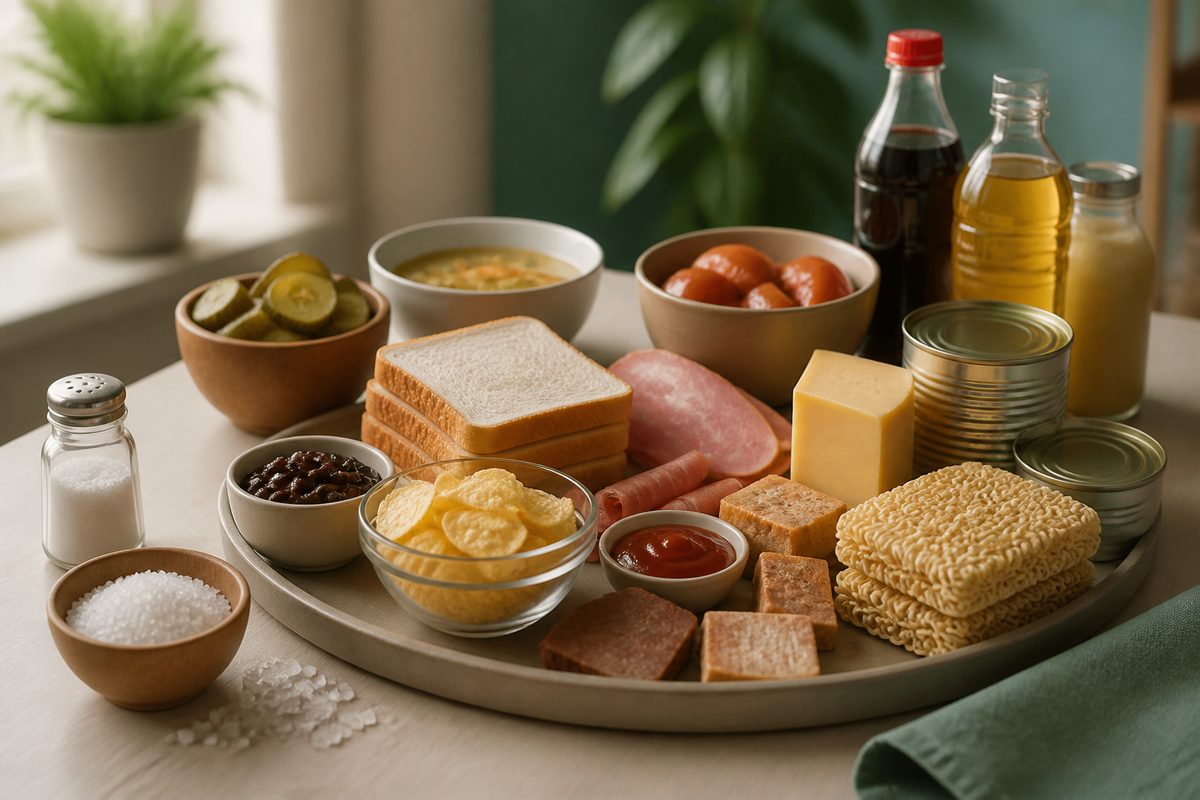
Focus on fresh, unprocessed foods: white bread, rice, pasta, most fruits and vegetables, and fresh lean meats without additives. Avoid processed meats, cola, cheese slices, and anything with phosphate additives (E338–E452). Plant phosphate is less absorbable than additive phosphate.

Key recommendation: Fresh fruits and most vegetables are naturally low in phosphate.

Quick answer

✓ Best choices

  • Fresh, unprocessed foods cooked at home
  • Plant proteins: tofu, beans, lentils in measured portions
  • Lower-phosphate cheeses (mozzarella, cottage cheese) in small amounts

✓ Foods to limit

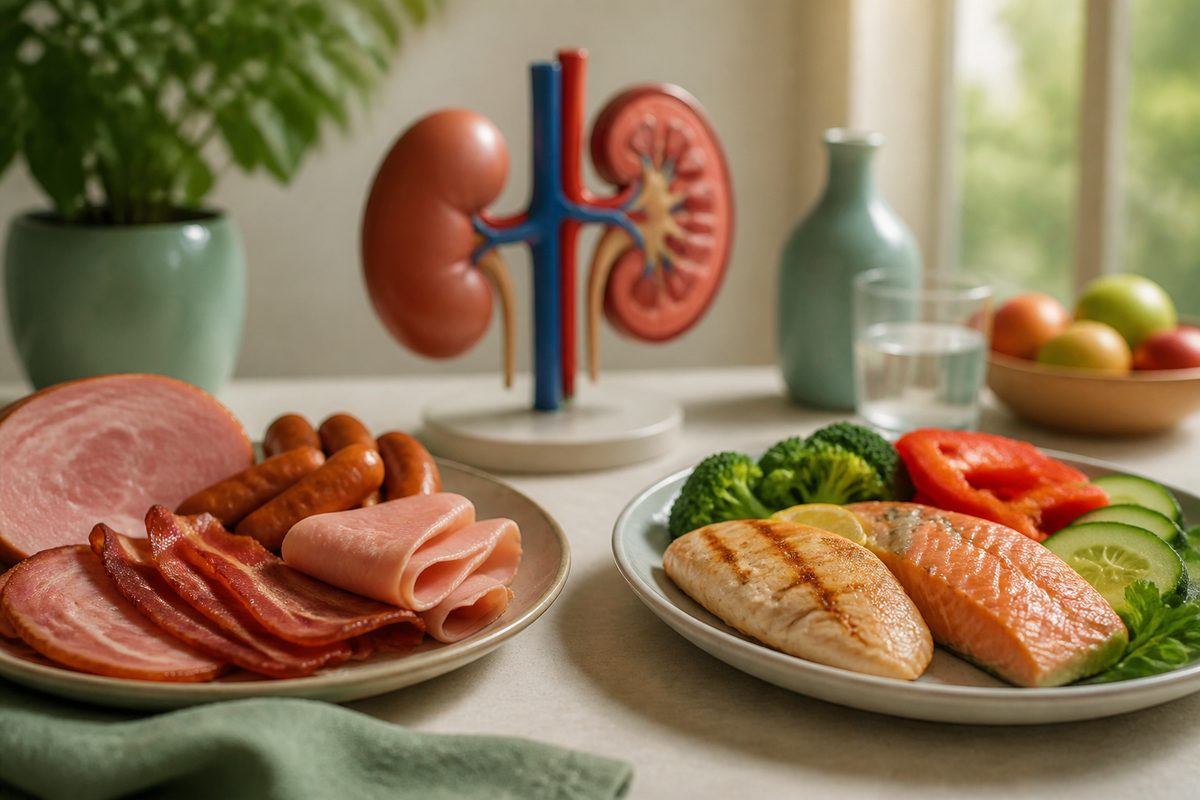
  • Processed meats (bacon, ham, sausages, deli slices)
  • Cola and dark fizzy drinks
  • Instant noodles, ready meals, processed cheese, milkshake powders
  • Any food with E338, E339, E340, E341, E343, E450, E451, E452 on the label

Key takeaway

Focus on fresh, unprocessed foods: white bread, rice, pasta, most fruits and vegetables, and fresh lean meats without additives. Avoid processed meats, cola, cheese slices, and anything with phosphate additives (E338–E452). Plant phosphate is less absorbable than additive phosphate.

Who should be cautious

People on dialysis, post-transplant, pregnant or breastfeeding, or taking prescription medication — confirm with your renal team before changes.

Low-Phosphate Foods for CKD

The phosphate-CKD connection

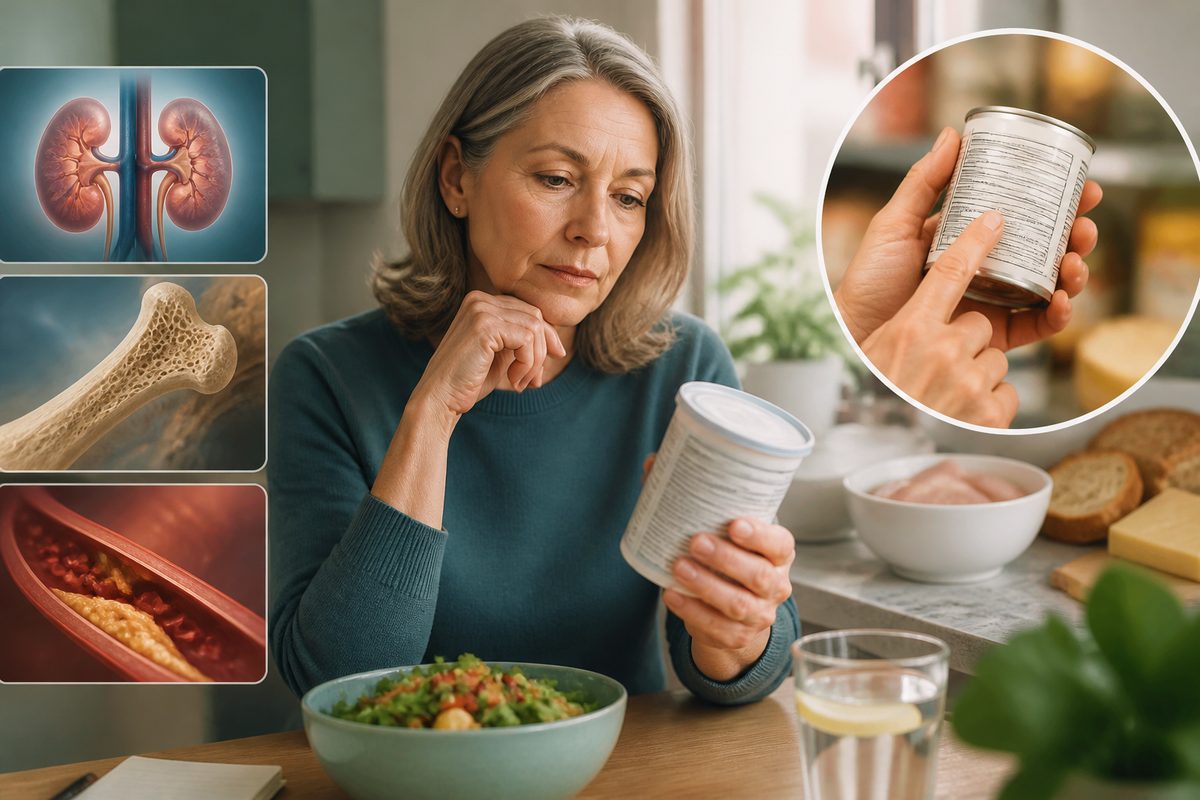
Phosphate is a mineral found in almost all foods. In healthy kidneys, excess phosphate is filtered out in urine. As kidney function declines, phosphate builds up in the blood (hyperphosphataemia). High phosphate triggers the parathyroid glands to release PTH, which pulls calcium from bones. The calcium-phosphate combination then deposits in blood vessels, heart valves and soft tissues — a process called vascular calcification. This is why controlling phosphate is a cornerstone of CKD-MBD (chronic kidney disease-mineral and bone disorder) management.

Low-phosphate fruits and vegetables

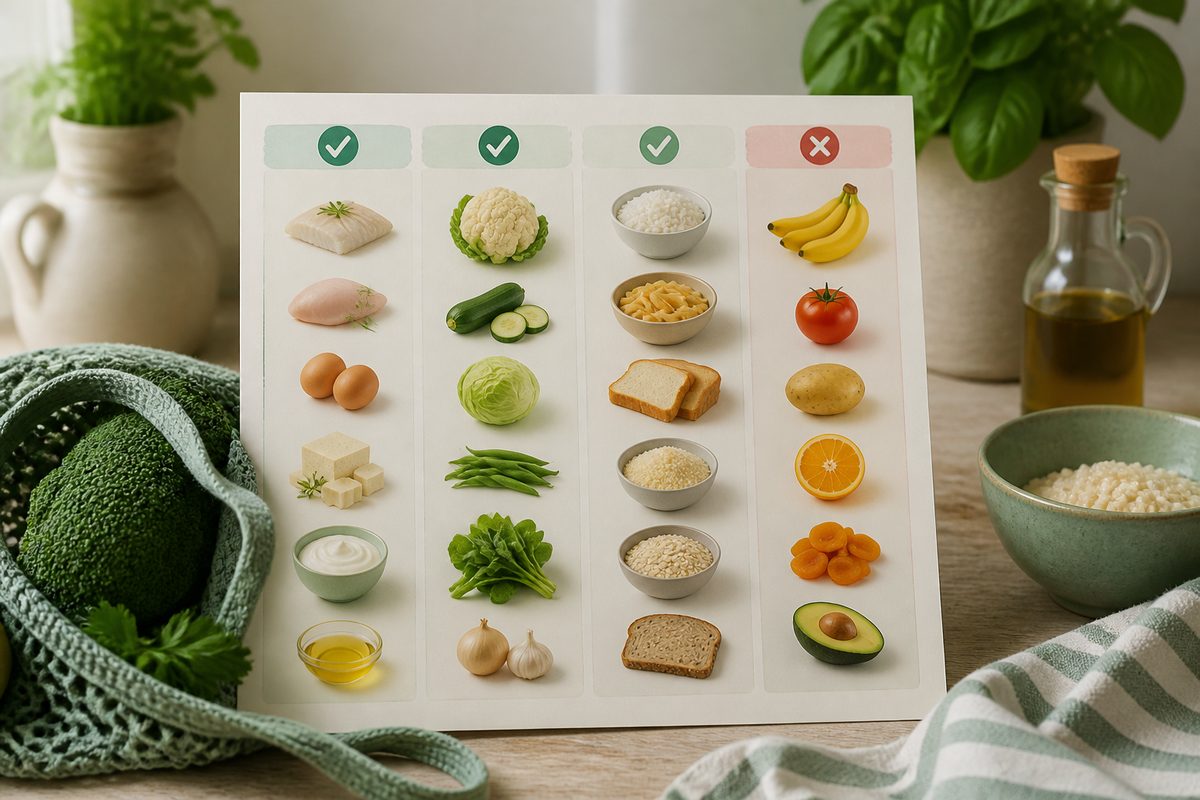
Most fresh fruits are very low in phosphate and can be eaten freely at all CKD stages: apples, pears, berries, grapes, cherries, peaches, plums, pineapple and melon. Vegetables that are naturally low in phosphate include cabbage, cauliflower, cucumber, iceberg lettuce, bell peppers, onions, leeks, green beans and courgette. Root vegetables like carrots and turnips are moderate. Potatoes are moderate-to-high in phosphate but much of it is lost with double-boiling (leaching). Tomatoes, mushrooms, spinach and avocado are higher — enjoy in smaller portions depending on your stage.

Low-phosphate proteins

Fresh chicken and turkey breast (without injected brine or phosphate solutions) are moderate in phosphate and good protein choices in sensible portions. White fish such as cod, haddock and plaice are also moderate. Eggs contain about 200 mg phosphate each — acceptable in early CKD, but portion-controlled in later stages. Tofu and plain tempeh are plant proteins with phytate-bound phosphate that is poorly absorbed. Avoid processed meats entirely: bacon, ham, sausages, deli slices, and fish fingers are loaded with sodium and phosphate additives.

Phosphate additives (E338–E452) are common in processed food and some supplements. Kidney Vitality is formulated without added phosphorus. See the formulation.

Carbohydrates and dairy swaps

Plain white bread, pitta, chapatti, white rice, pasta, couscous, and plain crackers are all low in phosphate. Wholemeal versions have more phosphate — fine in early CKD, but portion-controlled later. For dairy, fresh mozzarella, ricotta, paneer and cottage cheese are lower in phosphate than hard cheeses like cheddar, parmesan and red Leicester. Plant milks can be tricky: some are fortified with calcium phosphate. Choose unfortified versions or check the label carefully.

Foods to limit or avoid

Cola and soft drinks with phosphoric acid (E338) are a major source of absorbed phosphate and offer no nutritional value — avoid completely. Processed meats and cheeses are the next biggest concern. Bran cereals, wholegrain cereals with added phosphate, instant noodles with seasoning sachets, stock cubes, gravy granules, and instant sauces all contain phosphate additives. Tinned fish with edible bones (sardines, pilchards, salmon) are nutritious but very high in phosphate — limit to occasional small portions.

Reading UK food labels for phosphate

UK nutrition labels show phosphate content only occasionally. The ingredient list is your best tool. Scan for any E-number between 338 and 452. If you see 'sodium polyphosphate', 'calcium phosphate', 'phosphoric acid' or similar, the product contains additive phosphate. The Free From aisle often has lower-additive options, but always check the label — 'free from' does not mean phosphate-free. Apps like FoodMaestro and Change4Life can help, but nothing replaces reading the ingredients list yourself.

Sample low-phosphate day

Breakfast: Porridge made with unfortified oat milk, topped with blueberries and a drizzle of honey. White toast with a thin spread of butter or margarine. Lunch: Chicken salad with iceberg lettuce, cucumber, peppers and olive oil dressing. White bread roll. Dinner: Baked cod with boiled rice and steamed cauliflower. Olive oil and lemon for flavour. Snacks: Apple slices, plain rice cakes, a handful of grapes.
Phosphate and Kidney Disease
Related reading: Phosphate and Kidney Disease.

Key practical tips

Designed for quick scanning — what to order, what to avoid, sensible portions, common mistakes.

  • Take prescribed phosphate binders with every meal and snack containing protein
  • Look for 'PHOS' on ingredient lists — it usually means added phosphate
  • Plant-bound phosphate is more forgiving than processed-meat phosphate

Clinical guidance

TL;DR summary

Focus on fresh, unprocessed foods: white bread, rice, pasta, most fruits and vegetables, and fresh lean meats without additives. Avoid processed meats, cola, cheese slices, and anything with phosphate additives (E338–E452). Plant phosphate is less absorbable than additive phosphate.

Key takeaways
  • Fresh fruits and most vegetables are naturally low in phosphate.
  • White bread, rice, pasta and couscous are kidney-friendly carb staples.
  • Avoid phosphate additives E338–E452 in processed foods.
  • Plant phosphate (phytate) is 60–80% less absorbable than additive phosphate.
  • Check cola drinks, processed meats, stock cubes and gravy granules for hidden phosphate.
Kidney Diet & Nutrition Considerations

Two phosphate sources matter in CKD: natural phosphate from food (about 40–60% absorbed) and additive phosphate (over 90% absorbed). Cutting additive phosphate is the highest-yield change. Plant-bound phosphate from beans, lentils and whole grains is less well absorbed than animal phosphate.

Foods to prioritise

  • Fresh, unprocessed foods cooked at home
  • Plant proteins: tofu, beans, lentils in measured portions
  • Lower-phosphate cheeses (mozzarella, cottage cheese) in small amounts

Foods to limit

  • Processed meats (bacon, ham, sausages, deli slices)
  • Cola and dark fizzy drinks
  • Instant noodles, ready meals, processed cheese, milkshake powders
  • Any food with E338, E339, E340, E341, E343, E450, E451, E452 on the label

Potassium, phosphate and protein needs vary between individuals — please confirm personal targets with your renal team or dietitian. Browse the Kidney Diet Hub for more guides in this cluster.

Phosphate league table (per 100 g)

White bread

Phosphate (mg)
~80
CKD rating
Green — eat freely

Apples

Phosphate (mg)
~10
CKD rating
Green — eat freely

Cauliflower

Phosphate (mg)
~40
CKD rating
Green — eat freely

Fresh chicken breast

Phosphate (mg)
~200
CKD rating
Amber — moderate portions

Cheddar cheese

Phosphate (mg)
~500
CKD rating
Red — limit or avoid

Cola drink

Phosphate (mg)
~15–40
CKD rating
Red — additive phosphate, avoid

Baked beans

Phosphate (mg)
~130
CKD rating
Amber — small portions, drained

Sardines (tinned, with bones)

Phosphate (mg)
~400
CKD rating
Red — very high

Processed ham

Phosphate (mg)
~300+
CKD rating
Red — additive phosphate

Frequently asked questions

What is a low-phosphate food?

A low-phosphate food contains less than 100 mg of phosphate per 100 g. In CKD, controlling phosphate matters because damaged kidneys cannot excrete excess phosphate efficiently. Over time, high phosphate levels pull calcium from bones and deposit it in blood vessels, raising the risk of fractures and cardiovascular problems. Foods naturally low in phosphate include most fresh fruits and vegetables, white bread, plain rice, pasta, and many fresh meats without phosphate additives.

What foods are naturally low in phosphate?

Naturally low-phosphate foods include: fruits (apples, pears, berries, grapes, pineapple), vegetables (cabbage, cauliflower, cucumber, peppers, iceberg lettuce, onions), carbohydrates (white bread, white rice, pasta, couscous, plain crackers), proteins (fresh chicken, turkey, white fish, eggs — in moderation), and fats (olive oil, butter, margarine). Most fresh, unprocessed foods are lower in phosphate than processed equivalents.

Which foods are surprisingly high in phosphate?

Processed and convenience foods are the biggest hidden sources: cola drinks, processed meats (bacon, ham, sausages, deli slices), cheese (especially hard cheeses), baked beans, tinned fish with bones (sardines, pilchards), nuts and seeds, bran cereals, and wholemeal products. The real danger is additive phosphate (E338–E452) — this is absorbed much more efficiently than natural phosphate and is not counted on most nutrition labels.

How do I spot phosphate additives on labels?

Look for E numbers in the ingredients list: E338 (phosphoric acid), E339–E341 (sodium and calcium phosphates), E450 (diphosphates), E451 (triphosphates), and E452 (polyphosphates). These appear in processed meats, cheese slices, instant sauces, stock cubes, gravy granules, cola drinks, baked goods, and some breakfast cereals. If the label says 'phosphate', 'phosphoric acid', or any E-number in the 338–452 range, choose a different product.

Is natural phosphate from plants better than additive phosphate?

Yes. Phosphate from plant sources (beans, lentils, whole grains) is partly bound as phytate, which is poorly absorbed — only 20–40% makes it into your bloodstream. Phosphate additives in processed foods are inorganic and absorbed at 90–100%. This is why a bowl of lentils is gentler on your phosphate levels than a slice of processed cheese or a cola drink, even if the total phosphate number looks similar.

Do I need to avoid all high-phosphate foods?

Not necessarily in early CKD (stages 1–3). Your renal team will monitor your blood phosphate levels. If your phosphate is normal, you mainly need to avoid phosphate additives and very high-phosphate foods. In stages 4–5 and on dialysis, tighter control is usually needed, and you may be prescribed phosphate binders (taken with meals) alongside dietary restriction.

Which foods are highest in hidden phosphate?

Processed meats, cola and dark fizzy drinks, instant noodles, ready meals, processed cheeses and dairy-based powders are the biggest hidden sources, because they contain phosphate additives (E338–E452) that are over 90% absorbed — much more than natural food phosphate.

Nutritional challenges in kidney disease

Many people living with kidney disease have to limit foods because of potassium, phosphate, diabetes, dialysis, appetite changes or simply the time it takes to cook from scratch every day. That can make it harder to keep daily nutrition balanced — particularly for vitamins and minerals that food alone may not fully cover.

Kidney Vitality is a UK-formulated daily nutritional support product designed by Consultant Nephrologist Professor Mohammed Mahdi Althaf with renal nutrition in mind from the start. It keeps doses moderate, leaves out added potassium, phosphate and magnesium, and avoids megadose vitamin A — sitting alongside a kidney-friendly diet, not replacing it.

Why Kidney Vitality fits this need

Designed around UK renal nutrition guidance

Aligned with NICE NG203, KDOQI 2020 and British Dietetic Association Renal Nutrition Group recommendations on phosphate management.

Designed by a UK Consultant Nephrologist

Reviewed by Professor Mohammed Mahdi Althaf (GMC 7216325) to ensure clinical accuracy and safety.

Practical and printable

Food lists and label-reading tips you can use in the supermarket or share with your renal dietitian.

Designed by a UK Consultant Nephrologist

Ready to support your kidney health?

If you have been researching kidney health, supplements, CKD nutrition or kidney-friendly living, Kidney Vitality was developed specifically around those principles by Professor Mohammed Mahdi Althaf (GMC 7216325). A daily multivitamin formulated without added phosphorus.

  • No Added Phosphorus
  • No Added Potassium
  • No Added Magnesium
  • Developed by a Consultant Nephrologist
  • One capsule daily
  • UK GMP — BRCGS, NSF GMP, Halal

✓ Free UK tracked delivery  ·  ✓ Delivered every 30 days  ·  ✓ Pause or cancel anytime  ·  ✓ Never run out

ComparisonKidney VitalityTypical high-street multivitamin
Added potassiumNoneOften included
Added phosphateNoneOften included (E338–E452)
Vitamin A (retinol)No megadoseOften high-dose retinol
Kidney-focused formulationYesNo — general population
Consultant Nephrologist involvementYes (GMC 7216325)No
UK GMP manufacturedYes (BRCGS, NSF GMP)Varies

Food supplement. Not a medicine and not a treatment for kidney disease. Speak with your GP, pharmacist or renal team before starting any new supplement, especially in advanced CKD, on dialysis, post-transplant, pregnant or breastfeeding.

Clinical reviewer

Professor Mohammed Mahdi Althaf

Consultant Nephrologist

Acute Physician

GMC 7216325

View Full Biography

Professor Mohammed Mahdi Althaf is a UK Consultant Nephrologist and Acute Physician with a special interest in chronic kidney disease, AKI prevention and renal nutrition. He combines hospital practice with patient education and clinical guidance review.

View professional profile →
View Credentials
  • MD
  • MSc
  • PgDip (Clin Ed)
  • FRCP
  • FHEA
  • FASN

About this article

Written for UK patients and based on:

  • NICE guidance
  • NHS resources
  • British Dietetic Association guidance
  • Kidney Care UK resources
View methodology

Each article is researched against current UK clinical guidance (NICE NG203, NG118, NG136), NHS patient resources, KDIGO and KDOQI international guidelines, and the British Dietetic Association Renal Nutrition Group. Drafts are written by the Kidney Vitality editorial team and reviewed by a UK Consultant Nephrologist before publication. Content is reviewed on a rolling basis and updated when guidance changes.

Editorial standards

  • Clinically reviewed
  • NHS-aligned
  • NICE-aligned
  • Evidence-based
  • Reviewed before publication
View full editorial process

Every article is researched and written by the Kidney Vitality editorial team using current UK clinical guidance (NICE NG203, NG118, NG136), NHS patient resources, KDIGO/KDOQI international guidelines, and British Dietetic Association renal nutrition guidance. Drafts are reviewed for clinical accuracy by Professor Mohammed Mahdi Althaf, MD, MSc, PgDip (Clin Ed), FRCP, FHEA, FASN (Consultant Nephrologist & Acute Physician, GMC 7216325) before publication. Content is updated when UK guidance changes.

References (4)View Sources
  1. NICE NG203: Chronic kidney disease — assessment and management
  2. KDIGO 2024 Clinical Practice Guideline for the Evaluation and Management of CKD
  3. KDOQI Clinical Practice Guideline for Nutrition in CKD: 2020 Update
  4. British Dietetic Association — Renal Nutrition Group

Medical disclaimer

This content is educational only and does not replace personalised medical advice.

Read full disclaimer

This page is general information, not personal medical advice. If you have chronic kidney disease, are on dialysis, have had a kidney transplant, are pregnant or breastfeeding, or take prescription medication, please confirm any supplement with your GP, pharmacist or renal team before starting.