Midweek quick dinners (20 minutes)
Stir-fried chicken and peppers with rice: dice skinless chicken breast, stir-fry in olive oil with garlic, ginger and sliced bell peppers. Season with black pepper and a squeeze of lemon. Serve over white basmati rice. Lemon and herb baked cod: place cod fillets on a baking tray, drizzle with olive oil, lemon juice and dried herbs. Bake at 180°C for 15 minutes. Serve with boiled rice and steamed green beans. Egg fried rice: scramble 2 eggs, add cooled white rice, frozen peas, spring onions and a splash of low-sodium soy sauce. Quick, satisfying and naturally low in potassium.
Relaxed weekend meals
Homemade chicken curry: make a sauce from onions, garlic, ginger, tinned tomatoes (rinsed) and mild curry powder. Simmer diced chicken breast until cooked. Use a small splash of coconut milk rather than cream. Serve with rice and cucumber raita (plain yoghurt, cucumber, mint). Shepherd's pie with cauliflower mash: use lean lamb mince (drain fat after browning), add carrots, onions and low-sodium gravy. Top with mashed cauliflower (50:50 with potato if early CKD) and bake until golden. Pasta with homemade tomato sauce: saute garlic and onions in olive oil, add rinsed tinned tomatoes, simmer 20 minutes, toss with cooked pasta. Top with a small amount of fresh mozzarella or ricotta.
What to avoid at dinner
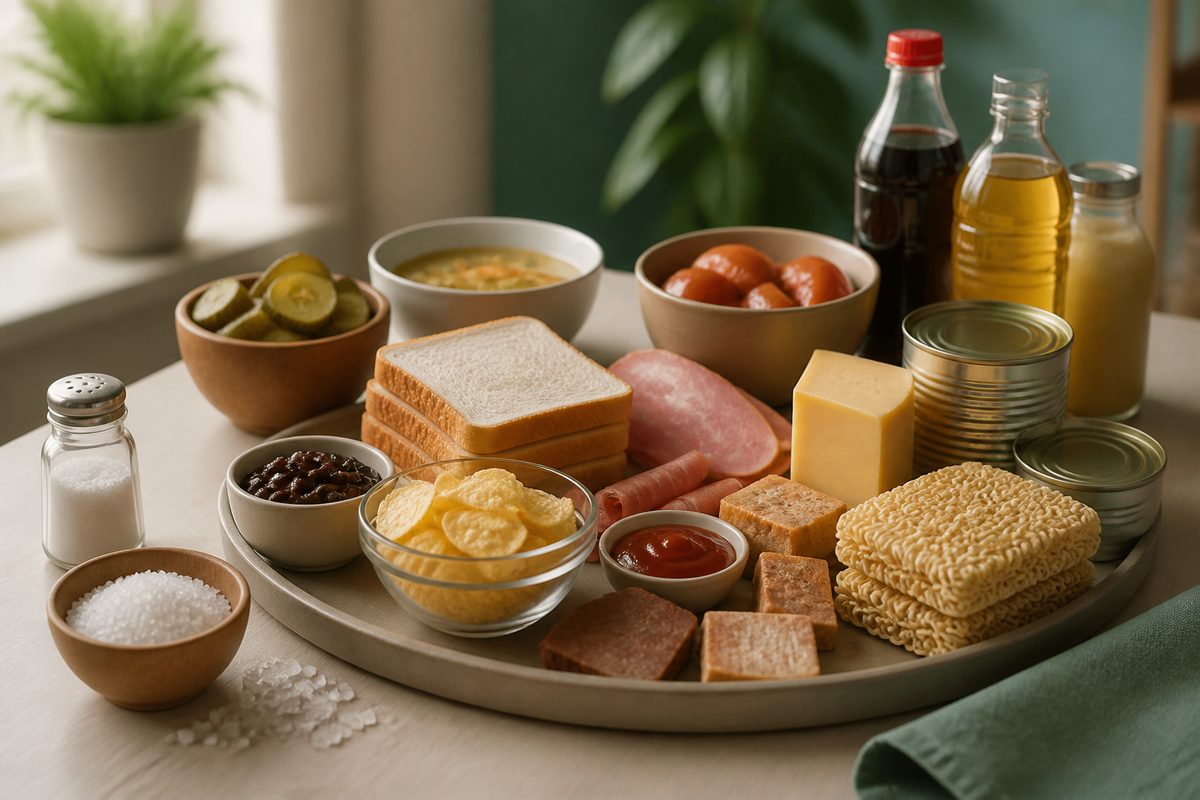
Jarred pasta sauces, curry sauces and stir-fry sauces are typically very high in salt and often contain phosphate additives (E338–E452). Stock cubes and gravy granules are concentrated sodium bombs — one stock cube can contain 2–3 g salt. Processed meats (sausages, bacon, ham, deli meats, fish fingers) are high in sodium and phosphate additives. Cheese-heavy dishes (pizza, lasagne, macaroni cheese) stack phosphate and sodium. Ready meals and takeaway curries, Chinese dishes and pizzas often exceed a day's salt allowance in a single serving.
Portion guidance by CKD stage
Stages 1–3: focus on salt restriction (under 5–6 g/day total). Most vegetables and moderate protein portions are fine. Aim for a palm-sized protein portion, two fist-sized vegetable portions, and one cupped-hand carb portion. Stages 4–5 (not on dialysis): protein may need moderate restriction (0.8 g/kg body weight/day). Potassium and phosphate become more important — choose lower-potassium vegetables, leach potatoes if eaten, and avoid phosphate additives. On dialysis: protein needs rise (1.0–1.2 g/kg/day) to replace losses, but potassium and phosphate still need restriction. Fluid restriction may apply — avoid soupy dinners and limit gravy.
Cooking techniques that help
Double-boiling (leaching) reduces potassium in potatoes and vegetables: peel, slice thinly, soak in warm water for 2 hours, then boil in fresh water and discard the cooking water. Rinse tinned beans, lentils and vegetables to remove up to 40% of sodium and some potassium. Use fresh herbs, garlic, ginger, lemon, vinegar and spices instead of salt. Cook from scratch as much as possible — it gives you full control over sodium and additives.
Kidney Vitality is a daily multivitamin developed by a UK Consultant Nephrologist using renal nutrition principles. It contains no added potassium, magnesium, phosphorus or iron, and no herbal blends. See the formulation.
Sample 7-day dinner plan
Monday: Lemon herb baked cod with rice and green beans. Tuesday: Chicken stir-fry with peppers and rice. Wednesday: Cauliflower mash shepherd's pie. Thursday: Pasta with homemade tomato sauce and side salad. Friday: Tofu and vegetable curry with rice. Saturday: Grilled chicken breast with roasted peppers, onions and couscous. Sunday: Omelette with mushrooms and a slice of toast.