The 'kidney cleanse' myth
Healthy kidneys do not need 'cleansing'. They filter ~ 180 litres of blood every day and excrete waste continuously. In CKD, kidneys are damaged — and no food or drink restores the lost nephrons. The 'kidney detox' and 'kidney cleanse' industry exists because the words sell products, not because the science supports them.
No randomised trial has ever shown that apple cider vinegar (or any other 'kidney detox' product) improves kidney function, slows CKD progression, or removes a meaningful amount of toxins. The honest medical reality is that the established treatments for CKD — controlling blood pressure, controlling diabetes, avoiding NSAIDs, ACE inhibitors/ARBs where appropriate, SGLT2 inhibitors, and a kidney-friendly diet — are what actually work.
Kidney stones — what ACV does and doesn't do
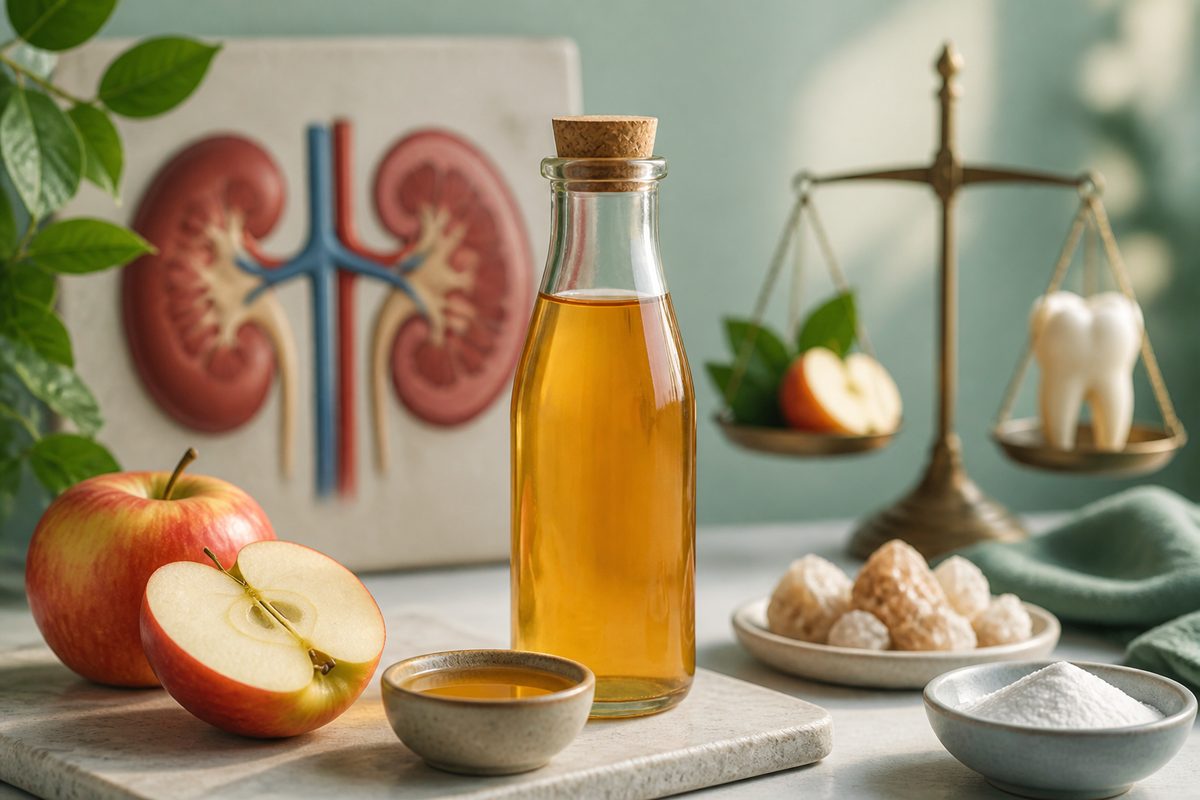
ACV does not dissolve calcium-oxalate kidney stones (~ 80% of UK stones). The pH of urine is regulated by the kidneys and by overall acid load from the whole diet — a tablespoon of vinegar has minimal effect.
For uric-acid stones (~ 5% of stones), making the urine less acidic is helpful — but the proven treatment is potassium citrate or sodium bicarbonate prescribed by a urologist or nephrologist, not vinegar (which is acidic).
The evidence-based ways to reduce kidney stone recurrence:
- Fluid intake to make > 2 L urine/day
- Reduce dietary salt
- Adequate dietary calcium (paradoxically protective)
- Limit oxalate-heavy foods if you've had calcium-oxalate stones
- Limit animal protein for uric-acid stones
- Prescribed citrate therapy where indicated
Blood sugar effects — modest but real
The best-studied benefit of ACV is on post-meal blood glucose. A 2017 systematic review and several small trials suggest:
- 15–30 ml ACV with a meal can blunt the post-meal glucose spike by 10–20%.
- In type 2 diabetes, daily ACV may reduce fasting glucose by ~ 0.3–0.5 mmol/L and HbA1c by ~ 3 mmol/mol.
For context, a single dose of metformin reduces HbA1c by ~ 10–15 mmol/mol. ACV is real, modest, and not a substitute for diabetes medication. For CKD patients with diabetes, optimising prescribed treatment is far higher-impact.
Risks of chronic high intake
- Hypokalaemia (low blood potassium) — a published case (NEJM, 1998) described severe hypokalaemia in a 28-year-old drinking 250 ml of ACV daily for 6 years. Risk is higher with concurrent diuretics.
- Tooth enamel erosion — vinegar pH ~ 2.5, comparable to lemon juice. Chronic undiluted intake causes irreversible enamel loss.
- Oesophageal and throat irritation — case reports of caustic injury from undiluted intake or capsules lodging in the oesophagus.
- Delayed gastric emptying — can worsen gastroparesis in long-standing diabetes.
- Interaction with insulin and sulphonylureas — additive hypoglycaemia risk.
For CKD patients on diuretics, ACE inhibitors, ARBs or insulin, daily high-dose ACV is best avoided.
If you want to use ACV — safe practical guidance
- Choose a 5% acidity bottled vinegar (UK supermarket brands).
- Dilute 1 tablespoon (15 ml) in a glass of water — never drink undiluted.
- Take with or just after a meal, not on an empty stomach.
- Drink through a straw and rinse with plain water afterwards to protect teeth.
- Don't exceed 2 tablespoons/day.
- Avoid ACV 'gummies' that combine the acid with sugar (defeats the purpose) and ACV capsules (oesophageal risk).
- If you take diuretics, ACEi/ARBs, insulin, sulphonylureas or have advanced CKD, check with your renal team before regular use.
- Don't use it instead of prescribed medication.
Food first. If you are choosing a daily multivitamin alongside a balanced diet, Kidney Vitality was developed by a UK Consultant Nephrologist using renal nutrition principles. See the formulation.