What alcohol does to the kidneys
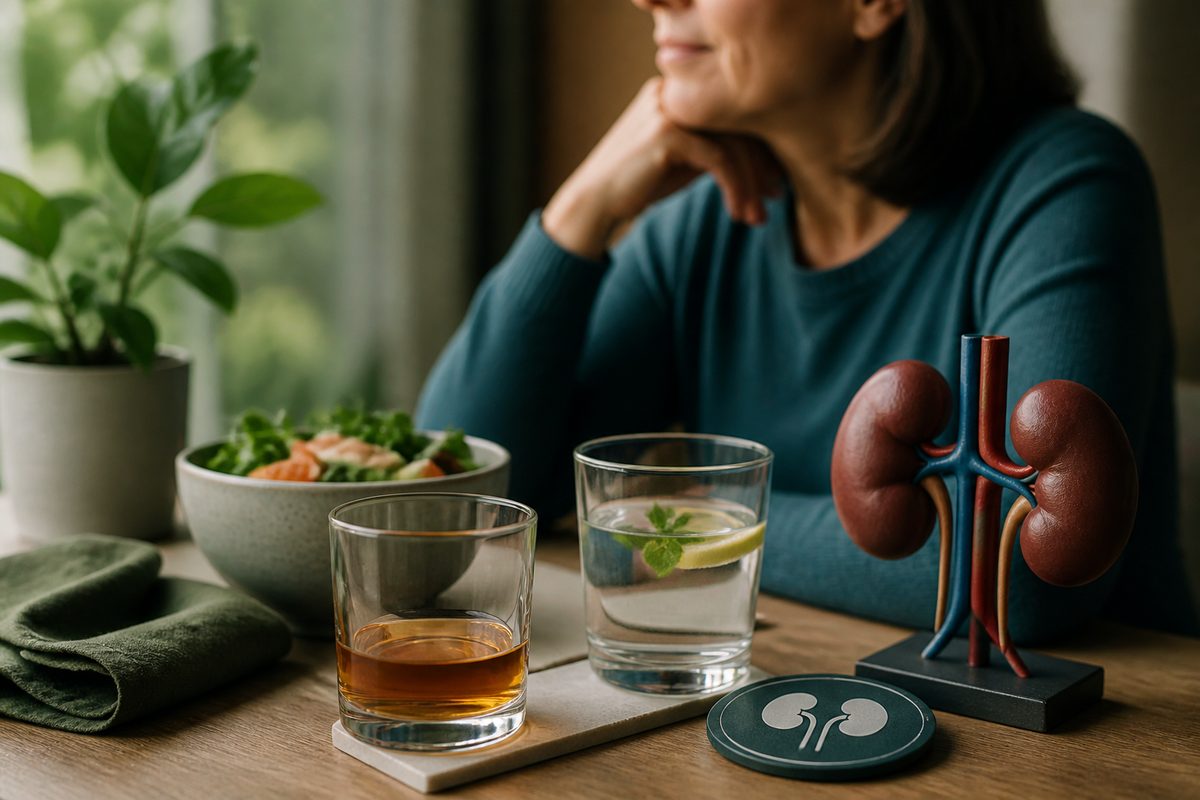
The kidneys filter and excrete the breakdown products of alcohol, and they adjust fluid balance in response to its diuretic effect. In moderate amounts, healthy kidneys cope. The damage from alcohol comes from indirect routes: raised blood pressure, dehydration, weight gain and metabolic syndrome, liver disease (which itself worsens kidney function via hepatorenal physiology), and an increased risk of falls, rhabdomyolysis and acute kidney injury during heavy episodes.
Large UK prospective studies (UK Biobank, EPIC) generally find no extra CKD risk for adults drinking within the 14-unit weekly guideline, and clear extra risk above ~ 28 units/week.
Blood pressure: the single biggest issue
Above roughly 2 units of alcohol per day, blood pressure rises in a dose-dependent way. For someone with CKD, this matters more than the average healthy adult, because NICE NG203 identifies blood-pressure control (typically < 130/80 mmHg in people with CKD and proteinuria) as the most powerful modifiable lever for slowing kidney decline.
If you are not yet at your target blood pressure, reducing alcohol — alongside cutting salt, losing weight if relevant, and taking your blood-pressure medication consistently — is one of the most evidence-based things you can do for your kidneys.
Binge drinking and acute kidney injury
Drinking ≥ 6 units (women) or ≥ 8 units (men) in a single session is classed as binge drinking in UK guidance, and it is a recognised cause of acute kidney injury (AKI). The mechanisms include severe dehydration, vomiting, hypotension, prolonged immobility with muscle breakdown (rhabdomyolysis), and — in heavier episodes — direct toxicity. AKI on top of existing CKD is one of the strongest predictors of progressing to dialysis. Anyone with CKD should avoid binge sessions even if their weekly total is otherwise low.
Choosing drinks if you have CKD
Across drink types, total alcohol units are what matter most. A few practical CKD-specific points:
- Beer and lager: relatively dilute alcohol but high fluid volume — relevant if you are on a fluid restriction in advanced CKD or on dialysis. Contains potassium and phosphate; traditional ales can be high in oxalate (potential issue for calcium-oxalate stone formers).
- Wine: lower volume per unit than beer; modest potassium content. Red wine has some oxalate.
- Spirits: concentrated alcohol with no nutritional content. The unit count adds up quickly in a single drink.
- Mixers: tonic water and cola contain sugar; sugar-free versions are usually a better metabolic option but still count as fluid.
- Alcohol-free options: a sensible swap for regular drinkers — they avoid the alcohol-specific harms while still counting as fluid and providing the same social ritual.
Alcohol and CKD medication
Several drugs commonly used in CKD interact with alcohol:
- Warfarin: alcohol affects INR, particularly with binge drinking.
- Tacrolimus and ciclosporin (transplant): alcohol can worsen tremor and add to liver load.
- Antihypertensives: alcohol can amplify postural drops in blood pressure, especially after a heavy session.
- Paracetamol: regular heavy drinkers should keep paracetamol within the standard maximum dose; do not exceed it.
Always tell your renal pharmacist what — and how much — you drink so they can review interactions properly.
Sensible defaults
If you have CKD and choose to drink, a reasonable starting framework is:
- Stay clearly within 14 units/week, ideally below 10.
- Spread drinking across at least 3 days; include 3–4 alcohol-free days.
- Never binge: cap any single session at 3 units for women, 4 for men.
- Alternate alcoholic drinks with water.
- Re-check blood pressure 2–3 weeks after reducing intake — most people see a measurable drop.
For people in CKD Stages 4–5, on dialysis, after a transplant, or trying to conceive / pregnant, the answer is often 'no alcohol' — confirm with your renal team.
Food first. If you are choosing a daily multivitamin alongside a balanced diet, Kidney Vitality was developed by a UK Consultant Nephrologist using renal nutrition principles. See the formulation.
If you're worried about your drinking
If alcohol has become hard to control, the NHS offers free, confidential help (search 'NHS alcohol support') and your GP can refer you to local services. Drinkline (0300 123 1110) is also a free, confidential UK helpline. Reducing alcohol is one of the most powerful single changes most people with CKD can make for their long-term kidney and cardiovascular health.