Kidney Vitality is a daily multivitamin developed by a UK Consultant Nephrologist — no added potassium, phosphorus or magnesium. From £31.44.Buy noworsee pricing
Quick answer
Are vitamins bad for your kidneys?
Most UK-recommended doses are safe. High-dose vitamin A, vitamin C and many herbal blends are the main risks.
Full explanation, references and clinician review below.
UK-aligned summary of supplement choices for adults with Lupus Nephritis.
Avoid
Echinacea, alfalfa — possible flare risk.
Consider
Vitamin D, omega-3 at moderate doses.
Always confirm with your kidney team
Bottom line
Lupus nephritis
Lupus nephritis is managed by combined rheumatology and renal teams in the UK. Hydroxychloroquine is foundational. Vitamin D deficiency is very common in lupus and should be corrected. Avoid echinacea and other 'immune-boosting' herbs, which can worsen autoimmune flares.
Considerations for men
UK men have a higher rate of kidney stones than women and benefit most from generous fluid intake, lower salt and moderate animal-protein portions. Selenium adequacy supports testosterone and thyroid health, but megadoses are unhelpful.
The UK clinical context
Kidney health in the UK is supported by a clear set of national resources: NICE guidelines (NG203 for CKD, NG118 for kidney stones, NG136 for hypertension), the NHS website's condition pages, and the patient-facing charities Kidney Care UK and the National Kidney Federation. Any supplement or diet change should be cross-checked against these UK-specific sources rather than US or generic "wellness" advice.
Practical UK checklist for Supplements for Lupus Nephritis
Know your numbers. Ask your GP for your most recent eGFR, urine ACR, blood potassium, phosphate, bicarbonate and 25-OH vitamin D.
Audit what you already take. Lay every supplement, herbal product and sports nutrition pot on the kitchen table. List actives by dose, not by %NRV.
Cross-check against UK guidance. NICE NG203 for CKD, NG118 for stones, NG136 for hypertension; NHS condition pages for general nutrition.
Book a pharmacist medicines review. Free on the NHS in England (the New Medicine Service and Structured Medication Reviews) and in equivalent schemes across Scotland, Wales and Northern Ireland.
Re-evaluate every 3–6 months. Kidney function changes; what was right last year may not be right today.
Common myths vs UK clinical reality
Myth: 'Kidney cleanses flush toxins.' Reality: The kidneys are the cleansing organ; no UK clinical body endorses 'cleanse' supplements, and several have caused acute kidney injury.
Myth: 'More vitamins is always better.' Reality: High-dose vitamin A, vitamin C and selenium are linked to harm in CKD; safety lies inside the UK RNI ranges.
Myth: 'Natural means safe.' Reality: Several herbals (Aristolochia, high-dose liquorice, comfrey) cause kidney injury. Look for MHRA Traditional Herbal Registration (THR) marks.
Myth: 'Drink as much water as possible.' Reality: Pale-straw urine is the goal in early CKD; advanced CKD and dialysis often require fluid restriction.
Common mistakes UK kidney patients make with supplements
Reaching for a standard high-street multivitamin. Most contain retinol vitamin A and sometimes added potassium or phosphate — fine for the general population, not ideal in CKD.
Using "low-sodium" salt as a swap. LoSalt, Solo and similar products are mostly potassium chloride, which can be dangerous in CKD, on ACE inhibitors, ARBs or potassium-sparing diuretics.
Buying a "kidney cleanse" or "renal detox" blend. No UK clinical body endorses these; several have caused acute kidney injury.
Stacking single-nutrient mega-doses. Three separate "high-strength" pots often deliver three times the safe ceiling for vitamin A, selenium or zinc.
Stopping prescribed renal vitamins (Renavit) and replacing them with a supermarket multivitamin. Renavit is designed for dialysis losses; over-the-counter products are not.
Forgetting to mention supplements at GP and pharmacy reviews. Interactions with warfarin, tacrolimus, ciclosporin and SGLT2 inhibitors are common and easy to miss.
How this fits into UK kidney care
Routine NHS kidney monitoring in adults uses two simple tests: serum creatinine (used to calculate eGFR) and a urine albumin-to-creatinine ratio (ACR). NICE NG203 sets out how often these should be repeated by stage, and when to refer to a renal team. Charities such as Kidney Care UK and the National Kidney Federation publish UK-specific patient information that complements anything you read in this guide.
When to speak to your GP
Persistent foamy urine, swollen ankles or unexplained fatigue.
An eGFR below 60 mL/min/1.73 m² on two tests at least 90 days apart.
Considering any new supplement when you have CKD, are on dialysis, or have had a transplant.
A family history of kidney disease, diabetes or high blood pressure under 50.
Medically reviewed for UK patients. This Q&A is general information, not a replacement for personal advice from your GP, renal team or registered dietitian.
In plain English, what is this guide on "Supplements for Lupus Nephritis" actually telling me?
UK lupus nephritis patients — which supplements are safe and which to avoid. The short version: read this whole page if supplements for lupus nephritis is directly relevant to you, and use the TL;DR box at the top if you only have a minute.
Is supplements for lupus nephritis safe for me if I have kidney disease?
Most people with early kidney disease do not need any supplement at all. The biggest gains come from blood-pressure control, less salt, less ultra-processed food, and review of any over-the-counter painkillers (especially ibuprofen). The detail on how this specifically applies to supplements for lupus nephritis is in the deep-dive section above.
How much should I have, and how often?
The page above gives UK-specific doses, portion sizes or frequencies. If you have CKD, are on dialysis, are pregnant, are over 65, or take regular medication, treat those numbers as a starting point and confirm them with your GP, pharmacist or renal dietitian before changing anything.
Will supplements for lupus nephritis interact with my usual medicines?
Common UK medicines that interact with supplements and foods include warfarin, ACE inhibitors (ramipril, lisinopril), ARBs (losartan, candesartan), diuretics (furosemide, spironolactone), PPIs (omeprazole, lansoprazole), metformin, statins and immunosuppressants (tacrolimus, ciclosporin). If you take any of these, ask your community pharmacist for a free Medicines Use Review before adding anything new.
What should I look for on the UK label or menu?
For supplements: check the actives table for the dose (not just %NRV), scan the 'other ingredients' line for added potassium chloride, phosphate salts or hidden sodium bicarbonate, and prefer beta-carotene over retinol. For food: check the back-of-pack salt (red traffic light is over 1.5 g per 100 g) and the additives list for phosphate codes E338–E452.
When should I actually speak to my GP or kidney team?
Speak to your GP if you have new ankle swelling, foamy urine, blood in the urine, unexplained tiredness, an eGFR below 60 on two tests 90 days apart, or before starting any new supplement when you already have CKD, are on dialysis, or have had a transplant.
Kidney Vitality is a daily multivitamin developed by a UK Consultant Nephrologist using renal nutrition principles. It contains no added potassium, magnesium, phosphorus or iron, and no herbal blends. See the formulation.
Frequently asked questions
Are vitamins bad for your kidneys?
Most UK-recommended doses are safe. High-dose vitamin A, vitamin C and many herbal blends are the main risks.
What is the best vitamin for kidney health UK?
Vitamin D (10 µg) for general adults, with a renal multivitamin if your team prescribes one.
How do I know if my kidneys are healthy?
A simple GP blood test (eGFR + creatinine) and a urine ACR check are the UK standard screening tests.
Can I improve kidney function naturally?
You can slow decline with blood pressure control, salt reduction, healthy weight, no smoking and avoiding nephrotoxic drugs.
Should I see a dietitian?
If your eGFR is below 60 or you have albuminuria, ask your GP for a referral to a UK-registered renal dietitian.
Other products vary. Compare their full labels and doses with your clinician; certification is not evidence of clinical efficacy.
Clinical reviewer
MA
Professor Mohammed Mahdi Althaf
Consultant Nephrologist
Acute Physician
GMC 7216325
View Full BiographyHide biography
Professor Mohammed Mahdi Althaf is a UK Consultant Nephrologist and Acute Physician with a special interest in chronic kidney disease, AKI prevention and renal nutrition. He combines hospital practice with patient education and clinical guidance review.
Each article is researched against current UK clinical guidance (NICE NG203, NG118, NG136), NHS patient resources, KDIGO and KDOQI international guidelines, and the British Dietetic Association Renal Nutrition Group. Drafts are written by the Kidney Vitality editorial team and reviewed by a UK Consultant Nephrologist before publication. Content is reviewed on a rolling basis and updated when guidance changes.
Editorial standards
Clinically reviewed
NHS-aligned
NICE-aligned
Evidence-based
Reviewed before publication
View full editorial processHide editorial process
Every article is researched and written by the Kidney Vitality editorial team using current UK clinical guidance (NICE NG203, NG118, NG136), NHS patient resources, KDIGO/KDOQI international guidelines, and British Dietetic Association renal nutrition guidance. Drafts are reviewed for clinical accuracy by Professor Mohammed Mahdi Althaf, MD, MSc, PgDip (Clin Ed), FRCP, FHEA, FASN (Consultant Nephrologist & Acute Physician, GMC 7216325) before publication. Content is updated when UK guidance changes.
This content is educational only and does not replace personalised medical advice.
Read full disclaimerHide full disclaimer
This page is general information, not personal medical advice. If you have chronic kidney disease, are on dialysis, have had a kidney transplant, are pregnant or breastfeeding, or take prescription medication, please confirm any supplement, diet or lifestyle change with your GP, pharmacist, renal dietitian or nephrologist before starting.
Kidney Vitality is a food supplement and is not intended to diagnose, treat, cure or prevent any disease. Always read the label and seek personalised advice from a UK-registered healthcare professional who knows your medical history.
From the makers of Kidney Vitality
Explore our other products
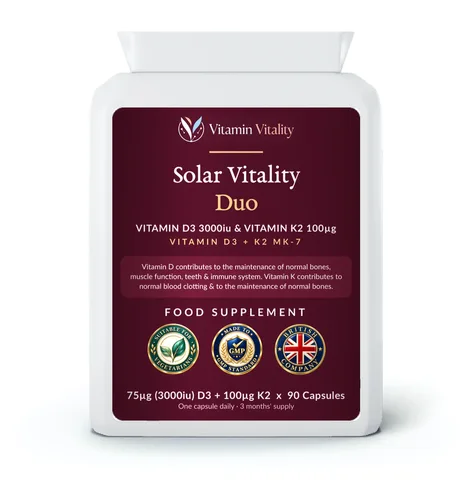
Discover the full Vitamin Vitality range — clinically dosed daily supplements, third-party tested and made in the UK.