Anatomy in plain English
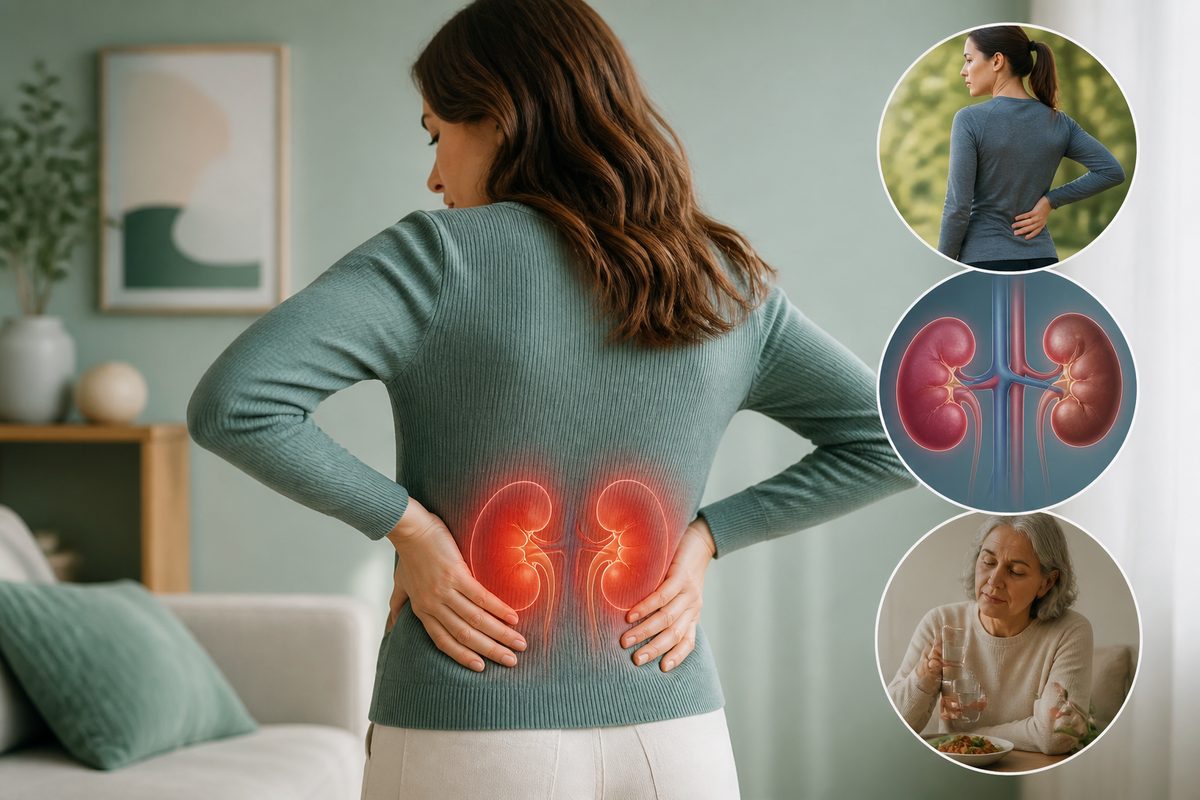
The kidneys are paired, fist-sized organs sitting in the retroperitoneum — at the back of the abdomen, behind the gut, tucked under the lower ribs (T12–L3). The right kidney is pushed slightly lower by the liver. Each kidney drains into a ureter, which carries urine to the bladder. Pain anywhere along this tract — kidney, ureter, bladder — can feel like 'kidney pain'.
Kidney pain vs back pain — the key differences
Kidney pain: deep, higher up (under the ribs), one-sided, may radiate to the groin, often associated with urinary symptoms. Muscular back pain: lower, central or both sides, worse with bending or twisting, eases with rest and stretching, no urinary symptoms. If paracetamol and rest improve it within 24–48 hours and there are no urinary changes, it is rarely the kidney.
Common causes
- Kidney stones: severe colicky pain, may radiate from loin to groin, often with nausea.
- Pyelonephritis (kidney infection): loin pain, fever, shivers, burning urination.
- Ureteric obstruction: from a stone, blood clot or stricture — back-pressure on the kidney.
- Polycystic kidney disease (PKD): dull, chronic flank discomfort.
- Kidney cysts: usually painless unless large, bleeding or infected.
- Trauma: any blunt loin injury — needs imaging.
When to seek urgent help
Go to A&E or call 111 for: high fever (> 38°C) with loin pain, visible blood in urine, vomiting that prevents fluids, severe pain not controlled by paracetamol, or inability to pass urine. These can indicate infected kidney stones, sepsis or obstruction — all needing same-day care.
Kidney Vitality is a daily multivitamin developed by a UK Consultant Nephrologist using renal nutrition principles. It contains no added potassium, magnesium, phosphorus or iron, and no herbal blends. See the formulation.