What is IgA nephropathy?
IgA nephropathy (IgAN), also called Berger's disease after the French nephrologist who described it in 1968, is the most common primary glomerulonephritis in the world.
What Happens
- Your immune system makes a slightly abnormal form of IgA antibody (galactose-deficient IgA1)
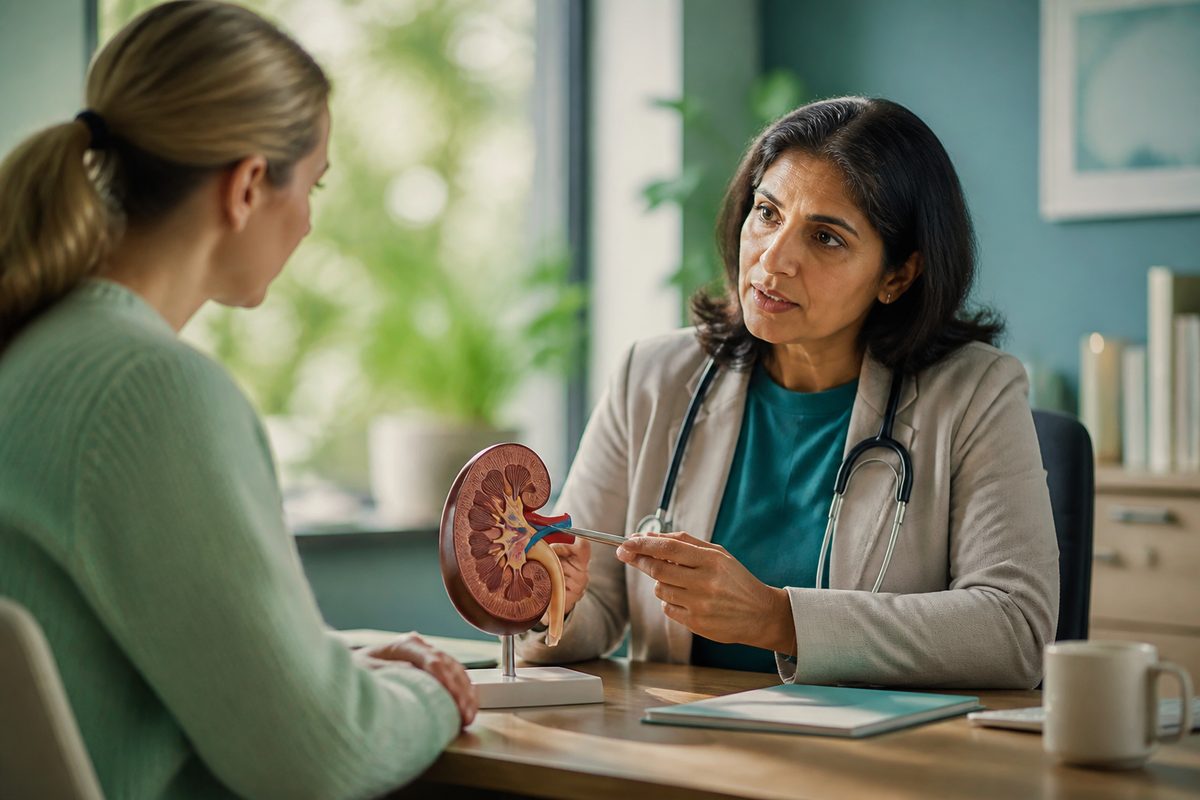
- These antibodies clump together and deposit in the mesangium (the supporting structure) of the kidney's filters (glomeruli)
- The deposits trigger inflammation, leaking blood and protein into urine
- Over years, this causes scarring and CKD
How Common
- Diagnosed in ~25 per million UK adults per year
- Likely 10× more common — many go undiagnosed
- Twice as common in men
- Often appears age 15–35
- Higher in East Asian populations
Symptoms and how it's found
Presentations
1. VISIBLE BLOOD IN URINE WITH INFECTIONS (most classic):
- Coca-cola or tea-coloured urine 24–48h after sore throat, cold, GI bug, or vigorous exercise
- Lasts a few days, resolves
- 'Synpharyngitic haematuria' — happens WITH the infection (unlike post-strep GN which happens 2 weeks later)
2. INCIDENTAL FINDING (now most common):
- Blood (and sometimes protein) on routine urine dip — life insurance, antenatal, occupational health
- Microscopic haematuria persisting between episodes
3. NEPHROTIC SYNDROME (~5%):
- Heavy proteinuria, leg swelling, low albumin
4. Already Advanced CKD
- High BP, fatigue, raised creatinine — biopsy reveals IgAN
5. Rarely Acute Kidney Injury
- 'Crescentic IgAN' — needs urgent immunosuppression
Diagnosis — the biopsy
There is NO blood test that diagnoses IgA nephropathy. The only certain diagnosis is a kidney biopsy.
Before Biopsy
- Urine ACR (proteinuria)
- Urine microscopy (dysmorphic red cells, casts)
- Blood pressure
- eGFR
- Tests to exclude lupus (ANA, complement), vasculitis (ANCA), HIV, hepatitis, infection
Biopsy Findings
- Light microscopy: mesangial proliferation
- Immunofluorescence: DOMINANT IgA deposits — diagnostic
- Electron microscopy: mesangial dense deposits
MEST-C SCORE — predicts prognosis:
- M — mesangial hypercellularity
- E — endocapillary proliferation
- S — segmental sclerosis
- T — tubular atrophy/fibrosis
- C — crescents
This is reported by the renal histopathologist and guides treatment intensity.
Modern treatment
STEP 1 — SUPPORTIVE (everyone):
- ACE inhibitor or ARB titrated to maximum tolerated dose
- BP target < 125/75 mmHg (if proteinuria > 1 g/day)
- SGLT2 inhibitor (dapagliflozin or empagliflozin) — proven benefit
- Salt restriction < 5 g/day
- Statin if appropriate
- Treat any tonsillitis promptly; tonsillectomy still controversial
- Stop smoking; control weight; treat OSA
- 3–6 months on this before stepping up
STEP 2 — IF PROTEINURIA REMAINS > 0.75–1 g/day:
- TARGETED-RELEASE BUDESONIDE (Kinpeygo/Tarpeyo) — releases steroid in distal ileum where IgA is made; UK NICE approved 2023
- SPARSENTAN — dual endothelin/angiotensin blocker; UK NICE approved 2024
- These can be combined with SGLT2 inhibitor for additive effect
STEP 3 — RAPIDLY PROGRESSIVE / CRESCENTIC:
- High-dose IV methylprednisolone
- Cyclophosphamide or rituximab
- Specialist nephrologist supervision
STEP 4 — KIDNEY FAILURE:
- Dialysis options
- Transplantation — IgAN can recur in transplant (~30%) but usually mild; outcomes generally good
What to expect long-term
Outlook
- 20-30% reach kidney failure over 20-30 years if untreated
- Modern treatment cuts this substantially
- Median time to kidney failure: ~25 years from diagnosis (untreated cohorts)
PROGNOSTIC FACTORS — WORSE:
- Proteinuria > 1 g/day persistently
- High BP
- Reduced eGFR at diagnosis
- T (tubular atrophy/fibrosis) and C (crescents) on biopsy
- Male sex, smoking
PROGNOSTIC FACTORS — BETTER:
- Isolated microscopic haematuria only
- Normal eGFR, normal BP
- Proteinuria < 0.5 g/day
- No crescents on biopsy
Monitoring
- 3-monthly: BP, urine ACR, creatinine
- 6-monthly with stable disease
- Lifelong — never discharge
LIVING WITH IgAN:
- Aerobic exercise is safe and encouraged
- Pregnancy is usually safe with stable function; close monitoring needed
- Avoid NSAIDs
- Annual flu, COVID, 5-yearly pneumococcal vaccines
- Genetic counselling not usually needed (sporadic in most)
Kidney Vitality is a daily multivitamin developed by a UK Consultant Nephrologist using renal nutrition principles. It contains no added potassium, magnesium, phosphorus or iron, and no herbal blends. See the formulation.