1. What people actually mean by "kidney support"
"Kidney support" is a consumer phrase. It does not appear in NICE NG203, in KDIGO 2024 or in the KDOQI 2020 nutrition guideline. What those documents do describe is a clear nutritional picture in CKD: certain vitamins fall short, others accumulate, and several common minerals are restricted under renal-team guidance. A useful daily multivitamin is one that maps onto that educational picture — not a herbal blend marketed with vague "detox" promises.
2. Nutrients discussed in renal nutrition guidance
- Vitamin D3 1000 IU (25 mcg). Vitamin D contributes to normal bone, muscle function and the immune system (EFSA-authorised). 25-OH levels are commonly low in CKD; NICE NG203 discusses correcting deficiency under clinical guidance.
- B-complex (B1, B2, B3, B5, B6, B12, folate, biotin). Contributes to normal energy-yielding metabolism and reduction of tiredness and fatigue (EFSA-authorised). Restricted-protein diets and dialysis losses make B-vitamins a routine topic in renal nutrition.
- Vitamin C 75 mg. Contributes to normal collagen formation and the protection of cells from oxidative stress (EFSA-authorised), without the oxalate concerns of megadose vitamin C.
3. Common marketing myths
- "Detox the kidneys." The kidneys are themselves the body's detox organ. There is no clinical basis for "detoxing" them with capsules or teas.
- "More vitamin C is better." In CKD, large doses can raise oxalate and contribute to stone formation.
- "Natural herbs are always safe." Aristolochic acid–containing herbs are nephrotoxic; nettle and dandelion are problematic in advanced CKD due to potassium and diuretic effects.
4. Kidney Vitality vs a typical high-street multivitamin
| Ingredient / feature | Kidney Vitality | Typical UK multivitamin |
|---|---|---|
| Vitamin A (retinol) | None added | Often 800 µg+ |
| Vitamin D3 | 1000 IU (25 mcg) daily | Variable, often very high or absent |
| Vitamin C | 75 mg (moderate) | Frequently 500–1000 mg |
| Added potassium | None | Often present |
| Added phosphorus | None | Frequently present |
| Added magnesium | None | Often present |
| Added iron | None | Often present |
| Herbal blends | None | Often present (cranberry, nettle, dandelion) |
| B-complex | Moderate, full spectrum | Variable, sometimes megadose |
| Designed by | UK Consultant Nephrologist | Generalist formulators |
5. CKD-stage educational considerations
Nutritional priorities change as kidney function declines. Renal nutrition guidance discusses vitamin D status and B-vitamin coverage across CKD, while potassium, phosphorus and magnesium are restricted under renal-team supervision rather than added through supplements. In Stage 5 and on dialysis, renal teams typically prescribe a specific renal multivitamin (e.g. Renavit) and any additional daily nutrition product should be confirmed with them first. This is educational background only and not a suitability claim for any individual.
See our stage-specific guides for CKD Stage 3, Stage 4 and Stage 5.
Nephrologist's summary
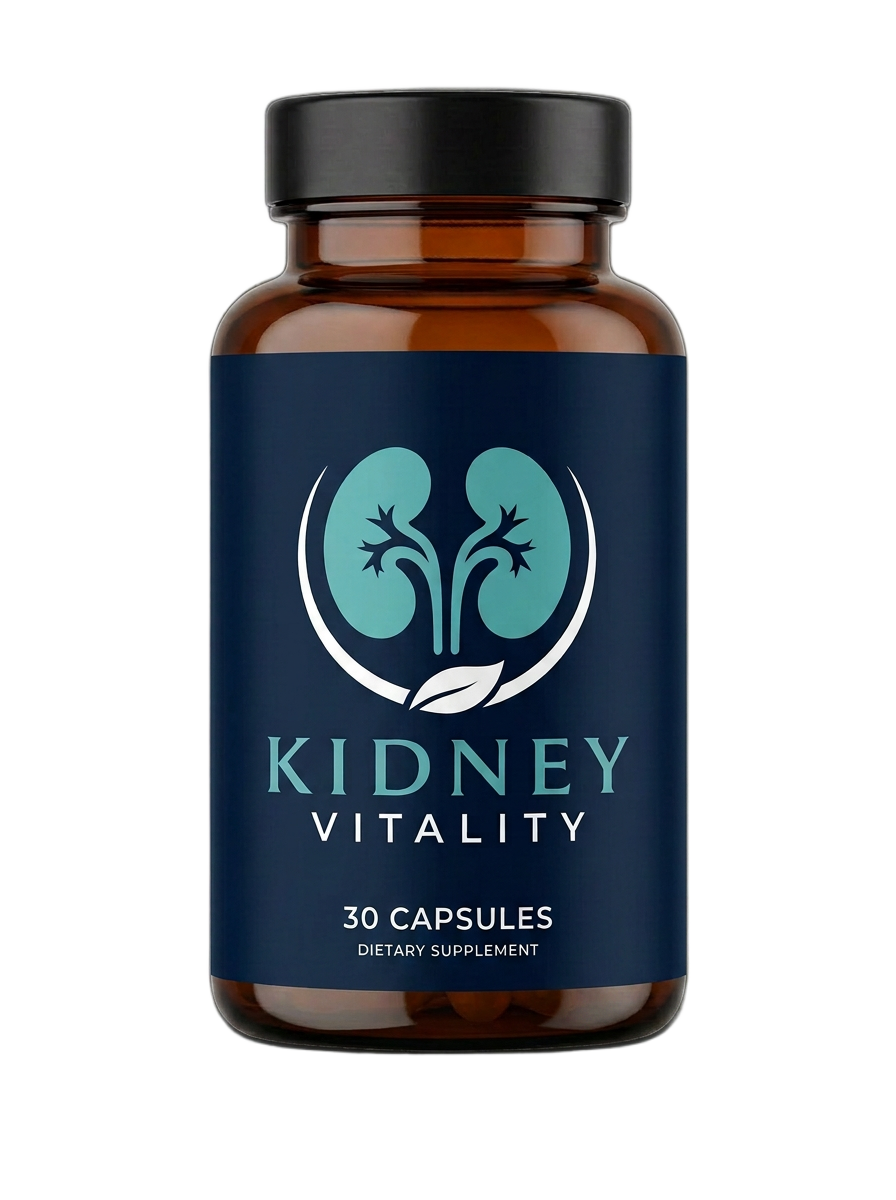
Kidney Vitality is a UK-manufactured daily food supplement designed by a UK Consultant Nephrologist with renal nutrition in mind: no added potassium, phosphorus, magnesium or iron, no herbal blends, and no megadose vitamin A. It is not a medicine and is not intended to treat, cure or prevent kidney disease.
Frequently asked questions
What do people mean by 'best kidney support supplement'?
'Kidney support supplement' is a consumer search phrase, not a regulated medical category. When people use it, they typically mean a daily multivitamin formulated with kidney nutrition in mind: moderate B-complex, vitamin D3, around 75 mg vitamin C, and no added retinol (vitamin A), potassium, phosphorus or magnesium. Kidney Vitality is a daily food supplement formulated to these UK renal-nutrition principles (NICE NG203, KDOQI 2020). It is not a treatment for kidney disease.
Is 'kidney support' a medical claim?
No. 'Kidney support' is a marketing phrase with no regulated medical meaning in the UK. No food supplement can claim to treat, cure or prevent kidney disease. What an evidence-based daily multivitamin can do is (1) top up nutrients that everyday diets commonly miss and (2) leave out ingredients that renal teams routinely flag — high-dose vitamin A, added potassium, added phosphorus and added magnesium.
Which nutrients are discussed in renal nutrition guidance?
NICE NG203 discusses vitamin D status in CKD. Water-soluble B-vitamins (B1, B2, B6, B12, folate) are commonly addressed in renal nutrition guidance. Moderate vitamin C contributes to normal antioxidant intake (EFSA-authorised wording). Sodium, potassium and phosphorus balance come from diet under renal-team guidance, not from added supplementation.
Are 'kidney cleanse' or 'kidney detox' products safe?
No mainstream nephrology guideline supports 'kidney cleanses'. The NHS advises against detox products, and several herbal blends marketed for kidney cleansing (e.g. aristolochic acid–containing herbs) are linked to kidney injury. A sensible daily multivitamin formulated for CKD is a safer alternative.
How does Kidney Vitality differ from a typical high-street multivitamin?
Most supermarket multivitamins contain high-dose retinol (vitamin A), added potassium or phosphorus, and often added magnesium — all four are routinely flagged by UK renal dietitians. Kidney Vitality leaves these out and keeps water-soluble vitamins at moderate, evidence-based daily amounts.
Is it safe to take Kidney Vitality with my CKD medication?
Kidney Vitality is designed to be compatible with common CKD medication, but anyone on ACE inhibitors, ARBs, potassium-sparing diuretics, vitamin D analogues or active CKD treatment should confirm with their GP, pharmacist or renal team before starting any supplement.
Is Kidney Vitality NHS-approved?
The NHS does not endorse over-the-counter supplements by brand. Kidney Vitality is a UK-manufactured food supplement (BRCGS, NSF GMP, Halal certified) formulated and reviewed by a UK Consultant Nephrologist; it is not a medicine and not a substitute for prescribed renal vitamins such as Renavit.
When do people typically take a daily multivitamin like this?
Most adults take one daily capsule with food and water. For people with established CKD, daily nutrition products should sit alongside — not replace — bloods monitoring, blood pressure control, and dietary advice from the renal team.